If it had been morally possible, I would have supported him gladly.
George Julian
The Public Record
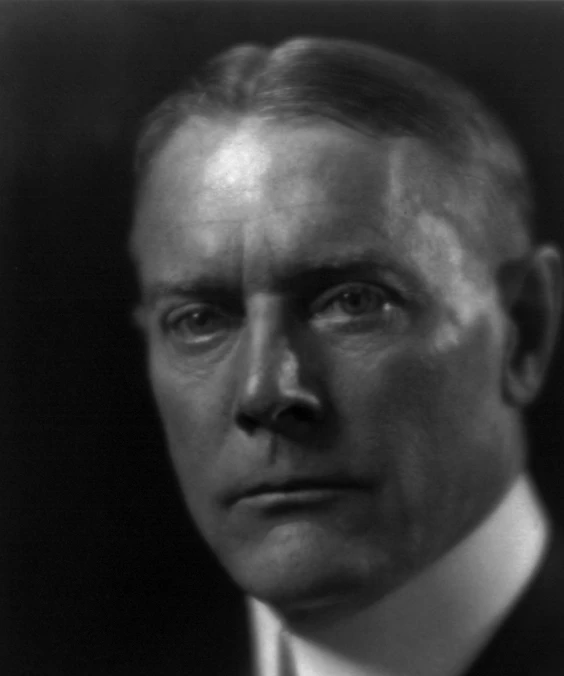
George Washington Julian was a politician, lawyer, and writer from Indiana who served in the United States House of Representatives during the 19th century. A leading opponent of slavery, Julian was the Free Soil Party's candidate for vice president in the 1852 election and was a prominent Radical Republican during the American Civil War and the Reconstruction era.
gutenberg.org
I could not aid in the re-election of Grant without sinning against decency and my own self-respect.
It was evident that my nomination was assured if I remained in the field; but as time wore on I saw that the re-nomination of General Grant had become absolutely inevitable; and, as I could not support him I could not honorably accept a…
The impolicy and injustice of the warfare which had long been carried on against me in Indiana were so generally felt by all fair-minded Republicans that Senator Morton himself, though personally quite as hostile as ever, was constrained…
The long-continued and wanton opposition which had been waged against me in my own party led me to covet it, and in the hope that General Grant's nomination might yet be averted I allowed my friends to urge my claims, and to believe I…
My dislike of the President steadily increased, and his disgraceful conduct towards Sumner and alliance with Morton, Conkling, Cameron, and their associates rendered it morally impossible for me any longer to fight under his banner.
Grant, but earnestly protested against the policy that sought to Tammany-ize the organization through his re-nomination.
He denounced the Administration and the San Domingo project in a style which commanded my decided approval, for my original dislike of Grant had been ripening into disgust and contempt, and, like Greeley, I had fully made up my mind that…
The demand for reform, as often as made, was instantly rebuked, and the men who uttered it branded as enemies of the party and sympathizers with treason.
The management of the Civil Service was an utter mockery of political decency, while the animosities engendered by the war were nursed and coddled as the appointed means of uniting the party and covering up its misdeeds.
While the issues of the war were retreating into the past the mercenary element of Republicanism had gradually secured the ascendancy, and completely appropriated the President.
What the country needed was not a stricter enforcement of party discipline, not military methods and the fostering of sectional hate, but oblivion of the past, and an earnest, intelligent, and catholic endeavor to grapple with the…
Roguery and plunder, born of the multiplied temptations which the war furnished, had stealthily crept into the management of public affairs, and claimed immunity from the right of search.
Our Civil Service was becoming a system of political prostitution.
Its action was inspired less by a creed than an object, and that object was to dedicate our National Territories to freedom, and denationalize slavery.
The final ratification of the Fifteenth Constitutional Amendment, which was declared in force on the thirtieth of March, 1870, perfectly consummated the mission of the Republican party, and left its members untrammeled in dealing with new…
The opportunity, now and then, to strangle a legislative monster like this, or to further the passage of beneficent and far-reaching measures, is one of the real compensations of public life.
The Southern Homestead law had dedicated to actual settlement millions of acres of the public domain in the land States of the South, while the Homestead Act of 1862 was splendidly vindicating the wisdom of its policy.
A very important reform, already referred to, had been made in our Indian treaty policy, by which lands relinquished by any tribe would henceforth fall under the operation of our land laws, instead of being sold in a body to some…
The rights of man are sacred, whether trampled down by Southern slave-drivers, the monopolists of the soil, the grinding power of corporate wealth, the legalized robbery of a protective tariff, or the power of concentrated capital in…
The abolition of the chattel slavery of the Southern negro was simply the introduction and prelude to the emancipation of all races from all forms of servitude, and my Congressional record had been a practical illustration of my faith in…
Slavery itself, greatly to the surprise and delight of its enemies, had perished; but it was, after all, only one form of a world-wide evil.
Almost everybody was an Abolitionist, and nobody any longer made a business of swearing that he was not.
Step by step I saw my constituents march up to my position, and the district at last completely disenthralled by the ceaseless and faithful administration of anti-slavery truth.
I believe no Congressional district in the Union was ever the theatre of so much hard toil by a single man; but although it involved the serious abridgement of health and life, the ruinous neglect of my private affairs, and the sacrifice…
Politicians like George Julian