Although the ranks of my supporters were constantly recruited and no man ever had more devoted friends, I was obliged, during all these years, to stand alone as the champion of my cause in debate.
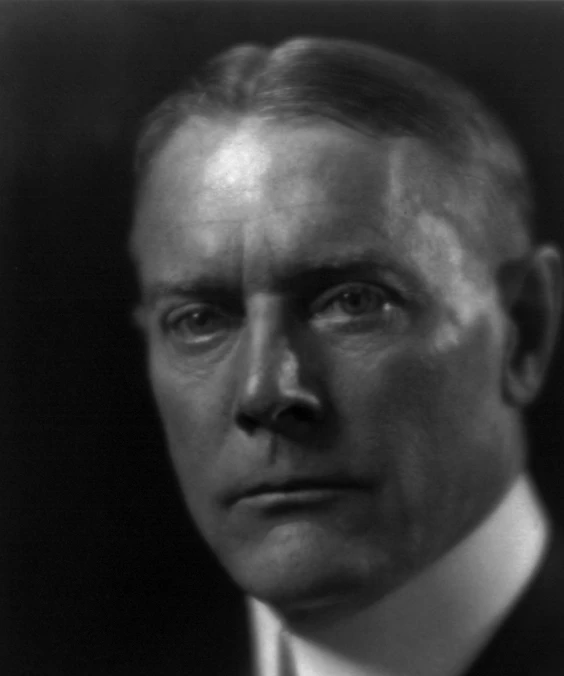
George Julian
The Public Record
George Washington Julian was a politician, lawyer, and writer from Indiana who served in the United States House of Representatives during the 19th century. A leading opponent of slavery, Julian was the Free Soil Party's candidate for vice president in the 1852 election and was a prominent Radical Republican during the American Civil War and the Reconstruction era.
gutenberg.org
I literally wore myself out in the work, and am perfectly amazed when I recall the amount of it I performed, and the complete abandon of myself to the task.
In the beginning, public opinion was overwhelmingly and fiercely against me, but I resolved, at whatever cost, to reconstruct it in conformity with my own earnest convictions.
But as the nominee of his party, fairly committed to its principles and measures touching the unsettled questions of reconstruction and suffrage, I saw no other practicable alternative than to give him my support.
His nomination, however, was only secured by cautious and timely diplomacy, and potent appeals to his sordidness, in the shape of assurances that he should have the office for a second term.
But the plea of his availability as a military chieftain was urged with great effect, and was made irresistible by the apprehension that if not nominated by the Republicans the Democrats would appropriate him, and make him a formidable…
Moreover, he had had no training whatever in civil administration, and no one thought of him as a statesman.
The idea of his nomination was exceedingly distasteful to me.
The work of reconstruction was only fairly begun, and its completion was involved in the approaching presidential election.
The idea of making the question of impeachment a matter of party discipline was utterly indefensible and preposterous.
Patriotism and party animosity were so inextricably mingled and confounded that the real merits of the controversy could only be seen after the heat and turmoil of the strife had passed away.
The attempt to impeach the President was undoubtedly inspired, mainly, by patriotic motives; but the spirit of intolerance among Republicans toward those who differed with them in opinion set all moderation and common sense at defiance.
To such men it seemed that all the trials of the war were merged in this grand issue, and that it involved the existence of Free Government on this continent.
The feeling against him became perfectly relentless, as I distinctly remember it, and shared in it myself; but on referring to the message now, I am astonished at the comparative moderation of its tone, and the strength of its positions.
It was a confession of Congressional incompetence to deal with a problem which Congress alone had the right to solve.
It was completely at war with the genius and spirit of democratic government.
It is not a mistake merely, but a great misfortune, that our laws touching so delicate and vital a question as the ownership and transfer of mineral lands were not so framed as to avert these frightful evils.
It tempts civilized men to become savages and savages to become devils.
No situation could well be more deplorable than that which obliges a man to pay heavy black- mail as the only means of saving his property from legal confiscation by another; and the moral ravages of a code which allows this can not be…
Its prizes are often rich and suddenly gained, and when they are sought through the forms of a law which compels a man to choose between an expensive and hazardous litigation and robbery, human nature is severely tried.
Such a state of affairs is worse than pestilence or famine; but the evil of uncertain titles puts on new and very aggravated forms in our gold-bearing regions.
The laws regulating the ownership and disposition of landed property not only affect the well-being but frequently the destiny of a people.
It may thus happen that a system of laws initiated by itinerant miners solely for the protection of their transient posessory interests, and carried through Congress at their behest by parliamentary roguery, may be permanently engrafted…
Moreover, men absorbed in a feverish and hazardous industry, and stimulated by the hope of sudden wealth, are not disposed to consider the advantages of permanent ownership and security of title.
Custom, and the faculty of adaptation, have a very reconciling influence upon communities as well as individuals.
Politicians like George Julian