My warfare against chattel slavery and the monopoly of the soil had assumed the duty of the Government to secure fair play and equal opportunities to the laboring masses, and I was willing to embody that idea in a specific legislative…
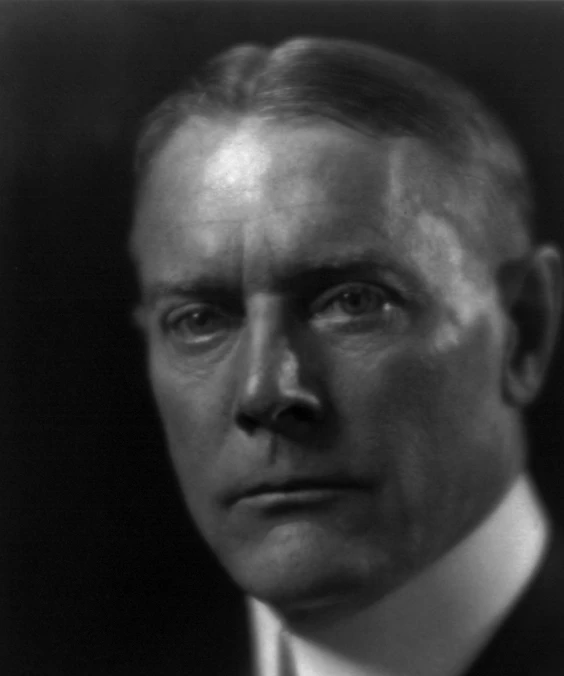
George Julian
The Public Record
George Washington Julian was a politician, lawyer, and writer from Indiana who served in the United States House of Representatives during the 19th century. A leading opponent of slavery, Julian was the Free Soil Party's candidate for vice president in the 1852 election and was a prominent Radical Republican during the American Civil War and the Reconstruction era.
gutenberg.org
While I was a believer in Free Trade, I was not willing to follow its logic in all cases of conflict between capital and labor.
The conservative party which had so long sought to spare slavery was obliged, as usual, to feel its way cautiously, and wait on the logic of events; while the negro, as I shall show, was finally indebted for his franchise to the desperate…
It sanctioned the barbarism of the Rebel State Governments in denying the right of representation to their freedmen, simply because of their race and color, and thus struck at the very principle of Democracy.
The majority was over two to one, thus clearly foreshadowing the enfranchisement of the negro in the insurrectionary districts.
If I had been willing to subordinate my political convictions and sense of duty to his ambition, peace could at once have been restored; but as this was impossible, I was obliged to accept the warfare which continued and increased, and…
He seemed to have no faith at all in the beneficent measures designed to guard the black race from outrage and wrong, while full of apprehension that the heavens would fall if such measures were adopted.
Sumner for proposing to give the ballot to the negroes and disfranchise the white Rebels, but his moral vision failed to discern anything amiss in his own ghastly policy of arming the white Rebels with the ballot and denying it to the…
Was some miracle to be wrought through which the slave-masters were to be transfigured into negro apostles and devotees?
He urged that the policy of negro suffrage would give the lie to all the arguments that had ever been employed against slavery as degrading and brutalizing to its victims.
The people of Indiana had no right to take advantage of their own wrong, or to sacrifice the welfare of four million blacks on the altar of Northern consistency.
It was, moreover, a question of national honor and gratitude, from which no escape was morally possible.
It involved not merely the fate of the negro, but the safety of society.
The question involved the welfare of both races, and the issues of the war.
A great national emergency pleaded for their right to it on other and far more imperative grounds.
My task was an arduous one, but I found the people steadily yielding up their prejudices, and ready to lay hold of the truth when fairly and dispassionately presented, while the soldiers were among the first to accept my teachings.
In the beginning of the canvass I even found a considerable portion of my old anti-slavery friends unprepared to follow me; but feeling perfectly sure I was right, and that I could revolutionize the general opinion, I entered upon the…
His hostility to the suffrage wing of his party seemed to be quite as relentless as to the Rebels, while the great body of the Republicans of the district deferred strongly to his views.
The politicians all opposed it on the plea that it would divide the Republicans and restore the Democrats to power, and that we must wait for the growth of a public opinion that would justify its agitation.
It was neither morally nor logically possible to escape it; and on my return to my constituents I prepared for a thorough canvass of my district.
In the meantime, pending the general drift of events, the suffrage question was constantly gaining in significance, and demanding a settlement.
The Governor's theory of reconstruction, in fact, made our war for the Union flagrantly unconstitutional.
In framing their new governments Congress would have no right to prescribe any conditions, or to govern them in any way pending the work of State reconstruction, since this would be to recognize the States as Territories, and violate the…
If the people could rightfully be overpowered by the national authority, that very fact would at once re-clothe them in all their rights, just as if they had never rebelled.
He elaborated the proposition that the loyal people of a State have the right to govern it; but he did not explain what would become of the State if the people were all disloyal, or the loyal so few as to be utterly helpless.
Politicians like George Julian