Lincoln, their appeal from the ballot to the bullet was the logical result of their insane devotion to slavery, and their conviction that nothing could save it but the dismemberment of the Republic.
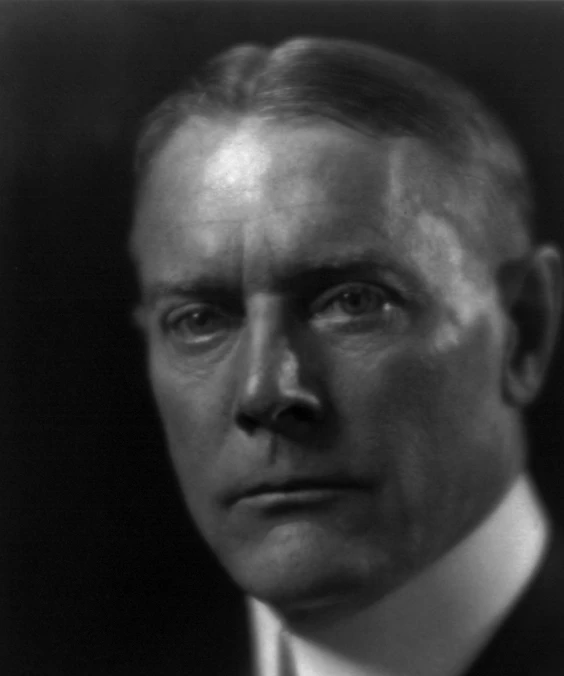
George Julian
The Public Record
George Washington Julian was a politician, lawyer, and writer from Indiana who served in the United States House of Representatives during the 19th century. A leading opponent of slavery, Julian was the Free Soil Party's candidate for vice president in the 1852 election and was a prominent Radical Republican during the American Civil War and the Reconstruction era.
gutenberg.org
They forgot that the Rebellion was simply an advanced stage of slaveholding rapacity, and that instead of tempting us to cower before it and surrender our principles, it furnished an overwhelming argument for standing by them to the death.
It was a sad thought, while standing on the banks of the Rappahannock, that here were more than a hundred thousand men on either side of a narrow river, brethren and kindred, and naturally owing each other nothing but good will, who were…
Our soldiers, he said, were not sufficiently fired by resentment, and he exhorted me, if I could, to breathe into our people at home the same spirit toward our enemies which inspired them toward us.
It was in yielding to this pressure that he finally became the liberator of the slaves through the triumph of our arms which it ensured.
The authority to emancipate under the war power is well settled, but it could only be asserted over territory occupied by our armies.
Each Commanding General, as fast as our flag advanced, could have offered freedom to the slaves, as could the President himself.
Lincoln as the great Emancipator, it shows how wisely he employed a grand popular delusion in the salvation of his country.
His proclamation had no present legal effect within territory not under the control of our arms; but as an expression of the spirit of the people and the policy of the Administration, it had become both a moral and a military necessity.
On the 14th of December I introduced a bill for the repeal of the Fugitive Slave Law, and in order to test the sense of the House on the question, I offered a resolution instructing the Judiciary Committee to report such a bill.
Many Republicans declined to vote, and we were evidently still under the lingering spell of slavery.
It was a very radical proposition, proposing to deal with these lands as public lands, and parcel them out into small homesteads among the poor of the South, black and white.
The report produced a powerful effect on the public mind, and caused unspeakable trouble and vexation to the enemy.
I assisted in the examination of our prisoners at Annapolis, and never before had been so touched by any spectacle of human suffering.
Not one of them expressed any regret that he had entered into the service of the country, and each declared that he would do so again, if his life should be spared and the opportunity should be offered.
In examining one of these men I was perfectly unmanned by my tears; and on retiring from the tent to give them vent I encountered Senator Wade, who had fled from the work, and was sobbing like a child.
It was the duty of the President, like John Bright and the English Liberals, to lead, not follow public opinion.
I kept cool, but asserted very positively that I did use the exact words reported, and in proof of my statement I appealed to a number of my friends, who sustained me by their distinct and positive recollections.
To me it was particularly vexatious, as the measure was a pet one of mine, having labored for it with much zeal, and in the confidence that the National Convention would approve it.
But to me the nomination of Andrew Johnson for Vice President was a still greater disappointment.
I knew he did not believe in the principles embodied in the platform.
Lincoln, seemed to have been preordained by the people, while the intelligent, sober men, in Congress and out of Congress, who lamented the fact, were not prepared to oppose the popular will.
Lincoln's nomination was nearly unanimous, only the State of Missouri opposing him; but of the more earnest and through-going Republicans in both Houses of Congress, probably not one in ten really favored it.
Loyalty to Republicanism was not only accepted as the best evidence of loyalty to the country, but of fitness for civil position.
It threatened discord and mischief, and I went to the President with these facts, and on the strength of them demanded his removal from office.
Politicians like George Julian