I got through with the work better than I anticipated, was handsomely listened to, and went home in triumph.
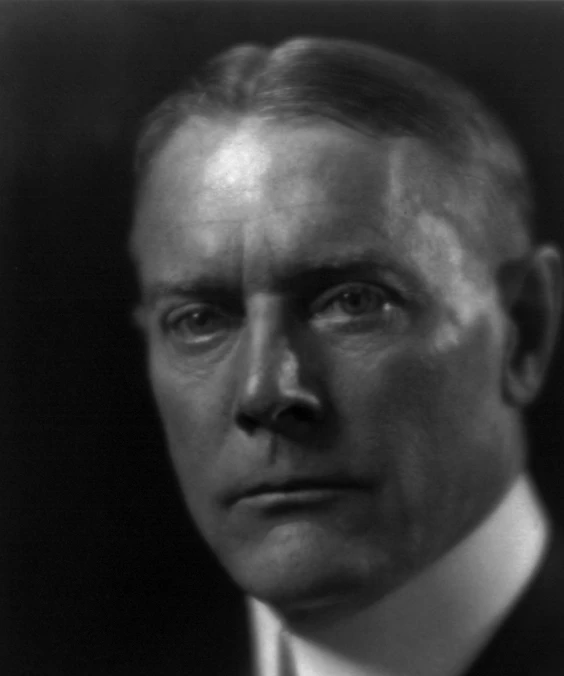
George Julian
The Public Record
George Washington Julian was a politician, lawyer, and writer from Indiana who served in the United States House of Representatives during the 19th century. A leading opponent of slavery, Julian was the Free Soil Party's candidate for vice president in the 1852 election and was a prominent Radical Republican during the American Civil War and the Reconstruction era.
gutenberg.org
I not only meant that they should not be ashamed of it, but that, if possible, it should stand the test of criticism, both as to matter and diction.
His impassioned arraignment of the disunionists was loudly applauded by the galleries, and clearly indicated the part he would have played in the late Rebellion had his life been spared to witness that direful event.
It is their meat, their bread, the air which they breathe; and if they saw in its incipient state, a measure giving them more of that food, and meat, and bread, and air, do you believe they would oppose themselves to its adoption?
Clay's great speech in the Senate on the Compromise Measures, and although I believed him to be radically wrong, I felt myself at times drawn toward him by that peculiar spell which years before had bound me to him as my idolized political…
In this impression I was fully confirmed later in the session, when he sorrowfully but manfully resisted the attempt of Senator Davis, his son-in-law, and other extreme men, to bully him into their measures, and avowed his sympathy with…
But although he seemed to be in the hands of the slave-holders, and was about to proclaim his policy of non-intervention with slavery in the Territories, he impressed me as being personally honest and patriotic.
Its existence was menaced by the policy of confinement and ultimate suffocation; and therefore no compromise of the pending strife over its prohibition in New Mexico, Utah and California was possible.
The prophets of slavery saw clearly that restriction meant destruction.
No sophistry could disguise this fact, nor could its significance be overstated.
The war with Mexico, like the annexation of Texas which paved the way for it, was inspired by the lust for slave territory.
It was very savingly felt in Congress in July of this year, on the vote by which Oregon, with a territory nearly equal to that of the thirteen original States, narrowly escaped the damnation of slavery.
It seated Chase in the United States Senate from Ohio, and sent to the lower branch of Congress a sufficient number of anti-slavery men from different States to hold the balance of power in that body.
The Free Soil ticket received a little less than three hundred thousand votes, and failed to carry the electoral vote of a single State; but the effect of the movement was inestimably important.
The worst passions of humanity were set on fire among the Whigs by this provoking insurrection against their party as the mere tool of slavery, while animosities were engendered that still survive, and which many men have carried to their…
But the fight, as I have said, was unspeakably relentless, vitriolic and exhausting, and nothing could redeem it but an overmastering sense of duty and self-respect.
With the truth on my side, I was delighted to find myself perfectly able, single-handed, to fight my battle against the advantages of superior talent and the trained leadership of men of established reputations on the stump.
I was so perfectly swallowed up in my work and dominated by the singleness of my purpose, that I took no thought of anything else; and the vigor of my invective in dealing with the scurrilous attacks of my assailants was very keenly…
After the presidential election of 1844, I resolved that I would never vote for another slaveholder, and the course of events and my own reflections had constantly strengthened this purpose.
The most remarkable feature of this contest was the bitterness of the Whigs toward the Free Soilers, and especially those who had deserted from the Whig ranks.
The only enthusiasm of the campaign was in the new party, and it was perfectly spontaneous and fervid.
It was hollow and false, and the best men in the party felt it.
Chairman, this is the most solemn experience of my life.
There was a feeling of intense anxiety about the result, and an earnestness and real seriousness which I have never witnessed in any other Convention.
Van Buren would undoubtedly mean the freedom of our Territories and the denationalization of slavery, and this was the great point.
Politicians like George Julian