But on the subject of slavery, though it had escaped my attention in the hurrah of 1840, I was thoroughly aroused.
George Julian
The Public Record
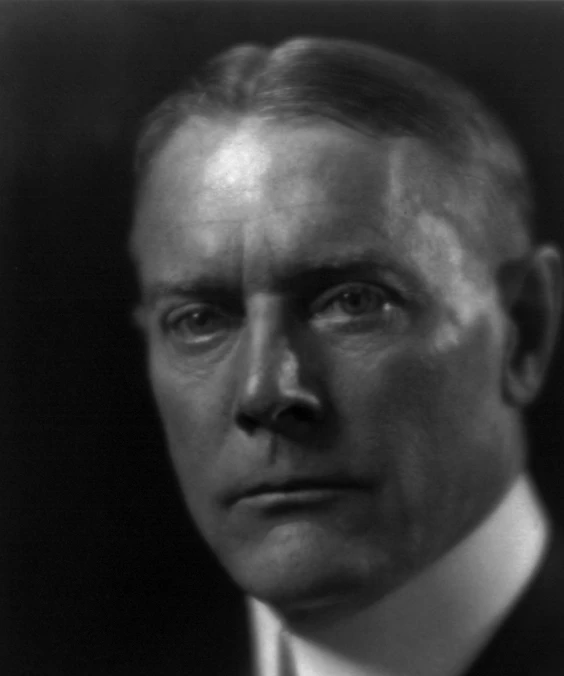
George Washington Julian was a politician, lawyer, and writer from Indiana who served in the United States House of Representatives during the 19th century. A leading opponent of slavery, Julian was the Free Soil Party's candidate for vice president in the 1852 election and was a prominent Radical Republican during the American Civil War and the Reconstruction era.
gutenberg.org
In his earlier years, he had been an outspoken emancipationist, and had always frankly expressed his opinion that slavery was a great evil.
The momentous question was now upon us; and on the dawning of the year 1844, all parties saw that it was destined to be the overshadowing issue in the ensuing presidential campaign.
The diplomacy through which the plot was prosecuted was marked by a cunning, audacity, and perfidy, which, in these particulars, leave the administration of John Tyler unrivalled in its ugly pre-eminence, and form one of the blackest pages…
Channing had styled it, was the unalterable purpose and unquenchable desire of the slave-holding interest, and its accomplishment was to be secured by openly espousing the principle that the end justifies the means, and setting all…
Yet my conscience presses me on; let me but die upon the breach.
He had no sympathy with the struggle of Adams and his associates, against the gag and in favor of the right of petition, and regarded the discussion of the slavery question as unconstitutional.
He had taken sides with the South in 1820 on the Missouri question.
While Governor of Indiana Territory he had repeatedly sought the introduction of slavery into that region through the suspension of the ordnance of 1787, which had forever dedicated it to freedom.
He had taken sides with Jackson in his lawless interference with the mails at the bidding of slave-holders.
He had allied himself to the enemies of the right of petition and the freedom of debate, as the means of conciliating the South.
Van Buren had attempted to shelter the slave trade under the national flag.
To choose between them was to betray the cause.
President Van Buren had dishonored his administration and defied the moral sense of the civilized world by his efforts to prostitute our foreign policy to the service of slavery and the slave trade.
We had been disgraced by two Florida wars, caused by the unconstitutional espousal of slavery by the General Government.
Channing had published his prophetic letter to Henry Clay, on the annexation of Texas, in 1837, and awakened a profound interest in the slavery question on both sides of the Atlantic.
President Jackson and Amos Kendall, his Postmaster General, had openly set the Constitution at defiance by justifying the rifling of the mails and the suppression of the circulation of anti-slavery newspapers in the South.
In 1838 a pro-slavery mob had set fire to Pennsylvania Hall, in Philadelphia, and defied the city authorities in this service of slavery.
In 1837 Lovejoy had been murdered in Alton, Illinois, and his assassins compared by the Mayor of Boston to the patriots of the Revolution.
It was unrecognized by both parties, but it made its advent, and the men who pointed its way quietly served notice upon the country of their ulterior purposes.
The movement of 1840 was necessarily transient and provisional, while underneath its clatter and nonsense was a real issue.
The times are bad, and want curing; They are getting past all enduring; Let us turn out Martin Van Buren, And put in old Tippecanoe.
Then ho! for March fourth, forty-one, boys, We'll shout till the heavens' arched blue Shall echo hard cider and fun, boys, Drink, drink, to old Tippecanoe.
Parched corn men can't stand it much longer, Enough is as much as we'll bear; With Tip at our head, in October, We'll tumble Van out of the chair.
Come ye who, whatever betide her, To Freedom have sworn to be true, Prime up with a cup of hard cider, And drink to old Tippecanoe.
Politicians like George Julian