May 24, 2011
The American people do not want their elected representatives playing politics with nuclear safety.
The Public Record
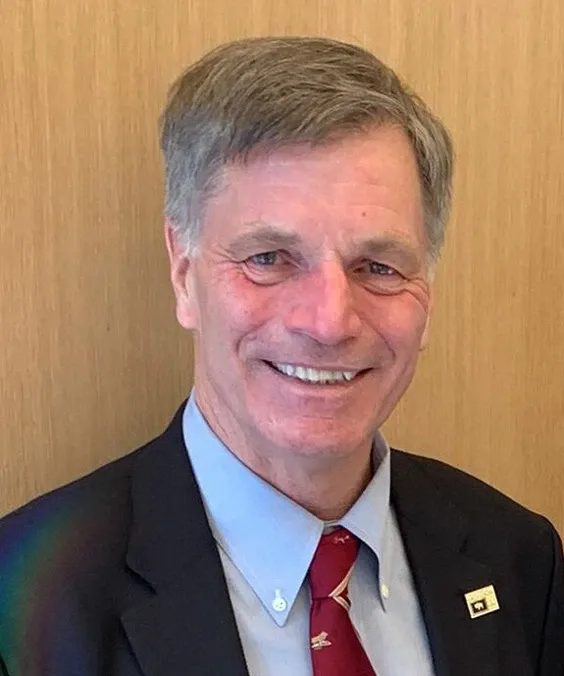
John Anthony Barrasso is an American politician and physician serving as the senior United States senator from Wyoming since 2007. A member of the Republican Party, Barrasso has focused on issues such as healthcare, energy, and economic growth during his tenure in the Senate. He has been an advocate for reducing government regulations and promoting energy independence, reflecting the interests of his constituents in Wyoming, a state rich in natural resources.
The American people do not want their elected representatives playing politics with nuclear safety.
This exchange between Senator Tester and Senator Risch seems to indicate that there has been progress there.
I always have concerns that there may be other groups out there. Such as snowmobilers, ranchers, who may have strong reservations about S. 268 and the impact that it will have on the local economy.
This is, kind of, the third Congress that I brought this piece of legislation. So I'd hope that we could truly move ahead in an expeditious manner.
I don't want to be in the same situation as Senator Murkowski, talks about the years of delay even though that the discussion continues.
S. 375 authorizes the Secretary of Agriculture and the Secretary of Interior to enter into cooperative agreements with State foresters.
The Act's establishment of a national Indian Youth Service Corps (IYSC) and grant program would enable Indian youth.
I also need to state that wilderness bills which include Bureau of Land Management Lands will be complicated by the Administration's approach which I believe is a wrongheaded approach, to their wild land policy.
I think, Mr. Chairman, we could have found a better way to start this process.
Until the underlying issues related to the President's wild land polices are resolved, these bills are going to face, I believe, strong opposition by many members of the Senate.
I think for anybody that has concerns about what the Department is doing with these lands, I think that was a very telling choice of a code word.
I know they used $1.1 million of DERA funding and did a $2.3 million project in Pinedale, WY.
The Diesel Emission Reduction Act, or DERA, has been instrumental in making those type of efforts successful.
I am the Chairman of the Republican Western Caucus, so those are obviously issues that we have concern about.
This bill does provide steps that an applicant must demonstrate to receive the long term indemnification.
I think what your investment community is looking for and what your capital markets are looking for in the form of certainty is the appreciation that the return on their investment will mature with time and gain value.
You know it's interesting in that recent article that Columbia professors disagreed with the Princeton professors as the cost and what the technology would be which makes me get to the final question, Mr. Chairman, is that what do think…
I think the real question is after those ten projects is there sufficient capacity for greater commercial application?
Isn't that what we are trying to do: save money, help people, do it more efficiently, more effectively? That is why I am proud to cosponsor with my friend, Senator Hatch, the State Flexibility Act.
I ask my colleague this: We are from neighboring States, Wyoming and Utah. I ask if the Senator could perhaps explain exactly how these Medicaid maintenance of effort mandates--and I believe they are onerous Washington mandates--directly…
Well, thank you. I want to thank all of you from this panel and I want to thank everyone who came to testify today.
Politicians like John Barrasso