There is no constitutional, conventional, or legal provision which allows them less power over the Indians within their borders than is possessed by Maine or New York.
Andrew Jackson
The Public Record
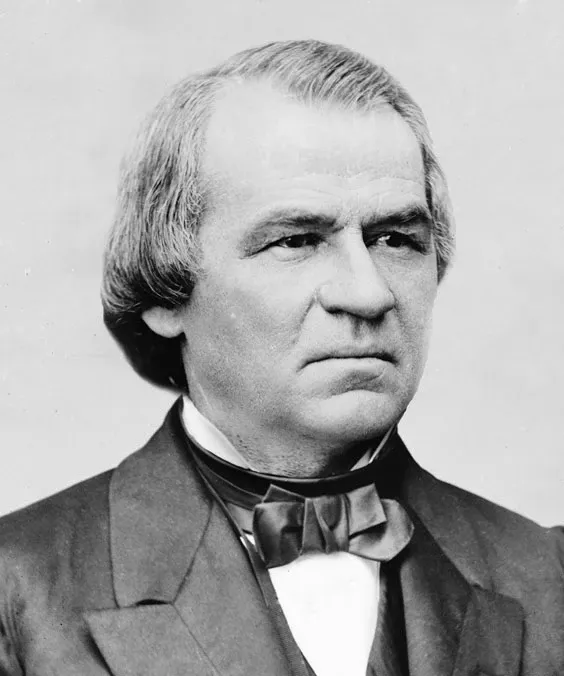
Andrew Jackson was the seventh President of the United States, serving from 1829 to 1837. A member of the Democratic Party, he is known for his populist style of politics and for being a founding figure of the party. Jackson's presidency was marked by significant events such as the Indian Removal Act and the Nullification Crisis, which highlighted his strong stance on federal authority. Before his presidency, he served as a military governor of Florida and held positions in both the U.S. House of Representatives and the Senate.
gutenberg.org
If the General Government is not permitted to tolerate the erection of a confederate State within the territory of one of the members of this Union against her consent, much less could it allow a foreign and independent government to…
These States, claiming to be the only sovereigns within their territories, extended their laws over the Indians, which induced the latter to call upon the United States for protection.
A portion, however, of the Southern tribes, having mingled much with the whites and made some progress in the arts of civilized life, have lately attempted to erect an independent government within the limits of Georgia and Alabama.
Thus, though lavish in its expenditures upon the subject, Government has constantly defeated its own policy, and the Indians in general, receding farther and farther to the west, have retained their savage habits.
By this means they have not only been kept in a wandering state, but been led to look upon us as unjust and indifferent to their fate.
Professing a desire to civilize and settle them, we have at the same time lost no opportunity to purchase their lands and thrust them farther into the wilderness.
This policy has, however, been coupled with another wholly incompatible with its success.
The law is defective in not embracing within its provisions all those who were during the last war disabled from supporting themselves by manual labor.
These relics of the War of Independence have strong claims upon their country's gratitude and bounty.
I would also suggest a review of the pension law, for the purpose of extending its benefits to every Revolutionary soldier who aided in establishing our liberties, and who is unable to maintain himself in comfort.
This institution has already exercised the happiest influence upon the moral and intellectual character of our Army; and such of the graduates as from various causes may not pursue the profession of arms will be scarcely less useful as…
Surely the statute ought not to run in favor of any man while he retains all the evidences of his crime in his own possession, and least of all in favor of a public officer who continues to defraud the Treasury and conceal the transaction…
All experience proves that oppressive debt is the bane of enterprise, and it should be the care of a republic not to exert a grinding power over misfortune and poverty.
He thus sinks into a state of apathy, and becomes a useless drone in society or a vicious member of it, if not a feeling witness of the rigor and inhumanity of his country.
The continuance of the liability after the means to discharge it have been exhausted can only serve to dispirit the debtor; or, where his resources are but partial, the want of power in the Government to compromise and release the demand…
Some more liberal policy than that which now prevails in reference to this unfortunate class of citizens is certainly due to them, and would prove beneficial to the country.
I can not, therefore, too strongly or too earnestly, for my own sense of its importance, warn you against all encroachments upon the legitimate sphere of State sovereignty.
This is not the reflection of a day, but belongs to the most deeply rooted convictions of my mind.
Nothing is clearer, in my view, than that we are chiefly indebted for the success of the Constitution under which we are now acting to the watchful and auxiliary operation of the State authorities.
We are responsible to our country and to the glorious cause of self-government for the preservation of so great a good.
The safest and simplest mode of obviating all the difficulties which have been mentioned is to collect only revenue enough to meet the wants of the Government, and let the people keep the balance of their property in their own hands, to be…
Everyone must be sensible that a distribution of the surplus must beget a disposition to cherish the means which create it, and any system, therefore, into which it enters must have a powerful tendency to increase rather than diminish the…
If we consider the protective duties, which are in a great degree the source of the surplus revenue, beneficial to one section of the Union and prejudicial to another, there is no corrective for the evil in such a plan of distribution.
By the watchful eye of self-interest the agents of the people in the State governments are repressed and kept within the limits of a just economy.
Politicians like Andrew Jackson