Those who have not had occasion to see and regret the indication of a sinister influence in these matters in past times have been more fortunate than myself in their observation of the course of public affairs.
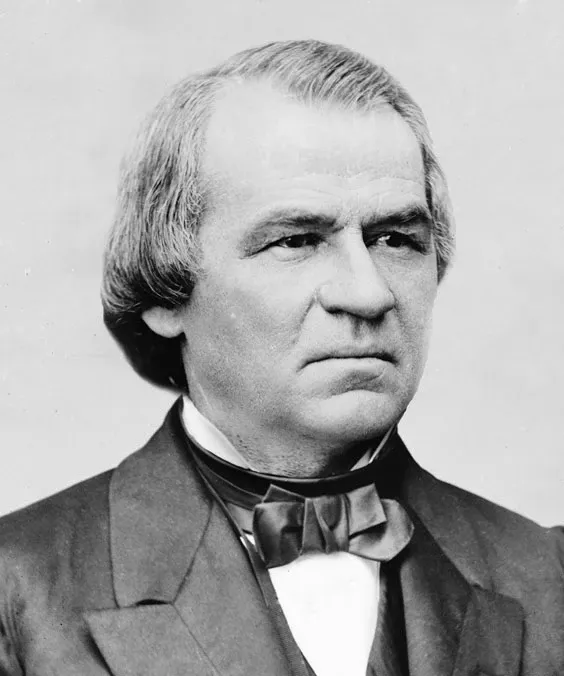
Andrew Jackson
The Public Record
Andrew Jackson was the seventh President of the United States, serving from 1829 to 1837. A member of the Democratic Party, he is known for his populist style of politics and for being a founding figure of the party. Jackson's presidency was marked by significant events such as the Indian Removal Act and the Nullification Crisis, which highlighted his strong stance on federal authority. Before his presidency, he served as a military governor of Florida and held positions in both the U.S. House of Representatives and the Senate.
gutenberg.org
Would it be strange, under such circumstances, and in times of great excitement, that grants of this description should find their motives in objects which may not accord with the public good?
We have it constantly before our eyes that professions of superior zeal in the cause of internal improvement and a disposition to lavish the public funds upon objects of this character are daily and earnestly put forth by aspirants to…
The want of this equitable distribution can not fail to prove a prolific source of irritation among the States.
I derive, too, no small degree of satisfaction from the reflection that if I have mistaken the interests and wishes of the people the Constitution affords the means of soon redressing the error by selecting for the place their favor has…
It is due to candor, as well as to my own feelings, that I should express the reluctance and anxiety which I must at all times experience in exercising the undoubted right of the Executive to withhold his assent from bills on other grounds…
That those whose immediate pecuniary interests are to be affected by proposed expenditures should shrink from the application of a rule which prefers their more general and remote interests to those which are personal and immediate is to…
In a government like ours more especially should all public acts be, as far as practicable, simple, undisguised, and intelligible, that they may become fit subjects for the approbation to animadversion of the people.
The interests of the nation would doubtless be better served by avoiding all such indirect modes of aiding particular objects.
Appropriations will be obtained with much greater facility and granted with less security to the public interest when the measure is thus disguised than when definite and direct expenditures of money are asked for.
This mode of aiding such works is also in its nature deceptive, and in many cases conducive to improvidence in the administration of the national funds.
I can not perceive how bills authorizing such subscriptions can be otherwise regarded than as bills for revenue, and consequently subject to the rule in that respect prescribed by the Constitution.
A different practice, if allowed to progress, would ultimately change the character of this Government by consolidating into one the General and State Governments, which were intended to be kept for ever distinct.
The successful operation of the federal system can only be preserved by confining it to the few and simple, but yet important, objects for which it was designed.
All improvements effected by the funds of the nation for general use should be open to the enjoyment of all our fellow citizens, exempt from the payment of tolls or any imposition of that character.
The consumer in the most inland State derives the same advantage from every necessary and prudent expenditure for the facility and security of our foreign commerce and navigation that he does who resides in a maritime State.
It is indisputable that whatever gives facility and security to navigation cheapens imports and all who consume them are alike interested in what ever produces this effect.
It is in this as in other respects our duty to avoid all unnecessary expense, as well as every increase of patronage not called for by the public service.
I am particularly gratified in being able to state that a decidedly favorable, and, as I hope, lasting, change has been effected in our relations with the neighboring Republic of Mexico.
Our country, by the blessing of God, is not in a situation to invite aggression, and it will be our fault if she ever becomes so.
Respect for that Empire and confidence in its friendship toward the United States have been so long entertained on our part and so carefully cherished by the present Emperor and his illustrious predecessor as to have become incorporated…
Sensible of the importance of the object, I felt it my duty to leave no proper means unemployed to acquire for our flag the same privileges that are enjoyed by the principal powers of Europe.
It gives me unfeigned pleasure to assure you that this negotiation has been throughout characterized by the most frank and friendly spirit on the part of Great Britain, and concluded in a manner strongly indicative of a sincere desire to…
The trade will be placed upon a footing decidedly more favorable to this country than any on which it ever stood, and our commerce and navigation will enjoy in the colonial ports of Great Britain every privilege allowed to other nations.
The important modifications of their Government, effected with so much courage and wisdom by the people of France, afford a happy presage of their future course, and have naturally elicited from the kindred feelings of this nation that…
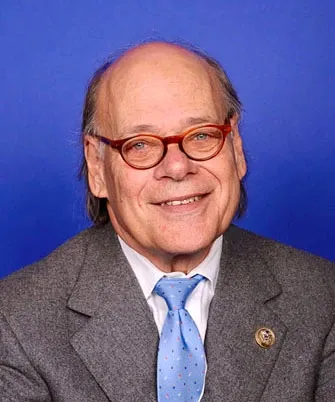
Politicians like Andrew Jackson