It is not until the prices of the necessaries of life become so dear that the laboring classes can not supply their wants out of their wages that the wages rise and gradually reach a justly proportioned rate to that of the products of…
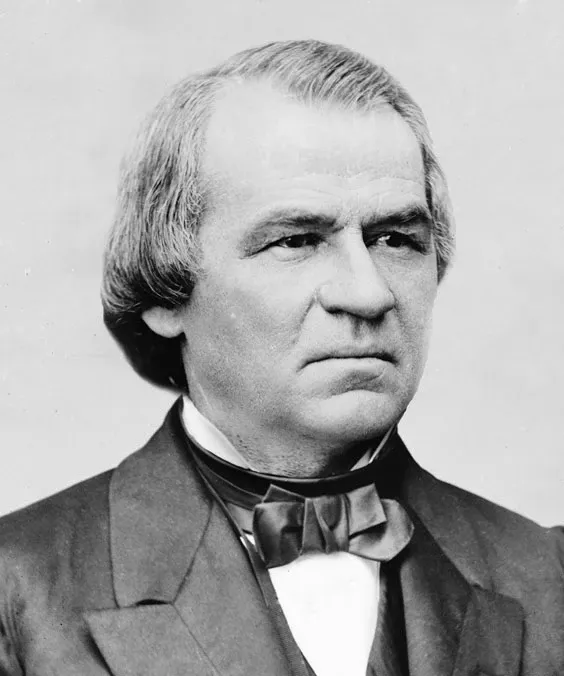
Andrew Jackson
The Public Record
Andrew Jackson was the seventh President of the United States, serving from 1829 to 1837. A member of the Democratic Party, he is known for his populist style of politics and for being a founding figure of the party. Jackson's presidency was marked by significant events such as the Indian Removal Act and the Nullification Crisis, which highlighted his strong stance on federal authority. Before his presidency, he served as a military governor of Florida and held positions in both the U.S. House of Representatives and the Senate.
gutenberg.org
Engaged from day to day in their useful toils, they do not perceive that although their wages are nominally the same, or even somewhat higher, they are greatly reduced in fact by the rapid increase of a spurious currency, which, as it…
The progress of an expansion, or rather a depreciation, of the currency by excessive bank issues is always attended by a loss to the laboring classes.
With us bank issues constitute such a currency, and must ever do so until they are made dependent on those just proportions of gold and silver as a circulating medium which experience has proved to be necessary not only in this but in all…
Variableness must ever be the characteristic of a currency of which the precious metals are not the chief ingredient, or which can be expanded or contracted without regard to the principles that regulate the value of those metals as a…
That the efforts of the fathers of our Government to guard against it by a constitutional provision were founded on an intimate knowledge of the subject has been frequently attested by the bitter experience of the country.
Such was the origin of a national bank currency, and such the beginning of those difficulties which now appear in the excessive issues of the banks incorporated by the various States.
A value was soon attached to the gold coins which made their exportation to foreign countries as a mercantile commodity more profitable than their retention and use at home as money.
On the establishment of a national bank it became the interest of its creditors that gold should be superseded by the paper of the bank as a general currency.
It is apparent from the whole context of the Constitution, as well as the history of the times which gave birth to it, that it was the purpose of the Convention to establish a currency consisting of the precious metals.
As already intimated, my views have undergone a change so far as to be convinced that no alteration of the Constitution in this respect is wise or expedient.
No such appeal has been taken, and in my opinion a distribution of the surplus revenue by Congress either to the States or the people is to be considered as among the prohibitions of the Constitution.
There would be no surplus to cramp and lessen the resources of individual wealth and enterprise, and the banks would be left to their ordinary means.
It is an infirmity of our nature to mingle our interests and prejudices with the operation of our reasoning powers, and attribute to the objects of our likes and dislikes qualities they do not possess and effects they can not produce.
The general interest is the interest of each, and my confidence is entire that to insure the adoption of such modifications of the tariff as the general interest requires it is only necessary that that interest should be understood.
I am persuaded that the advocates of these conflicting views do injustice to the American people and to their representatives.
Our political system would thus present the anomaly of a people stripped of the right to foster their own industry and to counteract the most selfish and destructive policy which might be adopted by foreign nations.
Rightly considered, the policy of the General Government toward the red man is not only liberal, but generous.
And is it supposed that the wandering savage has a stronger attachment to his home than the settled, civilized Christian?
Can it be cruel in this Government when, by events which it can not control, the Indian is made discontented in his ancient home to purchase his lands, to give him a new and extensive territory, to pay the expense of his removal, and…
It is rather a source of joy that our country affords scope where our young population may range unconstrained in body or in mind, developing the power and faculties of man in their highest perfection.
Doubtless it will be painful to leave the graves of their fathers; but what do they more than our ancestors did or than our children are now doing?
The waves of population and civilization are rolling to the westward, and we now propose to acquire the countries occupied by the red men of the South and West by a fair exchange, and, at the expense of the United States, to send them to a…
The tribes which occupied the countries now constituting the Eastern States were annihilated or have melted away to make room for the whites.
Philanthropy could not wish to see this continent restored to the condition in which it was found by our forefathers.
Politicians like Andrew Jackson