Hence when there are extravagant and wasteful appropriations there must be a corresponding increase of taxes, and the people, becoming awakened, will necessarily scrutinize the character of measures which thus increase their burdens.
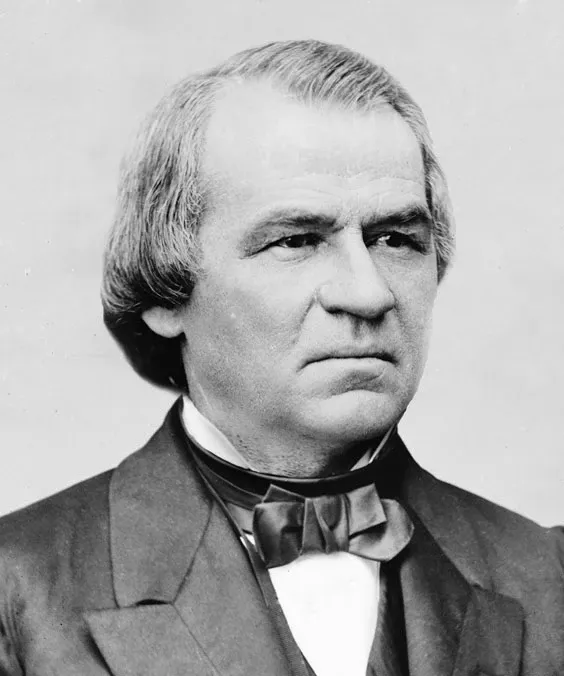
Andrew Jackson
The Public Record
Andrew Jackson was the seventh President of the United States, serving from 1829 to 1837. A member of the Democratic Party, he is known for his populist style of politics and for being a founding figure of the party. Jackson's presidency was marked by significant events such as the Indian Removal Act and the Nullification Crisis, which highlighted his strong stance on federal authority. Before his presidency, he served as a military governor of Florida and held positions in both the U.S. House of Representatives and the Senate.
gutenberg.org
All will admit that the simplicity and economy of the State governments mainly depend on the fact that money has to be supplied to support them by the same men, or their agents, who vote it away in appropriations.
But however this may be, the only safe rule for us in interpreting the powers granted to the Federal Government is to regard the absence of express authority to touch a subject so important and delicate as this as equivalent to a…
There is no such provision as would authorize Congress to collect together the property of the country, under the name of revenue, for the purpose of dividing it equally or unequally among the States or the people.
Were the Federal Government to exempt in express terms the imports, products, and manufactures of some portions of the country from all duties while it imposed heavy ones on others, the injustice could not be greater.
But what would be the value of such a uniform rule if the moneys raised by it could be immediately returned by a different one which will give to the people of some States much more and to those of others much less than their fair…
Argument can scarcely be necessary to show that a measure of this character ought not to receive further legislative encouragement.
The possession and use of the property out of which this surplus was created belonged to the people, but the Government has transferred its possession to incorporated banks, whose interest and effort it is to make large profits out of its…
To make the General Government the instrument of carrying this odious principle into effect would be at once to destroy the means of its usefulness and change the character designed for it by the framers of the Constitution.
It would be taking one man's property and giving it to another.
The shortest reflection must satisfy everyone that to require the people to pay taxes to the Government merely that they may be paid back again is sporting with the substantial interests of the country, and no system which produces such a…
Such a treasure would doubtless be employed at some time, as it has been in other countries, when opportunity tempted ambition.
To take from the people the right of bearing arms and put their weapons of defense in the hands of a standing army would be scarcely more dangerous to their liberties than to permit the Government to accumulate immense amounts of treasure…
To retain it in the Treasury unemployed in any way is impracticable; it is, besides, against the genius of our free institutions to lock up in vaults the treasure of the nation.
Under our present revenue system there is every probability that there will continue to be a surplus beyond the wants of the Government, and it has become our duty to decide whether such a result be consistent with the true objects of our…
The experience of other nations admonished us to hasten the extinguishment of the public debt; but it will be in vain that we have congratulated each other upon the disappearance of this evil if we do not guard against the equally great…
There are already those who, indifferent to principle themselves and prone to suspect the want of it in others, charge us with ambitious designs and insidious policy.
I can not avoid congratulating you, and my country particularly, on the success of the efforts made during my Administration by the Executive and Legislature, in conformity with the sincere, constant, and earnest desire of the people, to…
With no causes at home or abroad to lessen the confidence with which we look to the future for continuing proofs of the capacity of our free institutions to produce all the fruits of good government, the general condition of our affairs…
Addressing to you the last annual message I shall ever present to the Congress of the United States, it is a source of the most heartfelt satisfaction to be able to congratulate you on the high state of prosperity which our beloved country…
The result has shewn how safe is this reliance upon the patriotic temper and enlightened discernment of the people.
It will lighten the great tax which our paper system has so long collected from the earnings of labor, and do more to revive and perpetuate those habits of economy and simplicity which are so congenial to the character of republicans than…
The attainment of such a result will form an era in the history of our country which will be dwelt upon with delight by every true friend of its liberty and independence.
Severed from the Government as political engines, and not susceptible of dangerous extension and combination, the State banks will not be tempted, nor will they have the power, which we have seen exercised, to divert the public funds from…
It has been seen that without the agency of a great moneyed monopoly the revenue can be collected and conveniently and safely applied to all the purposes of the public expenditure.
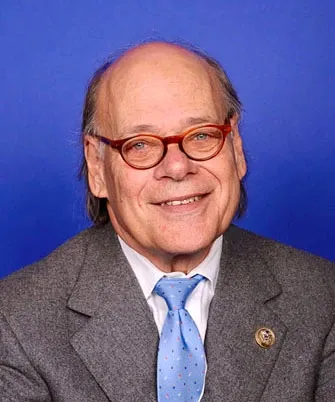
Politicians like Andrew Jackson