There are certain old truths which will be true as long as this world endures, and which no amount of progress can alter.
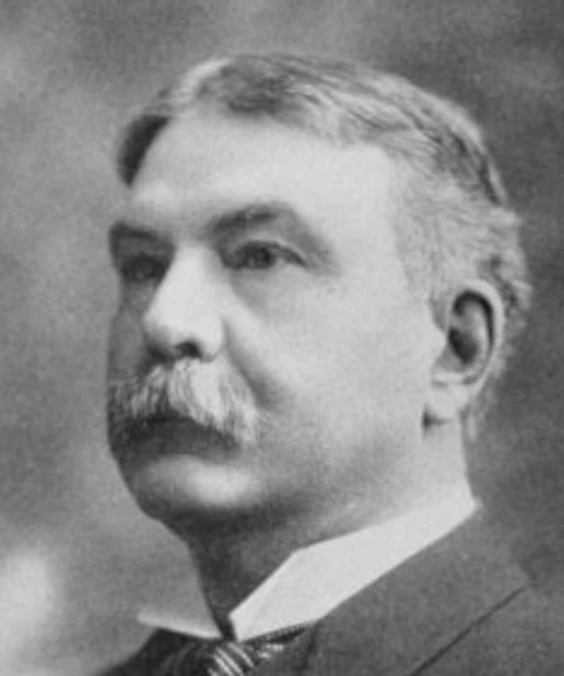
Teddy Roosevelt
The Public Record
Theodore Roosevelt was the 26th President of the United States, serving from 1901 to 1909. A member of the Republican Party, he was born on October 27, 1858, in New York. Roosevelt was a prominent leader of the Progressive Movement, advocating for domestic policies that included trust-busting, regulation of corporations, and conservation of natural resources. His administration is noted for significant reforms and the establishment of national parks and forests.
gutenberg.org
But far more important than the question of the occupation of our citizens is the question of how their family life is conducted.
In our modern industrial civilization there are many and grave dangers to counterbalance the splendors and the triumphs.
This is the spirit which lies behind this society, and all kindred societies; and we owe to this society all the help we can afford to give; for it is itself giving to our people a service beyond price, a service of love, a service which…
But the spirit necessary to meet the new dangers, the spirit necessary to ensure the triumph that we must and shall win, is the same now that it has always been.
Cities are built up to enormous size, and, of course, with the upbuilding of the cities comes the growth of the terrible problems which confront all of us who have to do with city life.
The gun changes, the ship changes; but the qualities needed in the man behind the gun, in the man who handles the ship, are just the same as they ever were.
But if the need ever comes for this Nation to call on its sons to face a foreign foe, the call will or will not be made in vain just exactly according to whether we do or do not still retain the spirit which drove Farragut and the men…
The qualities that count most in man and woman now are the qualities that counted most two thousand years ago; and as a Nation we shall achieve success or merit failure accordingly as we do or do not display those qualities.
But after all, in glorying over and wondering at this extraordinary development, I think that we sometimes forget that compared to the deeper things it is indeed only superficial in its effect.
If we make it the only ideal before this Nation, if we permit the people of this Republic to get before their minds the view that material well-being carried to an ever higher degree is the one and only thing to be striven for, we are…
It is not a good thing, it is a bad thing, if we treat it as the be-all and end-all of our life.
One of the best things done by this society, and by kindred religious and benevolent societies, is supplying in our American life of to-day the proper ideals.
But on that foundation he must build as a superstructure the spiritual life.
Therefore, it means much, not merely to the immigrants, but to every good American, that there should be at Ellis Island the colporteurs of this society, and the representatives of other religious and philanthropic societies to try to care…
We can not keep that level down for a part and not have it sink more or less for the whole.
If we do not see that the immigrant and the children of the immigrant are raised up, most assuredly the result will be that our own children and children’s children are pulled down.
If we do not take care of them, if we do not try to uplift them, then as sure as fate our own children will pay the penalty.
He is exposed to innumerable temptations, innumerable petty oppressions, on almost every hand; and unless some one is on hand to help him he literally has no idea where to turn.
The immigrant comes here almost unprotected; he does not, as a rule, know our language; he is wholly unfamiliar with our institutions, our customs, our habits of life and ways of thought; and there are, I am sorry to say, great numbers of…
But unless people have had some experience with the dangers and difficulties surrounding the newly arrived immigrant they can hardly realize how great they are.
We in our turn have an assured confidence that we shall be able to leave this heritage unwasted and enlarged to our children and our children’s children.
We know that no people needs such high traits of character as that people which seeks to govern its affairs aright through the freely expressed will of the freemen who compose it.
Yet, after all, though the problems are new, though the tasks set before us differ from the tasks set before our fathers who founded and preserved this Republic, the spirit in which these tasks must be undertaken and these problems faced…
If we fail, the cause of free self-government throughout the world will rock to its foundations; and therefore our responsibility is heavy, to ourselves, to the world as it is to-day, and to the generations yet unborn.
Politicians like Teddy Roosevelt