Upon the success of our experiment much depends; not only as regards our own welfare, but as regards the welfare of mankind.
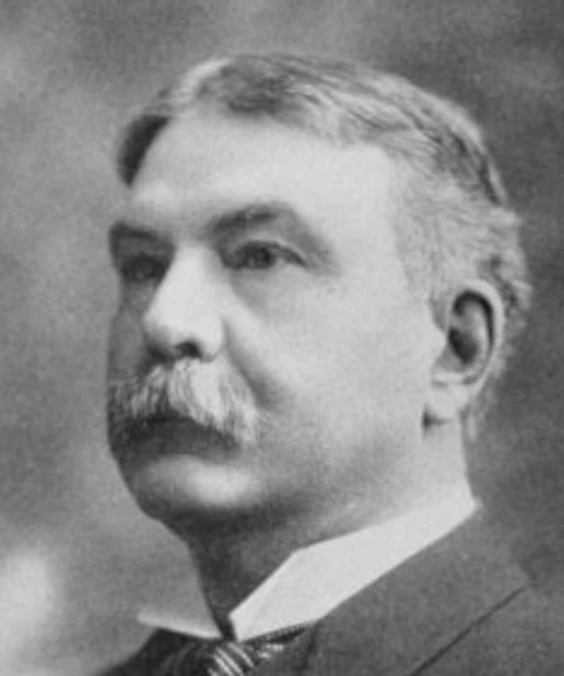
Teddy Roosevelt
The Public Record
Theodore Roosevelt was the 26th President of the United States, serving from 1901 to 1909. A member of the Republican Party, he was born on October 27, 1858, in New York. Roosevelt was a prominent leader of the Progressive Movement, advocating for domestic policies that included trust-busting, regulation of corporations, and conservation of natural resources. His administration is noted for significant reforms and the establishment of national parks and forests.
gutenberg.org
The conditions which have told for our marvelous material well-being, which have developed to a very high degree our energy, self-reliance, and individual initiative, have also brought the care and anxiety inseparable from the accumulation…
Never before have men tried so vast and formidable an experiment as that of administering the affairs of a continent under the forms of a democratic republic.
Modern life is both complex and intense, and the tremendous changes wrought by the extraordinary industrial development of the last half century are felt in every fibre of our social and political being.
Our relations with the other Powers of the world are important; but still more important are our relations among ourselves.
We wish it because we think it is right and not because we are afraid.
We wish peace; but we wish the peace of justice, the peace of righteousness.
While ever careful to refrain from wronging others, we must be no less insistent that we are not wronged ourselves.
But justice and generosity in a nation, as in an individual, count most when shown not by the weak but by the strong.
We must show not only in our words but in our deeds that we are earnestly desirous of securing their goodwill by acting toward them in a spirit of just and generous recognition of all their rights.
We have become a great Nation, forced by the fact of its greatness into relations with the other nations of the earth; and we must behave as beseems a people with such responsibilities.
Much has been given to us, and much will rightfully be expected from us.
We have not been obliged to fight for our existence against any alien race; and yet our life has called for the vigor and effort without which the manlier and hardier virtues wither away.
We are the heirs of the ages, and yet we have had to pay few of the penalties which in old countries are exacted by the dead hand of a bygone civilization.
To us as a people it has been granted to lay the foundations of our national life in a new continent.
The educated man is entitled to no special privilege, save the inestimable privilege of trying to show that his education enables him to take the lead in striving to guide his fellows aright in the difficult task which is set to us of the…
It is but occasionally that a college graduate can do much outright for his alma mater; he can best repay her by living a life that will reflect credit upon her, by so carrying himself as a citizen that men shall see that the years spent…
That college graduate is but a poor creature who does not feel when he has left college that he has received something for which he owes a return.
To merely political issues have succeeded those of grave social and economic importance, the solution of which demands the best efforts of the best men.
The higher education, such as is provided by the University of Pennsylvania and kindred bodies, not only confers great benefits to those able to take advantage of it, but entails upon them corresponding duties.
There is nothing dearer to our hearts than our public school system, by which free primary education is provided for every one within our borders.
It is a source of just pride to every American that our people have so consistently acted in accordance with Washington’s principle of promoting institutions for the diffusion of knowledge.
School education can never supplant or take the place of self-education, still less can it in any way take the place of those rugged and manly qualities which we group together under the name of character; but it can be of enormous use in…
No nation can permanently retain free government unless it can retain a high average of citizenship; and there can be no such high average of citizenship without a high average of education, using the word in its broadest and truest sense…
Washington was far too much of a patriot, had far too much love for his fellow-citizens, to try to teach them that they could govern themselves unless they could develop a sound and enlightened public opinion.
Politicians like Teddy Roosevelt