In proportion as the structure of a government gives force to public opinion, it is essential that public opinion should be enlightened.” Education may not make a man a good citizen, but most certainly ignorance tends to prevent his being…
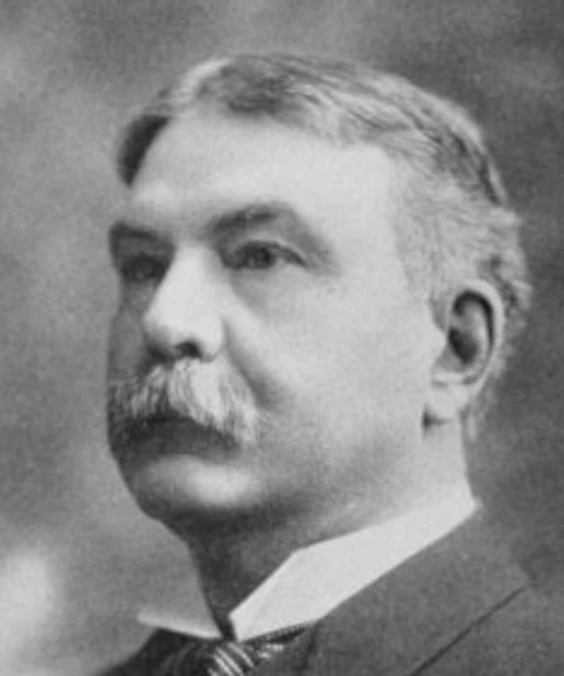
Teddy Roosevelt
The Public Record
Theodore Roosevelt was the 26th President of the United States, serving from 1901 to 1909. A member of the Republican Party, he was born on October 27, 1858, in New York. Roosevelt was a prominent leader of the Progressive Movement, advocating for domestic policies that included trust-busting, regulation of corporations, and conservation of natural resources. His administration is noted for significant reforms and the establishment of national parks and forests.
gutenberg.org
Observe that Washington speaks both of justice and benevolence, and that he puts justice first.
Again Washington said: “Give to mankind the example of a people always guided by an exalted justice and benevolence.” This feeling can be shown alike by our dealings within and without our own borders.
Old Hickory was a patriot through and through, and there was not an ounce of timidity in his nature, and of course he felt only indignant contempt for a policy which purchased an ignoble peace by cowardice instead of exacting a just peace…
If we let it run down it is as certain as the day that sooner or later we shall have to choose between a probably disastrous foreign war or a peace kept on terms that imply national humiliation.
If it is strong enough I believe it will minimize the chance of our being drawn into foreign war.
Our possession of the Philippines, our interest in the trade of the Orient, our building the Isthmian Canal, our insistence upon the Monroe Doctrine, all demand that our Navy shall be of adequate size and for its size of unsurpassed…
So, in the world at large, the nation which is of use in the progress of mankind is that nation which combines strength of character, force of character, and insistence upon its own rights, with a full acknowledgment of its own duties…
Yet, on the other hand, a nation prepared for war is a menace to mankind unless the national purpose is to treat other nations with good faith and justice.
It is not merely an idle dream, but a most mischievous dream, to believe that mere refraining from wrongdoing will ensure us against being wronged.
Among Washington’s maxims which he bequeathed to his countrymen were the two following: “Observe good faith and justice toward all nations,” and “To be prepared for war is the most effective means to promote peace.” These two principles…
If this is done a general acceptance of the Monroe Doctrine will in the end surely follow; and this will mean an increase of the sphere in which peaceful measures for the settlement of international difficulties gradually displace those of…
It is in the highest degree necessary that we should prove by our action that the world may trust in our good faith and may understand that this international duty will be performed by us within our own sphere, in the interest not merely…
We are bound to show that we perform this duty in good faith and without any intention of aggrandizing ourselves at the expense of our weaker neighbors or of conducting ourselves otherwise than so as to benefit both these weaker neighbors…
We on our part are simply performing in peaceful manner, not only with the cordial acquiescence, but in accordance with the earnest request of the Government concerned, part of that international duty which is necessarily involved in the…
But no such plan at present exists; and under existing circumstances, when the condition of affairs becomes such as it has become in Santo Domingo, either we must submit to the likelihood of infringement of the Monroe Doctrine or we must…
That most wise measure of international statesmanship, the Platt amendment, has provided a method for preventing such difficulties from arising in the new Republic of Cuba.
But it has now become evident that decided action of some kind can not be much longer delayed.
The ordinary resources of diplomacy and international arbitration are absolutely impotent to deal wisely and effectively with the situation in the Dominican Republic, which can only be met by organizing its finances on a sound basis and by…
The chronic disorders prevailing in Santo Domingo have, moreover, become exceedingly dangerous to the interests of Americans holding property in that country.
As the result of chronic disorders attended with a constant increase of debt, the state of things in Santo Domingo has become hopeless, unless the United States or some other strong Government shall interpose to bring order out of the…
It can not with propriety say that it will protect its own citizens and interests, on the one hand, and yet on the other hand refuse to allow other Governments to protect their citizens and interests.
The United States Government is embarrassed in its efforts to foster American enterprise and the growth of our commerce through the cultivation of friendly relations with Santo Domingo, by the irritating effects on those relations, and the…
Thus the attempted solution of the complex problem by the ordinary methods of diplomacy reacts injuriously upon the United States Government itself, and in a measure paralyzes the action of the Executive in the direction of a sound and…
It can not be too often and too emphatically asserted that the United States has not the slightest desire for territorial aggrandizement at the expense of any of its southern neighbors, and will not treat the Monroe Doctrine as an excuse…
Politicians like Teddy Roosevelt