I want to have the battleships as a provocative for arbitration so far as the other man is concerned.
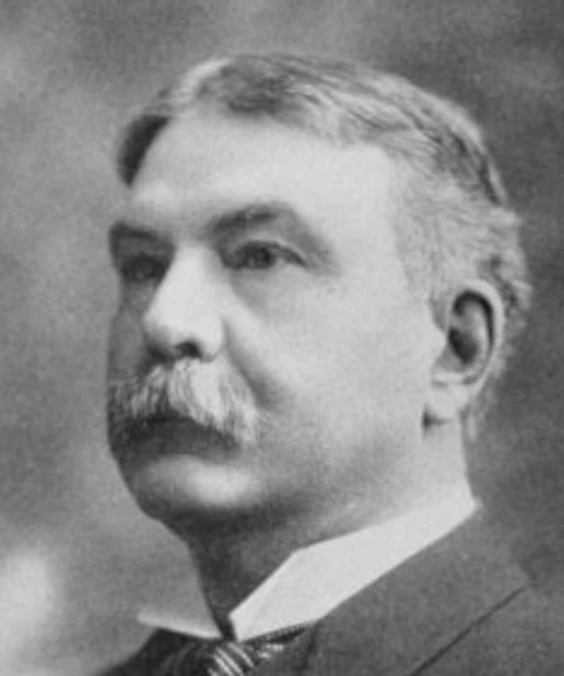
Teddy Roosevelt
The Public Record
Theodore Roosevelt was the 26th President of the United States, serving from 1901 to 1909. A member of the Republican Party, he was born on October 27, 1858, in New York. Roosevelt was a prominent leader of the Progressive Movement, advocating for domestic policies that included trust-busting, regulation of corporations, and conservation of natural resources. His administration is noted for significant reforms and the establishment of national parks and forests.
gutenberg.org
Do not hit at all if you can help it, but never hit soft.
I take immense interest in the Navy, because the Navy is the arm upon which this country must most depend for holding its own and upholding its honor so far as our international relations are concerned.
We rank as such, we occupy our present position and we are a power potent for peace because we deliberately faced the fact that we did not have a Navy worth anything in 1882.
We were hampered in that struggle by the ignorant and unspeakably foolish belief that somehow or other America was so big and smart a Nation that we did not need a Navy, and could improvise one out of hand if the need ever arose.
Now, I ask that societies like this teach the truth; teach the truth that helps, even if it hurts a little in the helping.
We won these victories because we had the fleet; and if the fleet had been bigger we would not have had to fight the war at all.
Our pride in what was done in the past should not permit us to be led away into blindness by failure to appreciate whatever was wrong in the past.
The thing to do is to remember what Emerson says, that in the long run an unpleasant truth is a very much safer companion than even the pleasantest falsehood.
I do not think that a diet of all praise is good for any one, and it is no better for us as a body politic than for any one of us individually.
The way to pay effective homage to the men of the mighty past is to live decently and efficiently in the present.
It is a good thing, pre-eminently a good thing, for this Nation never to lose sight of what has been done in the past by those who founded and those who preserved the Republic.
He looks beyond the accidents of occupation or social condition and hails each of his fellow-citizens as his brother, asking nothing save that each shall treat the other on his worth as a man, and that they shall all join together to do…
Let us keep our pride in the stocks from which we have sprung, but let us show that pride, not by holding aloof from one another, least of all by preserving the Old World jealousies and bitternesses, but by joining in a spirit of generous…
But, after all, in speaking to you, or, to any other body of my fellow-citizens, no matter from what Old World country they themselves or their forefathers may have come, the great thing is to remember that we are all of us Americans.
And right here let me make a special plea to you, to this society and kindred societies: We Americans take a just pride in the development of our great universities, and more and more we are seeking to provide for creative and original…
In every walk in life in this country men of this blood have stood and now stand pre-eminent, not only as soldiers but as statesmen, on the bench, at the bar, and in business.
But the men of Irish birth or of Irish descent have been far more than soldiers—I will not say more than, but much in addition to, soldiers.
There has never been a time in this country when it has not been true of the average American of Irish birth or parentage, that he came up to this standard, able to work and able to fight at need.
If the average man can not work and fight, the race is in a poor way; and it will not have, because it will not deserve, the respect of any one.
And I want to say here, as I have said and shall say again elsewhere, as I shall say again and again, that we must never forget that no amount of material wealth, no amount of intellect, no artistic or scientific growth can avail anything…
The people who have come to this country from Ireland have contributed to the stock of our common citizenship qualities which are essential to the welfare of every great nation.
Bucky O’Neill was killed at Santiago, showing the same absolute indifference to life, the same courage, the same gallant readiness to sacrifice everything on the altar of an ideal, that his father had shown when he died in Meagher’s…
And in this second great crisis the part played by the men of Irish birth or parentage was no less striking than it had been in the Revolution.
By the time the Revolution had broken out, the men of different race strains had begun to fuse together, and the Irish among those strains furnished their full share of leadership in the struggle.
Politicians like Teddy Roosevelt