Make it a matter of pride to do your utmost, without regard to the inadequacy of your instruments.
Teddy Roosevelt
The Public Record
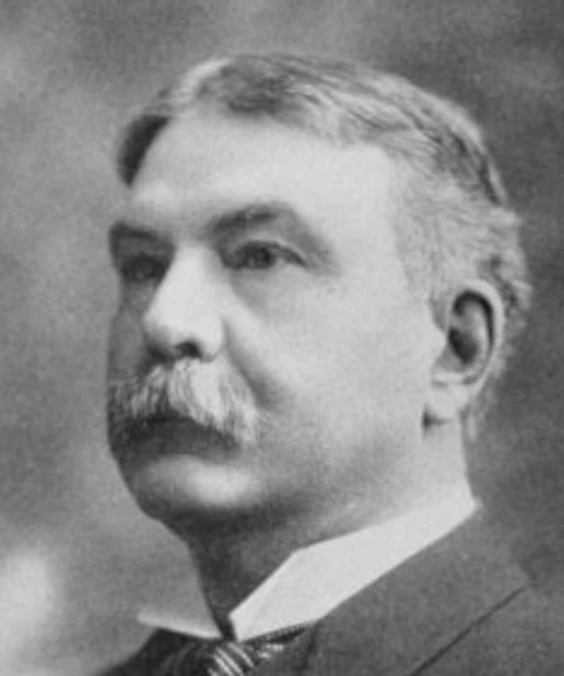
Theodore Roosevelt was the 26th President of the United States, serving from 1901 to 1909. A member of the Republican Party, he was born on October 27, 1858, in New York. Roosevelt was a prominent leader of the Progressive Movement, advocating for domestic policies that included trust-busting, regulation of corporations, and conservation of natural resources. His administration is noted for significant reforms and the establishment of national parks and forests.
gutenberg.org
Make up your mind that while you will do all you can to get the best material together in advance, you will not put forward the lack of that material as an excuse for not doing the best work possible with imperfect tools.
If you sit down and do nothing but say you could have done excellently if only you had had the right implements to work with, you will show your unfitness for your position.
I want to impress, with all the strength that in me lies, upon every medical man in either the Army or the Navy, to remember always that in any time of crisis the chances are that you will have to work with imperfect implements.
If we fail in it then it is our responsibility, not yours.
Let critics remember not to blame the people in power when such a breakdown comes, but to blame themselves, the people of the United States, because they have not had the forethought to take the steps in advance which would prevent such…
Only adequate preparation in advance will obviate the trouble which otherwise is certain to come if we have a war.
I want you now, as you graduate, to feel that on your shoulders rests a great weight of responsibility; that your position is one of high honor, and that it is impossible to hold a position of high honor and not hold it under penalty of…
The morale of the entire ship’s company, of the entire body of men with which you are to be thrown, will be sensibly affected by the way in which each of you does his duty.
Each one of you here has resting upon him not only a great responsibility for the care of the body of the officer or enlisted man who will be under his supervision, but a care—which ought not to be too consciously shown, but which should…
The effect that the doctor has upon the body of the patient is in very many cases no greater than the effect that he has upon the patient’s mind.
Find out the facts; and then with your whole heart set to work to preserve and make better the good and to cut out and do away with the evil.
State the truth; do not hysterically exaggerate what is good; do not hysterically exaggerate what is evil.
Try to find out what the facts really are, try to find out what the good qualities, what the defects; what the good side is in any portion of our Government, what the defect is in any portion of our Government.
He wants to find out the facts; for to take either too dark or too rosy a view may be fatal to the patient.
It is only by making a correct diagnosis that we can find out how to treat any given disease.
We ought to avoid ignorant praise as much as ignorant blame.
Study what has been done in the past by the men who have made errors no less than by the men who have won triumphs, and profit alike by the study of the triumphs and by the study of the errors.
This is a people that will not abandon the Monroe Doctrine, will not stop building the Isthmian Canal, will not surrender its hold upon the islands of the sea.
I speak in the interest of peace when I ask for an efficient Army and Navy.
We can never achieve that ideal unless we are willing as a Nation to spend the money so that the Army shall have the chance of being handled in time of peace in great masses by the men who will handle it in masses in time of war.
Surely we owe it to this Nation that we should have that Army of fifty thousand men able to manœuvre as an Army of fifty thousand men and able to render as good service as such as any army can render.
Because I believe that I think it not merely an iniquity but a crime not to give the officers and the enlisted men that equal chance.
I firmly believe that given an equal chance, the officers and enlisted men of the American Army offer material quite as good as any to be found in any army of the world.
It is advisable, it is necessary, that the Army we have should be efficient as a whole as well as efficient in its individual parts.
Politicians like Teddy Roosevelt