We need and must and shall have the very best regular army of its size that is to be found anywhere.
Teddy Roosevelt
The Public Record
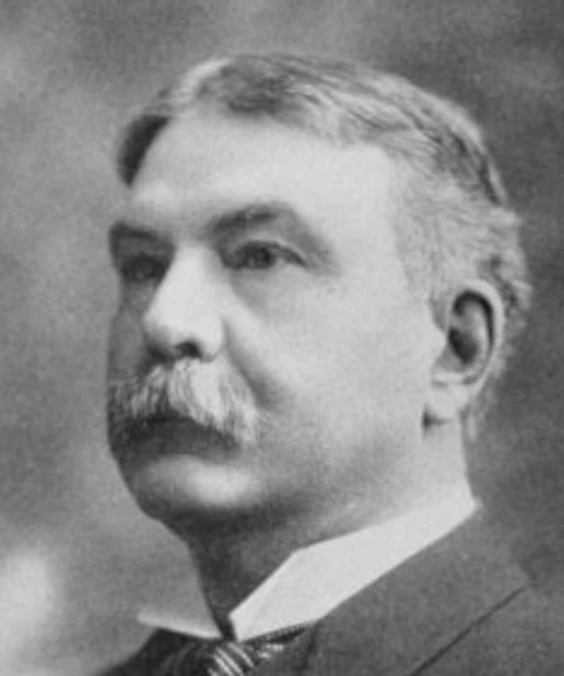
Theodore Roosevelt was the 26th President of the United States, serving from 1901 to 1909. A member of the Republican Party, he was born on October 27, 1858, in New York. Roosevelt was a prominent leader of the Progressive Movement, advocating for domestic policies that included trust-busting, regulation of corporations, and conservation of natural resources. His administration is noted for significant reforms and the establishment of national parks and forests.
gutenberg.org
There must be a certain trust placed in the common-sense and common honesty of those who are to enforce the law.
As every one knows, the power of taxation, which must of course be given to the representatives of the people, is the power of death, for it is possible to kill any industry by excessive taxation.
The proper exercise of that power is conditioned upon the securing of proper legislation, which will enable the representatives of the public to see to it that any unjust or oppressive or discriminating rate is altered, so as to be a just…
Let us be moderate in our statements; but let us make our deeds bear out absolutely our words.
My experience has been that the man who talks over-loudly of his hostility to corporate wealth can not be trusted even to antagonize corporate wealth when it is wrong.
Most emphatically we can not as good Americans bear hostility to any rich man as such any more than to any poor man as such.
Fundamentally our attitude in our foreign affairs and in reference to foreign nations must in the long run, if we are to be successful as a people, be based upon certain common-sense rules of conduct, the identical rules upon which every…
The things that concern us all as good citizens are infinitely larger than the matters concerning which we are divided one from the other along party lines.
Speaker, and gentlemen, that the longer our experience in public office is, the more we realize that at least ninety-five per cent, if not more, in importance, of the work done by any public officer who is worth his salt has nothing…
If the railroad wants more than it is entitled to have, then he must decide against it; if the public ignorantly demands that the railroad shall do more than it can with propriety do, then just as fearlessly he must antagonize public…
I shall expect him to do the square thing, both by the railroad and by the public.
I wish it understood definitely that if I find any subordinate of mine doing an injustice against a railroad, or doing an injustice for it, I will cinch him just as quickly in one case as in the other.
I should not do that for one moment if I believed that there would be injustice done to the railroads by the Interstate Commerce Commission.
In the same way when you come to internal affairs; I have advocated giving the Interstate Commerce Commission increased power; power that will enable it to work effectively and quickly.
If we had not done that and were not doing it, I for one would not have recommended going into the Panama business, and I would not advocate the Monroe Doctrine, for I do not intend to go into anything and make a bluff and then have the…
Always speak courteously; be dead sure you are right before going into trouble; being in, see it through.
One would rather be wronged than insulted; and this is just as true internationally as among individuals.
Do not speak impolitely, disrespectfully of other nations.
In foreign policies, for instance, I have this strong belief, which I am sure will appeal to every cow-man present—never draw, unless you mean to shoot; and that implies, of course, that when you draw it shall not be an empty gun.
In other words, it is not in the power of any human being to devise legislation or administration by which each man shall achieve success and have happiness; it not only is not in the power of any man to do that, but if any man says that…
If the cards do not come to any man, or if they do come, and he has not got the power to play them, that is his affair.
When I say I believe in a square deal I do not mean, and nobody who speaks the truth can mean, that he believes it possible to give every man the best hand.
Especially as regards what was done in Panama, I want to say that while I was most anxious to deserve the approval of my countrymen, and while I was very glad to be elected President, I would without one moment’s hesitation have given up…
My own view has been that if I must choose between taking risks by not doing a thing or by doing it, I will take the risks of doing it.
Politicians like Teddy Roosevelt