Of course, you want to give your children all the love possible; but it is not right to mistake folly for affection.
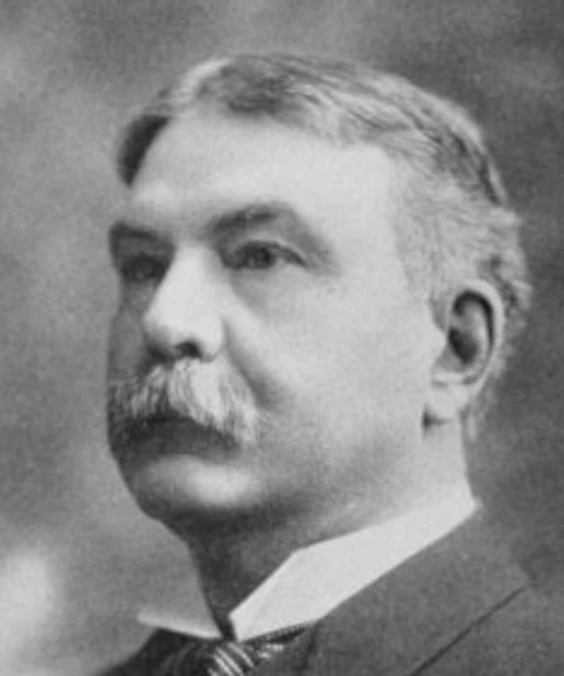
Teddy Roosevelt
The Public Record
Theodore Roosevelt was the 26th President of the United States, serving from 1901 to 1909. A member of the Republican Party, he was born on October 27, 1858, in New York. Roosevelt was a prominent leader of the Progressive Movement, advocating for domestic policies that included trust-busting, regulation of corporations, and conservation of natural resources. His administration is noted for significant reforms and the establishment of national parks and forests.
gutenberg.org
Too often you see the man, and I am sorry to say the woman, who says, “I have had to work hard; my sons and my daughters shall have an easy time.” Such a man or woman is preparing ruin for the children about whom this is said.
I think that all of us know people who, because they have worked hard and triumphed, feel that somehow or other they will spare their children the acquisition of the very qualities which have made the parents triumph.
A thing that is distressing to me to see is when sometimes the man and woman who have done well in life show a curious inability to train their own children in the way that has resulted successfully for themselves.
So in the State itself, important though it is to provide for the industrial welfare of the commonwealth, the thing that is most important is to take care of the really vital crop—the crop of citizens.
So you must train your children up so that in addition to having what counts for material prosperity in a State, you must have the things that tell most for greatness, the things that make for the soul of the Nation.
We of to-day, we who, if a war should come, will have to fight under new conditions, with new arms, will win (as assuredly I believe we shall win) only because our men still have in them the spirit that made their forefathers do well in…
They did that because they had in them the spirit which from time immemorial has made the soldiers of whom the world is proud, the spirit for the lack of which no other quality in man or in nation will atone.
The men of the Civil War, alike the men who wore the gray and the men who wore the blue, made a record which remains forever a heritage of honor and of glory for all this people.
Tactics change, weapons change, but the soul that drives a man forward to victory does not change as the ages go by.
But the weapon does not in any shape or way serve as a substitute for the spirit of the soldier.
If the other man is a good man too, you want a mighty good weapon, or you will get beaten.
You may take the finest modern weapon, put it in the hands of a weakling or a coward, and a good man will beat him with a club.
We need arms and equipment, but the best rifle ever made does not make a soldier if it has not got the right man behind it.
The material counts for nothing if you do not build upon it the spiritual, if you do not build upon it the things of the soul, of the mind.
The only way in which you can ever really help any man is to help him to help himself.
You can help him up; but once up he has got to walk himself.
Every man of us at times needs a helping hand stretched out to him; and shame to any man who will not stretch out that helping hand to his brother if that brother needs it.
If he is a poor man and does his duty, help him, stand by him.
But don’t cinch him because he is a rich man.
If the rich man does not his duty, cinch him, and I will help you just as far as I can.
Remember always that you listen at your peril to any man who would seek to inflame you against your fellow-citizen because he is better off.
In the same way, if a man is a decent citizen, he is a decent citizen, whether rich or poor.
We have a right to ask that our neighbor do his duty toward God and man; but we have no business to dictate to him how he shall worship his Maker, and no business to discriminate for or against him because of the way in which he does it.
Now, besides applauding that sentiment, let us live up to it.
Politicians like Teddy Roosevelt