You can not give any needed power to the representatives of the people without exposing yourselves to the danger of that power being abused.
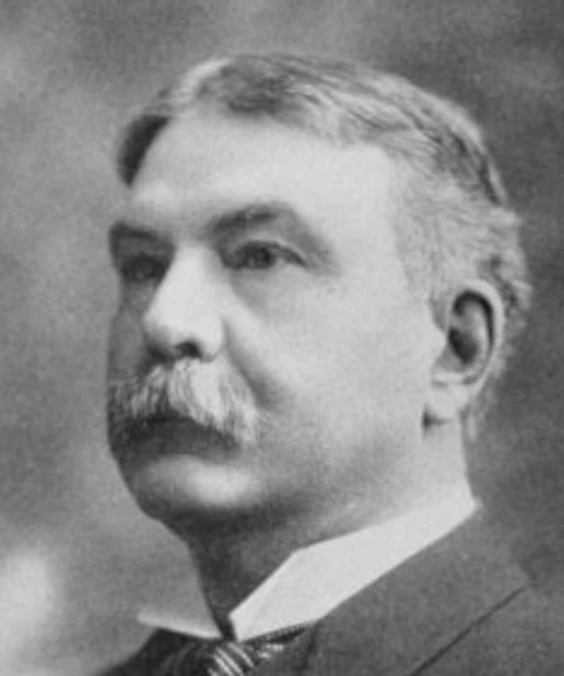
Teddy Roosevelt
The Public Record
Theodore Roosevelt was the 26th President of the United States, serving from 1901 to 1909. A member of the Republican Party, he was born on October 27, 1858, in New York. Roosevelt was a prominent leader of the Progressive Movement, advocating for domestic policies that included trust-busting, regulation of corporations, and conservation of natural resources. His administration is noted for significant reforms and the establishment of national parks and forests.
gutenberg.org
The power of taxation is liable to grave abuse, and yet it must exist in the appropriate legislative body.
Not only should this power over rates go in, but in my belief we should at the same time deal with the private car question, which, as regards certain industries, offers an even greater menace than is offered by the present system of…
I do not ascribe it to any moral culpability of the men engaged in handling these great corporations that they can not see some of the bad effects of certain things they do.
We must remember always that most of the men who are responsible for the management of these great corporations, and who have profited thereby, have made their fortunes not as incidental to damaging, but to benefiting the community as a…
If I have the appointment of any of those men, or their retention, they will give a square deal all around or else their shrift will be short.
The arrogance and the envy are not two different qualities; they are the same quality shown by men under different circumstances.
A spirit of envy on the part of those less well off against the better off is as bad as and no worse than a spirit of arrogant disregard for the rights of the man of small means on the part of the man of large means.
Whether the man owns the biggest railroad or the greatest outside corporation in the land, or whether he makes each day’s bread by the sweat of that day’s toil, he is entitled to justice and fair dealing, to no more and to no less.
We can not afford in any shape or way in this country to encourage a feeling which would do injustice to a man of property, any more than to submit to injustice from a man of property.
You must be as jealous to do justice to the railroads as to exact justice from them.
Now the second and even more important matter: When you give the Nation that power, remember that harm and not good will come unless you give it with the firm determination not only to get justice for yourselves, but to do justice to…
A measure of good will come, some good will be done, some injustice will have been prevented; but we shall be a long way from the millennium.
When such is the case, in my judgment it is absolutely necessary that the Nation (for the separate States can not possibly do it) should assume a supervisory and regulatory function over the great corporations which practically control the…
The first step and to my mind the most important step in this general policy is to give the Nation in effective form this power over the great transportation corporations of this country.
I speak of the policy of extending the powers of the Interstate Commerce Commission, of giving them the power to fix rates and to have the rates that they fix go into effect practically at once.
There is just one safe motto for Americans to act on; that is, the motto of all men up; not some men down.
So far from its being a hurt to any one section to see another section prosper, we can on the contrary count it as certain that if a part of this country prospers much the rest of the country will as a whole feel some good effects from the…
There must in the community as in the individual be first as a basis the material prosperity; but woe to the community, woe to the individual, that accepts such material prosperity as the be-all and the end-all of its life.
We must have a basis of material prosperity before any community, whether State, municipality, or nation, can develop itself, can rise in any degree.
Dishonesty, especially if accompanied by that unpleasant type of ability without conscientiousness which some people deify under the name of “smartness,” is a curse and a disgrace to the individual and to the community.
The qualities that make a good citizen are those that the humblest man or woman, girl or boy, can have; but they are the qualities upon which the foundations of the State rest.
If he surrenders himself to idleness and ignorance, to mean envy and mean hate; if he is not thrifty, industrious, energetic and intelligent; above all, if his moral fibre weakens—then the Republic will be in a bad way.
The man who carries the hod or the axe or the coupling-pin; the man who holds the plow or the hammer; the average man who does the average work of the Nation, is the man upon whom our whole political and social fabric rests.
If that man had not had the right stuff in him not all the generalship of the greatest leaders would have availed to win victory.
Politicians like Teddy Roosevelt