Every time a mob congregates, every act of violence performed by either a union man or a sympathizer, it reacts to our detriment.
Teddy Roosevelt
The Public Record
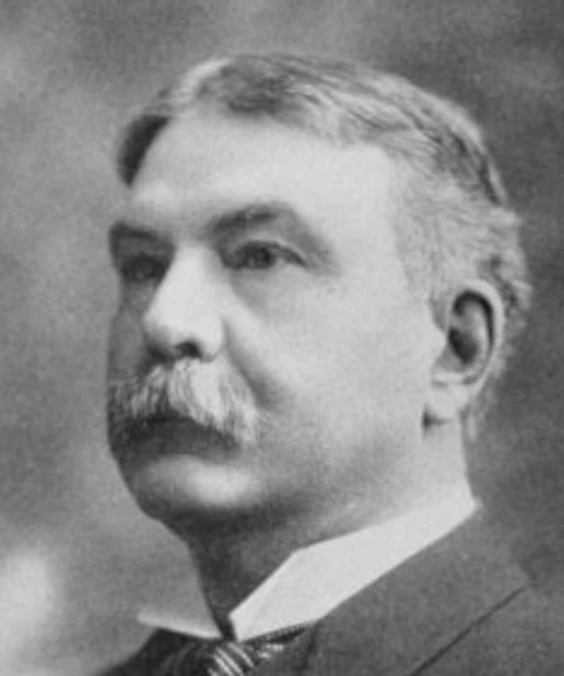
Theodore Roosevelt was the 26th President of the United States, serving from 1901 to 1909. A member of the Republican Party, he was born on October 27, 1858, in New York. Roosevelt was a prominent leader of the Progressive Movement, advocating for domestic policies that included trust-busting, regulation of corporations, and conservation of natural resources. His administration is noted for significant reforms and the establishment of national parks and forests.
gutenberg.org
But if ever the need arises, back of the city stands the State, and back of the State stands the Nation.
But I believe that the union, like the individual, must be held to a strict accountability to the power of the law.
They are indispensable instruments of our modern industrialism; but I believe that they should be so supervised and regulated that they shall act for the interest of the community as a whole.
No true patriot will fail to do everything in his power to prevent the growth of any such spirit in this country.
In either case, just as soon as the republic became one in which one class substituted loyalty to that class for loyalty to the republic, the end of the republic was at hand.
It meant disaster and ultimately the downfall of the republic, and it mattered not one whit which class became dominant; it mattered not one whit whether the poor plundered the rich or the rich exploited the poor.
Sometimes in the past the republic became a republic in which one class grew to dominate over another class, so that for loyalty to the republic was substituted loyalty to a class.
The greatest and most dangerous rock in the course of any republic is the rock of class hatred.
In other words, I shall strive to see that that branch of the Government with its increased power is administered as every branch of the Government ought to be administered—that is, in a spirit of striving to do exact justice to the men of…
If the measure which I advocate is enacted into law, a good many people will expect that it will bring the millennium considerably nearer than will prove to be the case.
False hopes are always raised by any measure of reform, because there are always people who expect the impossible.
If the power is granted me to create such a board, such a commission, or to continue in power, if I so desire, a commission or board with increased powers, I shall strive to appoint and retain men who will do exactly the same justice to…
The fact that it is possible that the power may be abused is not, and can not be, an argument against placing it where we shall have a right to expect that it will be used fairly toward all.
It must exist; it must be lodged in some body which is to give expression to the needs of the people as a whole.
The power must be lodged in the representatives of the people.
It is perfectly possible for the body that has the power of taxation intrusted to it to use it viciously and harmfully against certain interests or certain classes.
Any power strong enough, any power which could be granted sufficiently great to be efficient, would be sufficiently great to be harmful if abused.
In other words, I am well aware that to give this power means the possibility that the power may be abused.
The courts will retain, and should retain, no matter what the Legislature does, the power to interfere and upset any action that is confiscatory in its nature.
We can not afford to do damage to those men or to those corporations, because in the first place we can not afford to do injustice to any man, rich or poor; in the next place, because to do such damage to them would mean widespread damage…
As a rule benefit and not harm has come from their efforts, and in making fortunes for themselves they have done good to all of us.
We therefore have for the first time in history a highway for the commerce of all the people under the control of a private individual or private corporation.
We now have the great highways of commerce of an entirely different kind.
Under such circumstances the fathers and founders of this Republic could not foresee, and therefore, doubly, could not provide for, the conditions of the present day.
Politicians like Teddy Roosevelt