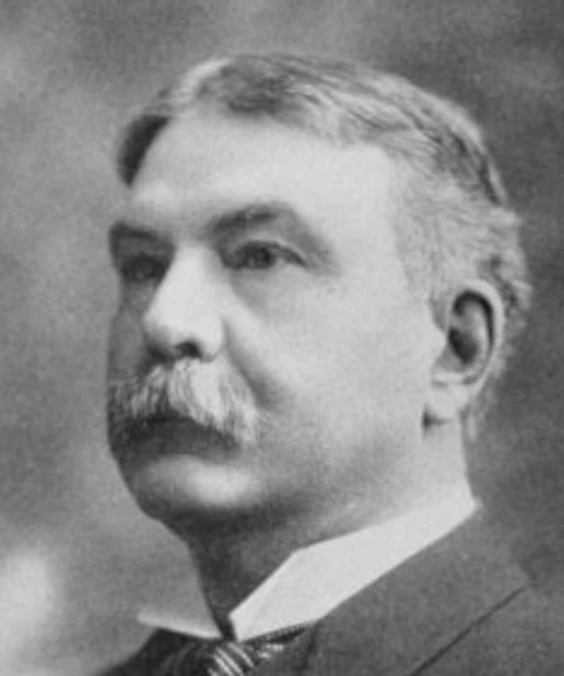
We have been moving in untried paths, but our steps have been guided by honor and duty.
Teddy Roosevelt
The Public Record
Theodore Roosevelt was the 26th President of the United States, serving from 1901 to 1909. A member of the Republican Party, he was born on October 27, 1858, in New York. Roosevelt was a prominent leader of the Progressive Movement, advocating for domestic policies that included trust-busting, regulation of corporations, and conservation of natural resources. His administration is noted for significant reforms and the establishment of national parks and forests.
gutenberg.org
To retrace our steps would be to give proof of an infirm and unstable national purpose.
Our action represents a great stride forward in spreading the principles of orderly liberty throughout the world.
So far from having “sapped the foundations” of free popular government at home by the course taken in the Philippines, we have been spreading its knowledge, and teaching its practice, among peoples to whom it had never before been more…
We have administered them in the interest of their own people; and the Filipinos themselves have profited most by our presence in the islands; but they have also been of very great advantage to us as a nation.
It may be asserted without fear of successful contradiction that nowhere else in recent years has there been as fine an example of constructive statesmanship and wise and upright Administration as has been given by the civil authorities…
Their individual rights to life, liberty, and the pursuit of happiness are now by act of Congress jealously safeguarded under the American flag; and if the protection of the flag were withdrawn their rights would be lost, and the islands…
We have opened before them a vista of orderly development in their own interest, and not a policy of exploitation.
If successful in the coming election they would either have to break faith, or else to do an act which would leave an indelible stain upon our national reputation for courage, and for good sense.
It would be a criminal absurdity; and yet our opponents have pledged themselves thereto.
If it is morally indefensible to hold the archipelago as a whole under our tutelage in the interest of its own people, then it is morally indefensible to hold any part of it.
Bloody conflicts would inevitably ensue in the archipelago, and just as inevitably the islands would become the prey of the first Power which in its own selfish interest took up the task we had cravenly abandoned.
Anarchy would follow; and the most violent anarchic forces would be directed partly against the civil government, partly against all forms of religious and educational civilization.
The mere consciousness of broken faith would hamper them in continuing our policy in the islands; and only by continuing unchanged this policy can the honor of the country be maintained, or the interests of the islands subserved.
If this is the case, if, in other words, they are insincere in the promise they make, it is only necessary to say again that it is unwise to trust men who are false in one thing to deal with anything.
But as we must ourselves be the judges as to when they become “fit,” and when it would be “prudent” to keep such a promise if it were made, it necessarily follows that to make such a promise now would amount to a deception upon the…
To promise to give them independence when it is “prudent” to do so, or when they are “fit” for it, of course implies that they are not fit for it now, and that it would be imprudent to give it to them now.
If the promise thus made is not immediately fulfilled they will regard it as broken, and will not again trust to American faith; and it would be indeed a wicked thing to deceive them in such fashion.
If promised independence they will expect independence; not in the remote future, for their descendants, but immediately, for themselves.
They have been taught to trust the word of this Government because this Government has promised nothing which it did not perform.
The public work of the United States has never been conducted with a higher degree of honesty and efficiency than at the present time; and a special meed of praise belongs to those officials responsible for the Philippines and Porto Rico…
The irrigation policy in the arid and semi-arid regions of the West is one fraught with the most beneficent and far-reaching good to the actual settlers, the homemakers, whose encouragement is a traditional feature in America’s National…
The rural free-delivery is of the greatest use and convenience to the farmers, a body of men who live under conditions which make them ordinarily receive little direct return for what they pay toward the support of the Government.
The pensions to the veterans of the Civil War are demanded by every sentiment of regard and gratitude.
If our opponents should come into power they could not reduce our Army below its present size without greatly impairing its efficiency and abandoning part of the national duty.
Politicians like Teddy Roosevelt