When this Nation was created, such a thing as a modern corporation not only did not exist, but could not be imagined.
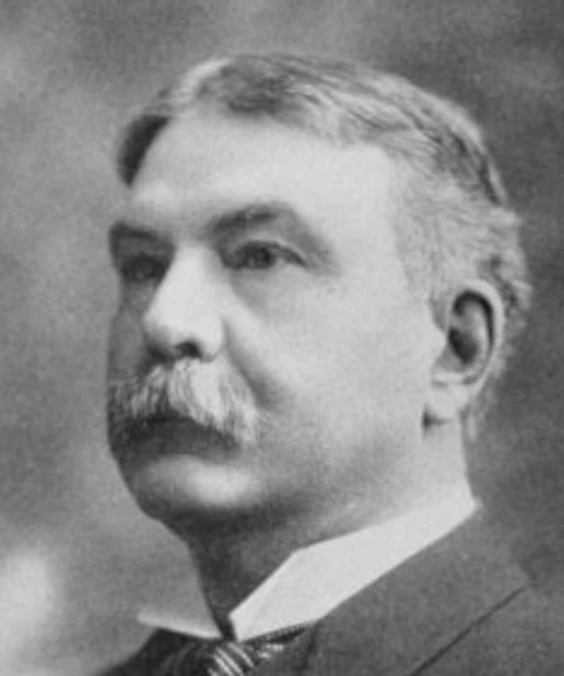
Teddy Roosevelt
The Public Record
Theodore Roosevelt was the 26th President of the United States, serving from 1901 to 1909. A member of the Republican Party, he was born on October 27, 1858, in New York. Roosevelt was a prominent leader of the Progressive Movement, advocating for domestic policies that included trust-busting, regulation of corporations, and conservation of natural resources. His administration is noted for significant reforms and the establishment of national parks and forests.
gutenberg.org
There are two sides to what I have said, and we are very apt to hear only insistence upon one side—sometimes insistence upon one side, sometimes insistence upon the other, but not as often as we should insistence upon both sides.
Our political differences should, and in the great majority of cases do, disappear at the water’s edge.
The frankest opposition to a given man or a given party on questions of public policy not only can be, but almost always should be, combined with the frankest recognition of the infinitely greater number of points of agreement than of the…
That will be a much greater provocative to friendship and respect than any amount of recrimination.
Let them say anything; but let us go on and build up the navy.
Hard words will not hurt us if we will only disregard them.
What they say is of no consequence to us compared to what we say to them.
The public speaker, the writer in the press, the legislator, the public servant, all owe it to this country to behave with the courtesy toward others which we would like to have extended toward us; but to behave with that courtesy whether…
I hope to see our foreign policy conducted always in a spirit not merely of scrupulous regard for the rights of others, but of scrupulous courtesy toward others; and at the same time to see us keep prepared so that there is no position…
In private life there is no one to whom we rightly object more than to the man who is continually offending and insulting his neighbors; except to the man who in addition to doing that then fails to make good.
If there is one thing that ought to be more offensive to every good American than almost anything else it is the habit of speaking with a loose tongue, speaking offensively about foreign nations, or adopting an ill-considered and…
I earnestly hope that with the added responsibility will come not merely a growth of power to meet that responsibility, but a growth of mental attitude on our part toward these new duties.
We can not abandon the duties that have come to us from the mere fact of our growth as a Nation, from the growth of our commercial interests in the East and in the West, on the Atlantic and in the Pacific.
We can not abandon our position on the Monroe Doctrine.
With the navy the case is different We have not the choice, gentlemen, as to whether or not this country will play a great part in the world.
We are so fortunate that in this country we can get along with a very small army, an army which relatively to the population of the country is smaller than the police force of many of our great cities.
I want to see every section of this country realize that the navy stands for the whole country, and that the people of the seacoast are not a particle more interested in it than the people of the Mississippi Valley.
I need not say to those of you who know anything at all about me that I believe in a big navy; and I hope I need not say that I believe in it not as a provocative to war, but as a guarantee of peace.
Permanent success will come to the business community where the average man’s word can be trusted, where the average man himself can be trusted in dealing with his fellows.
The destruction was as inevitable in one instance as in the other.
In time past republic after republic has existed in this world and has gone down to destruction, sometimes because the republic was turned into a government of the poor who plundered the rich, sometimes because it was turned into a…
I wish to say again that, important though that legislation is, it is nothing like as important as the spirit in which we approach it.
The ethical conception upon which I acted was that I did not intend that Uncle Sam should be held up while he was doing a great work for himself and all mankind.
There must be the possibility of abuse or there can not be the possibility of effective use.
Politicians like Teddy Roosevelt