But great action, action that is really great, can not take place if the man has it not in his brain to think great thoughts, to dream great dreams.
Teddy Roosevelt
The Public Record
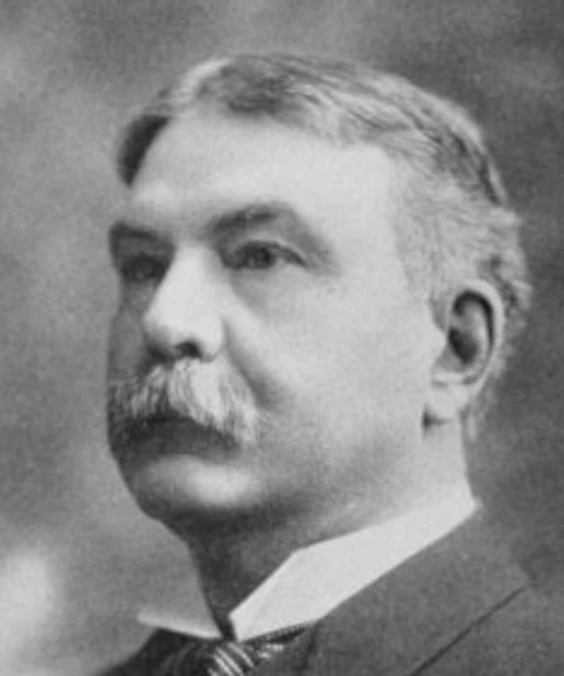
Theodore Roosevelt was the 26th President of the United States, serving from 1901 to 1909. A member of the Republican Party, he was born on October 27, 1858, in New York. Roosevelt was a prominent leader of the Progressive Movement, advocating for domestic policies that included trust-busting, regulation of corporations, and conservation of natural resources. His administration is noted for significant reforms and the establishment of national parks and forests.
gutenberg.org
Of course, if the dream is not followed by action, then it is a bubble; it has merely served to divert the man from doing something.
It is true of the Nation, as of the individual, that the greatest doer must also be a great dreamer.
You are doing it and you will continue to do it only by fitting yourselves in every way to be ready for war, if war should come.
I am speaking to the men who, more than any others in this country, do most for peace.
I do not think we will have any war if we have a good enough navy; and I could appeal to any peace society in the land for support upon the ground that every first-class record of target practice in the American navy is a positive…
The time of peace is the time when we must make ready for war, should war come.
Even if you yourselves never go into battle, you create the spirit which makes those who come after you on the ships able to do their duty in battle.
In other words, I believe you have the coolness, the courage, the endurance, the fighting edge.
Often it needs a tragedy to bring out the qualities that are in a man.
I believe in the navy of the United States, primarily because I believe in the intelligence, the patriotism, and the fighting edge of the average man of the navy.
If the officers and enlisted men are not trained to the highest point, then the best ships are useless; and it is better to have none than to have useless ships.
Every warship which is not first class in efficiency becomes in battle not a help to the Nation, but a menace to the national honor.
You can do nothing without the proper training, but the training will not do very much if there is not the right stuff in you to train.
It is all-important that we should have ships, the best in hull, the best in armor, the best in armament, of any nation in the world.
I think in view of events now happening all over the world that we can count upon having Congress continue to build up our navy.
You might have all the individual shots you could gather, and they would not be worth a rap if they could not act together, if they did not act so as to subordinate in the mind of each man the success of that particular man to the success…
I can not too often say, in speaking to civilians, what every naval man knows, that in battle those win who have prepared best for the battle beforehand.
Now, a special word to you upon whom so heavy a responsibility rests; because it depends upon the way you do your duty in peace as to whether or not, should ever the need for war arise, our flag will receive credit or discredit at your…
Therefore, not only for his sake do we owe it to him to see that he has every chance to lead a wholesome and manly life, but we owe it to ourselves, we owe it to the Nation of which we are all part, to see that that man’s capacities for…
It shows that we are fortunately past the period when we are afraid that if we make a man too decent he will not fight well enough.
The people of the United States should make it their especial duty to see to the welfare, moral even more than physical, of the men upon whose exertions, upon whose skill, training, and prowess, upon whose character in time of crisis the…
You showed in times that tried men’s souls what this country has a right to expect from its sons.
But you could not have done much more if your patriotism, your devotion to the flag, had not been backed up by the power to show that your metal rang true in battle.
If you had not had patriotism, devotion to the country and to the flag, you could have done nothing.
Politicians like Teddy Roosevelt