It is a sad and evil thing if the men with a moral sense group themselves as impractical zealots, while the men of action gradually grow to discard and laugh at all moral sense as an evidence of impractical weakness.
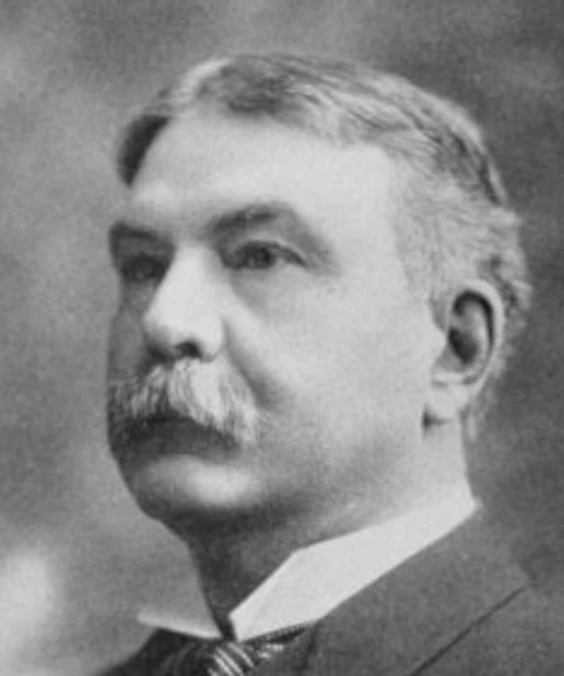
Teddy Roosevelt
The Public Record
Theodore Roosevelt was the 26th President of the United States, serving from 1901 to 1909. A member of the Republican Party, he was born on October 27, 1858, in New York. Roosevelt was a prominent leader of the Progressive Movement, advocating for domestic policies that included trust-busting, regulation of corporations, and conservation of natural resources. His administration is noted for significant reforms and the establishment of national parks and forests.
gutenberg.org
There can be nothing worse for the community than to have the men who profess lofty ideals show themselves so foolish, so narrow, so impracticable, as to cut themselves off from communion with the men who are actually able to do the work…
It shall not help us if we avoid the Scylla of baseness of motive, only to be wrecked on the Charybdis of wrong-headedness, of feebleness and inefficiency.
This is a rough, workaday, practical world, and if in it we are to do the work best worth doing, we must approach that work in a spirit remote from that of the mere visionary, and above all remote from that of the visionary whose…
But in addition to having high ideals it can not too often be said to a body such as is gathered here to-day, that together with devotion to what is right must go practical efficiency in striving for what is right.
Surely Harvard has the right to expect from her sons a high standard of applied morality, whether their paths lead them into public life, into business, or into the great profession of the law, whose members are so potent in shaping the…
Such a spirit may breed the demand that laws shall be made even more drastic against the rich, or else it may manifest itself in hostility to all laws.
Now, the great lawyer who employs his talent and his learning in the highly remunerative task of enabling a very wealthy client to override or circumvent the law is doing all that in him lies to encourage the growth in this country of a…
The great profession of the law should be that profession whose members ought to take the lead in the creation of just such a spirit.
Every man of great wealth who runs his business with cynical contempt for those prohibitions of the law which by hired cunning he can escape or evade is a menace to our community; and the community is not to be excused if it does not…
Much has been given to these men and we have the right to demand much of them in return.
This Nation never stood in greater need than now of having among its leaders men of lofty ideals, which they try to live up to and not merely to talk of.
But we have a right to expect that the men who come out of Harvard will do something more than merely pull their own weight.
Unless he can pull his own weight he must be content to remain a passenger all his life.
It is a far better thing for our colleges to have the average student interested in some form of athletics than to have them all gather in a mass to see other people do their athletics for them.
But I think our effort should be to minimize rather than to increase that kind of love of athletics which manifests itself, not in joining in the athletic sports, but in crowding by tens of thousands to see other people indulge in them.
I wish to see Harvard win a reasonable proportion of the contests in which it enters, and I should be heartily ashamed of every Harvard athlete who did not spend every ounce there was in him in the effort to win, provided only he does it…
It is a bad thing to permit sensationalism and hysteria to shape the development of our sports.
I hope to see both graduate and undergraduate opinion come to scorn such a man as one guilty of base and dishonorable action, who has no place in the regard of gallant and upright men.
But when these injuries are inflicted by others, either wantonly or of set design, we are confronted by the question, not of damage to one man’s body, but of damage to the other man’s character.
I have no sympathy whatever with the overwrought sentimentality which would keep a young man in cotton wool, and I have a hearty contempt for him if he counts a broken arm or collar bone as of serious consequence when balanced against the…
I believe in outdoor games, and I do not mind in the least that they are rough games, or that those who take part in them are occasionally injured.
I do not know whether anything we can say will have much effect on this point, but just so far as the alumni have weight I hope to see that weight felt in serious and sustained effort against the growing tendency to luxury, and in favor of…
But the average undergraduate has enough robustness of nature, enough capacity for enthusiasm and aspiration, to make it worth while to turn to account the stuff that is in him.
So much for the first function of the university, the sending forth of a small number of scholars of the highest rank who will do productive work of the first class.
Politicians like Teddy Roosevelt