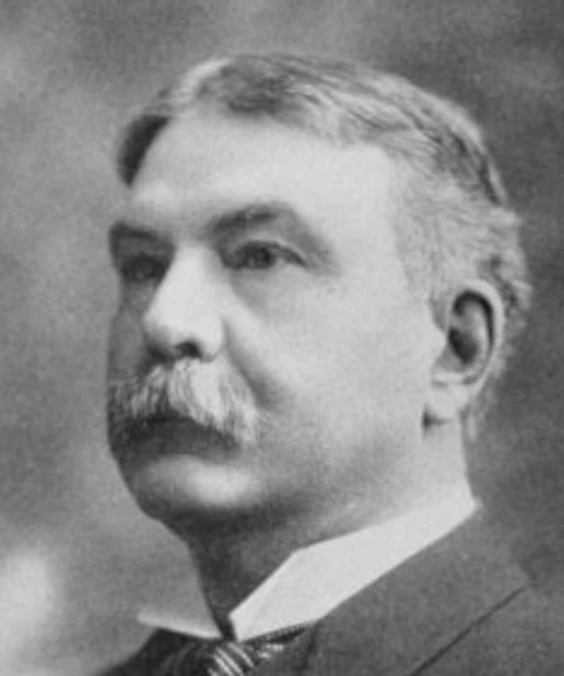
Under the present laws we have in the last four years accomplished much that is of substantial value; but the difficulties in the way have been so great as to prove that further legislation is advisable.
Teddy Roosevelt
The Public Record
Theodore Roosevelt was the 26th President of the United States, serving from 1901 to 1909. A member of the Republican Party, he was born on October 27, 1858, in New York. Roosevelt was a prominent leader of the Progressive Movement, advocating for domestic policies that included trust-busting, regulation of corporations, and conservation of natural resources. His administration is noted for significant reforms and the establishment of national parks and forests.
gutenberg.org
Much of the legislation aimed to prevent the evils connected with the enormous development of these great corporations has been ineffective, partly because it aimed at doing too much, and partly because it did not confer on the Government…
The present method prevents there being any need of our establishing any kind of protectorate over the island and gives the people of Santo Domingo the same chance to move onward and upward which we have already given to the people of Cuba.
If the arrangement is terminated, chaos will follow; and if chaos follows, sooner or later this Government may be involved in serious difficulties with foreign governments over the island, or else may be forced itself to intervene in the…
This is enabling the poor harassed people of Santo Domingo once more to turn their attention to industry and to be free from the curse of interminable revolutionary disturbance.
The conditions in Santo Domingo have for a number of years grown from bad to worse until recently all society was on the verge of dissolution.
Santo Domingo has now made an appeal to us to help it in turn, and not only every principle of wisdom but every generous instinct within us bids us respond to the appeal.
In the interest of justice, it is as necessary to exercise the police power as to show charity and helpful generosity.
Moreover, we are now beginning to recognize that weaker peoples have a claim upon us, even when the appeal is made, not to our emotions by some sudden calamity, but to our consciences by a long-continuing condition of affairs.
A famine or a plague in one country brings much sympathy and some assistance from other countries.
Finally, and what is in my view really the most important thing of all, it is our duty, so far as we are able, to try to help upward our weaker brothers.
Now let it be understood once for all that no just and orderly government on this continent has anything to fear from us.
Its purpose is partly to secure this Nation against seeing great military powers obtain new footholds in the Western Hemisphere, and partly to secure to our fellow-republics south of us the chance to develop along their own lines without…
When we announce a policy such as the Monroe Doctrine we thereby commit ourselves to accepting the consequences of the policy, and these consequences from time to time alter.
The reason why it is meeting with this recognition is because we have not allowed it to become fossilized, but have adapted our construction of it to meet the growing, changing needs of this hemisphere.
But most of all I believe in the efficacy of the man himself striving continually to increase his own self-respect by the way in which he does his duty to himself and to his neighbor.
I believe in the work of these great temperance organizations, of all kindred movements like the Young Men’s and Young Women’s Christian Associations, in short in every movement which strives to help a man by teaching him how to help…
I believe it the duty of capitalist and wage-worker to try to seek one another out, to understand each the other’s point of view, and to endeavor to show broad and kindly human sympathy one with the other.
I strongly believe in trades unions wisely and justly handled, in which the rightful purpose to benefit those connected with them is not accompanied by a desire to do injustice or wrong to others.
No man can be a good citizen, can deserve the respect of his fellows, unless first of all he is a good man in his own family, unless he does his duty faithfully by his wife and children.
Let him remember above all that the performance of duty is the first essential to right living, and that a good type of average family life is the cornerstone of national happiness and greatness.
But it is most emphatically true that the chance for leading a happy and prosperous life is immensely improved if only the man is decent, sober, industrious, and exercises foresight and judgment.
I strive never to tell any one what I do not thoroughly believe, and I shall not say to you that to be honest, and temperate, and hardworking, and thrifty will always bring success.
The dignity of labor should be maintained, which can be done only through the love that a man should have for his work, and through the intelligence which he puts into it.
Hence, with an increase of wages a corresponding movement for better manhood, nobler citizenship, and truer Christianity should be set on foot.
Politicians like Teddy Roosevelt