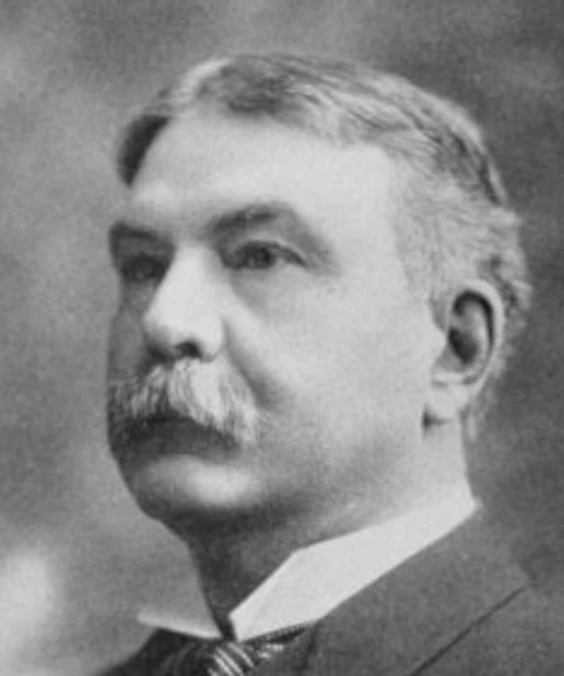
I congratulate you upon the great industrial activity shown in your Commonwealth—an industrial activity which, to mention but one thing, has placed this State second only to one other in the number of its textile factories.
Teddy Roosevelt
The Public Record
Theodore Roosevelt was the 26th President of the United States, serving from 1901 to 1909. A member of the Republican Party, he was born on October 27, 1858, in New York. Roosevelt was a prominent leader of the Progressive Movement, advocating for domestic policies that included trust-busting, regulation of corporations, and conservation of natural resources. His administration is noted for significant reforms and the establishment of national parks and forests.
gutenberg.org
In the Revolution she did many memorable deeds; and the battle of King’s Mountain marked the turning point of the Revolutionary War in the South.
It was in North Carolina that the Mecklenburg Declaration of Independence foreshadowed the course taken in a few short months by the representatives of the thirteen colonies assembled in Philadelphia.
This purpose must find its expression and support not merely in our collective action through the agencies of the Government, but in our social attitude.
The crime of brutal disregard of the rights of others is as much a crime when it manifests itself in the shape of greed and brutal arrogance on the one side, as when it manifests itself in the shape of envy and lawless violence on the…
It was ultimately as fatal to the cause of freedom whether it was the rich who oppressed the poor or the poor who plundered the rich.
Many republics have risen in the past, and some of them flourished long, but sooner or later they fell; and the cause most potent in bringing about their fall was in almost all cases the fact that they grew to be governments in the…
But the soul of the soldier has remained the same throughout, and the qualities which drove forward to victory or to death the men of ’76 and the men of ’61 are the very qualities which the men of to-day must keep unchanged if in the hour…
But after all we will do well to remember that, although the problems to be solved change from generation to generation, the spirit in which their solution must be attempted remains forever the same.
Our efforts should be to see that they work for the good and not for the harm of the body politic.
The extraordinary growth of industrialism during the last half century brings every civilized people face to face with the gravest social and economic questions.
The problems that face us abroad are important, but the problems that face us at home are even more important.
If we decline to give them such help the result will be bad both for them and for us; and will in the end in all probability cause us to face humiliation or bloodshed.
I firmly believe that by a little wise and generous aid we can help even the most backward of the peoples in these coasts and islands forward along the path of orderly liberty so that they can stand alone.
We must be scrupulous in doing justice to others and scrupulous in exacting justice for ourselves.
We must be scrupulous in respecting the rights of the weak, and no less careful to make it evident that we do not act through fear of the strong.
Our mission in the world should be one of peace, but not the peace of cravens, the peace granted contemptuously to those who purchase it by surrendering the right.
We have to play it; all we can decide is whether we shall play it well or ill.
In foreign affairs we must make up our minds that, whether we wish it or not, we are a great people and must play a great part in the world.
We of this Nation, we, the citizens of this mighty and wonderful Republic, stretching across a continent between the two greatest oceans, enjoy extraordinary privileges, and as our opportunity is great, therefore our responsibility is…
If we treat the mighty memories of the past merely as excuses for sitting lazily down in the present, or for standing aside from the rough work of the world, then these memories will prove a curse instead of a blessing.
You stand loyally to your traditions and memories; you also stand loyally for our great common country of to-day and for our common flag, which symbolizes all that is brightest and most hopeful for the future of mankind; you face the new…
Now the teeming riches of mine and field and factory attest the prosperity of those who are all the stronger because of the trials and struggles through which this prosperity has come.
Her success has been extraordinary, and all citizens of our common country should feel joy and pride in it; for any great deed done or any fine qualities shown by one group of Americans of necessity reflects credit upon all Americans.
Great though the meed of praise is which is due the South for the soldierly valor her sons displayed during the four years of war, I think that even greater praise is due to her for what her people have accomplished in the forty years of…
Politicians like Teddy Roosevelt