You know that the temperance movement is a potent auxiliary to the institutions of our country in building up a better manhood and a truer Christianity among our citizens.
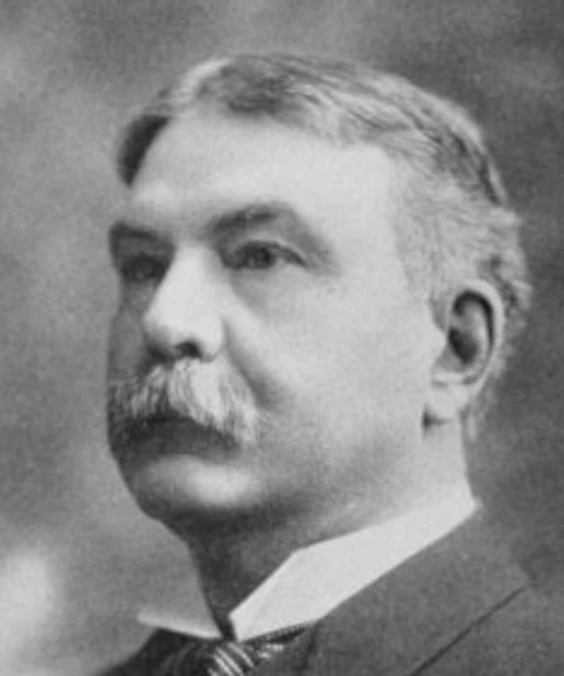
Teddy Roosevelt
The Public Record
Theodore Roosevelt was the 26th President of the United States, serving from 1901 to 1909. A member of the Republican Party, he was born on October 27, 1858, in New York. Roosevelt was a prominent leader of the Progressive Movement, advocating for domestic policies that included trust-busting, regulation of corporations, and conservation of natural resources. His administration is noted for significant reforms and the establishment of national parks and forests.
gutenberg.org
This applies just as much to the man of great wealth as to the man of small means; to the capitalist as to the wage-worker.
For the drunkard, for the man who loses his job because he can not control or will not control his desire for liquor and for vicious pleasure, we have a feeling of anger and contempt mixed with our pity; but for his unfortunate wife and…
Whatever tends to increase his self-respect, whatever tends to help him overcome the temptations with which all of us are surrounded, is of benefit not only to him, but to the whole community.
But in the last analysis the factor most influential in determining any man’s success must ever be the sum of that man’s own qualities, of his knowledge, foresight, thrift, and courage.
Something more can be done by combination and organization among ourselves in our private capacities as citizens, so long as this combination or organization is managed with wisdom and integrity, with insistence upon the rights of those…
There are exceptional times when any one of us needs outside help, and then it should be given freely; but normally each one of us must depend upon his own exertions for his own success.
And we must never forget that the chief factor in securing the welfare alike of wage-worker and of farmer, as of everybody else, must be the man himself.
If we can secure the welfare of these two classes we can be reasonably certain that the community as a whole will prosper.
In our country the happiness of all the rest of our people depends most of all upon the welfare of the wage-worker and the welfare of the farmer.
This country has never had done for it better work, that is, work that reflected more honor upon the country, or for humanity at large, than the work done for it in Cuba.
It will be a success; and it will be a success because we shall treat every little check, not as a reason for abandoning the work, but as a reason for altering and bettering our plans so as to make it impossible that that particular check…
The people to whom this country owes and will owe much are those who stay down there and do not talk, but do their work, and do it well.
Let each man feel that if such work can be well done it is in itself the amplest reward and the amplest prize.
Such service as that could not have been rendered save by a man who had before him ideals as far apart as the poles from those ideals which have in them any taint of what is base or sordid.
By your lives, no less than by your teachings, you show that while you regard wealth as a good thing, you regard other things as still better.
Each one of these states of mind, whether it be hatred, servility, or arrogance, is in reality closely akin to the other two; for each of them springs from a fantastically twisted and exaggerated idea of the importance of wealth as…
Moreover, such an attack is in itself an exceptionally crooked and ugly tribute to wealth, and therefore the proof of an exceptionally ugly and crooked state of mind in the man making the attack.
It is generally our own fault if he does damage to us, for he damages us chiefly by arousing our envy or by rendering us sour and discontented.
If we did not ourselves attach an exaggerated importance to the rich man who is distinguished only by his riches, this rich man would have a most insignificant influence over us.
But, after all, the service you render is incalculable, because of the very fact that by your lives you show that you believe ideals to be worth sacrifice, and that you are splendidly eager to do non-remunerative work if this work is of…
Moreover, where altogether too much prominence is given to the mere possession of wealth, the country is under heavy obligations to such a body as this, which substitutes for the ideal of accumulating money the infinitely loftier…
It is in no small degree due to you and your efforts that we are one people instead of a group of jarring peoples.
You furnish a common training and common ideals for the children of all the mixed peoples who are here being fused into one nationality.
For instance, you render to the Republic the prime, the vital service of amalgamating into one homogeneous body the children alike of those who are born here and of those who come here from so many different lands abroad.
Politicians like Teddy Roosevelt