The spirit of the scholar is the vital factor in the productive scholarship of the country.
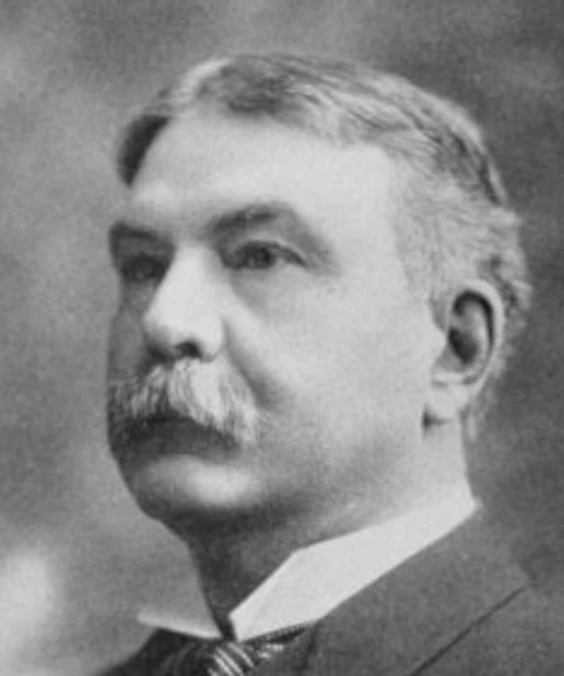
Teddy Roosevelt
The Public Record
Theodore Roosevelt was the 26th President of the United States, serving from 1901 to 1909. A member of the Republican Party, he was born on October 27, 1858, in New York. Roosevelt was a prominent leader of the Progressive Movement, advocating for domestic policies that included trust-busting, regulation of corporations, and conservation of natural resources. His administration is noted for significant reforms and the establishment of national parks and forests.
gutenberg.org
In this field the smallest amount of really first-class work is worth all the second-class work that can possibly be produced; and to have done such work is in itself the fullest and amplest reward to the man producing it.
In productive scholarship, in the scholarship which adds by its work to the sum of substantial achievement with which the country is to be credited, it is only first-class work that counts.
The prime need is to instil into the minds of the scholars themselves a true appreciation of real as distinguished from sham success.
But of course what counts infinitely more than any possible outside reward is the spirit of the worker himself.
But it is also true that the effect upon ambitious minds can not but be bad if as a people we show our very slight regard for scholarly achievement by making no provision at all for its reward.
It is important even to the development of the average man, for the average of all of us is raised by the work of the great masters.
In this country we rightly go upon the theory that it is more important to care for the welfare of the average man than to put a premium upon the exertions of the exceptional.
But I am not speaking of this now; I am not speaking of the desirability, great though that is, of giving better payment to the average educator, I am speaking of the desirability of giving to the exceptional man the chance of winning an…
As a people I think we are waking up to the fact that there must be better pay for the average man and average woman engaged in the work of education.
There is no one thing which will bring about this desired change, but there is one thing which will materially help in bringing it about, and that is to secure to scholars the chance of getting one of a few brilliant positions as prizes if…
The scholarly career, the career of the man of letters, the man of arts, the man of science, must be made such as to attract those strong and virile youths who now feel that they can only turn to business, law, or politics.
No first-class science, no first-class literature or art, can ever be built up with second-class men.
Good teachers, excellent institutions, and libraries are all demanded in a graduate school worthy of the name.
If in the public mind the career of the scholar is regarded as of insignificant value when compared with that of a glorified pawnbroker, then it will with difficulty be made attractive to the most vigorous and gifted of our American young…
We can best help the growth of American scholarship by seeing that as a career it is put more on a level with the other careers open to our young men.
If America is to contribute its full share to the progress not alone of knowledge, but of wisdom, then we must put ever-increasing emphasis on university work done along the lines of the graduate school.
The ideal for the graduate school and for those undergraduates who are to go into it must be the ideal of high scholarly production, which is to be distinguished in the sharpest fashion from the mere transmittal of ready-made knowledge…
Agassiz, when you and those like you faced 1861, you had to win peace by war, and you rendered us forever your debtors, because when the choice was between what was peaceful and what was right you chose what was right.
I am for peace, because normally peace is the best instrument wherewith to obtain righteousness.
Of course every President who is fit to be President must be for peace.
I trust that if any great crisis come again—may Heaven forbid its coming—if ever a great crisis like that of ’61 should come, may the men of that day who have been brought up in Harvard rise level to it as you of the years from ’55 onward…
I speak in behalf of the younger men here present when I say that we shall count ourselves more than happy if in the future we can approach the service of the men of Harvard in the past.
I do not believe that it will produce the millennium, or anything approaching it; and I am quite certain that some of its most ardent advocates will be disappointed with the results.
The fear expressed by excellent people, who no doubt feel it genuinely, that we could not get a commission who would fix all the rates of the railroads of the country, is to my mind much as if they should express fear that you could not…
Politicians like Teddy Roosevelt