Jan 1, 1900
But to do this work, keep ever in mind that we must show in a very high degree the qualities of courage, of honesty, and of good judgment.
The Public Record
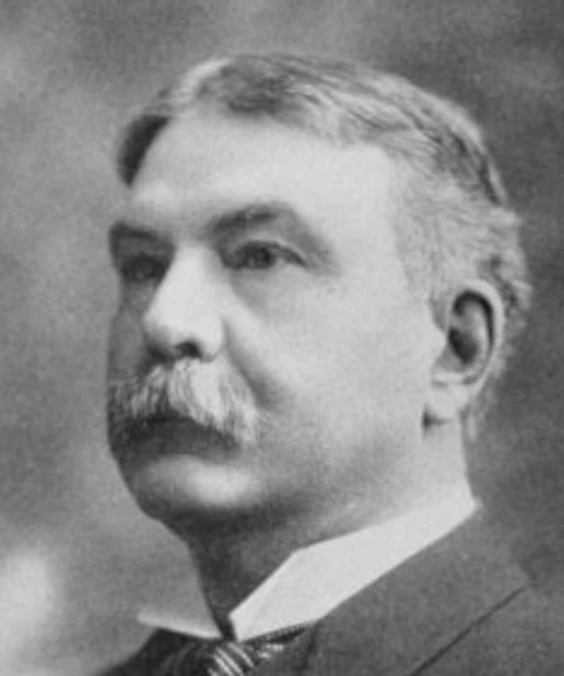
Theodore Roosevelt was the 26th President of the United States, serving from 1901 to 1909. A member of the Republican Party, he was born on October 27, 1858, in New York. Roosevelt was a prominent leader of the Progressive Movement, advocating for domestic policies that included trust-busting, regulation of corporations, and conservation of natural resources. His administration is noted for significant reforms and the establishment of national parks and forests.
But to do this work, keep ever in mind that we must show in a very high degree the qualities of courage, of honesty, and of good judgment.
So, if we do our duty aright in the Philippines, we will add to that national renown which is the highest and finest part of national life, we will greatly benefit the people of the Philippine Islands, and, above all, we will play our part…
If we now let it be replaced by savage anarchy, our work has been for harm and not for good.
Others may in time become fit, but at present can only take part in self-government under a wise supervision, at once firm and beneficent.
Personally, I am far too firm a believer in the greatness of my country and the power of my countrymen to admit for one moment that we shall ever be driven to the ignoble alternative.
If we are too weak, too selfish, or too foolish to solve them, some bolder and abler people must undertake the solution.
It is cowardly to shrink from solving them in the proper way; for solved they must be, if not by us, then by some stronger and more manful race.
In the same way, while a nation’s first duty is within its own borders, it is not thereby absolved from facing its duties in the world as a whole; and if it refuses to do so, it merely forfeits its right to struggle for a place among the…
A man’s first duty is to his own home, but he is not thereby excused from doing his duty to the State; for if he fails in this second duty it is under the penalty of ceasing to be a freeman.
But because we set our own household in order we are not thereby excused from playing our part in the great affairs of the world.
We must strive for honesty in office, for honesty toward the creditors of the nation and of the individual; for the widest freedom of individual initiative where possible, and for the wisest control of individual initiative where it is…
The army and the navy are the sword and the shield which this nation must carry if she is to do her duty among the nations of the earth—if she is not to stand merely as the China of the Western Hemisphere.
On them will lie the burden of any loss of our soldiers and sailors, of any dishonor to the flag; and upon you and the people of this country will lie the blame if you do not repudiate, in no unmistakable way, what these men have done.
If, during the years to come, any disaster should befall our arms, afloat or ashore, and thereby any shame come to the United States, remember that the blame will lie upon the men whose names appear upon the roll-calls of Congress on the…
There is no body from which the country has less to fear, and none of which it should be prouder, none which it should be more anxious to upbuild.
To no body of men in the United States is the country so much indebted as to the splendid officers and enlisted men of the regular army and navy.
We must hold to a rigid accountability those public servants who show unfaithfulness to the interests of the nation or inability to rise to the high level of the new demands upon our strength and our resources.
We must demand the highest order of integrity and ability in our public men who are to grapple with these new problems.
Above all, let us, as we value our own self-respect, face the responsibilities with proper seriousness, courage, and high resolve.
The work must be done; we can not escape our responsibility; and if we are worth our salt, we shall be glad of the chance to do the work—glad of the chance to show ourselves equal to one of the great tasks set modern civilization.
Some stronger, manlier power would have to step in and do the work, and we would have shown ourselves weaklings, unable to carry to successful completion the labors that great and high-spirited nations are eager to undertake.
It is worse than idle to say that we have no duty to perform, and can leave to their fates the islands we have conquered.
If we drove out a medieval tyranny only to make room for savage anarchy, we had better not have begun the task at all.
The guns that thundered off Manila and Santiago left us echoes of glory, but they also left us a legacy of duty.
We must build the Isthmian Canal, and we must grasp the points of vantage which will enable us to have our say in deciding the destiny of the oceans of the East and the West.
Politicians like Teddy Roosevelt