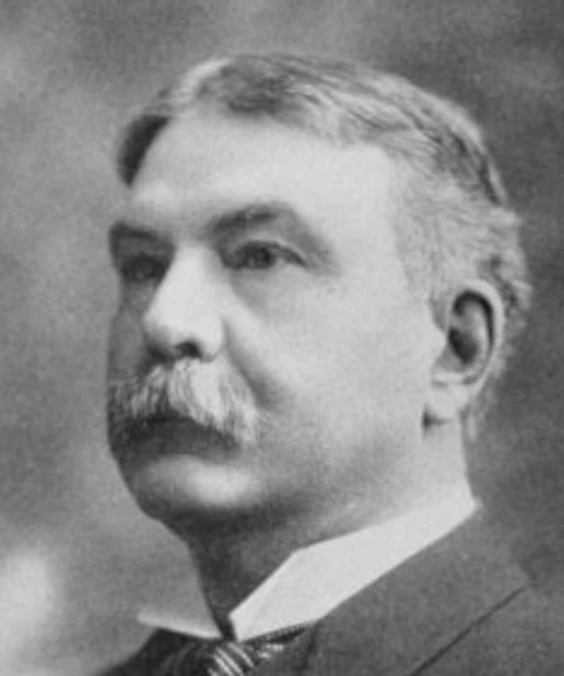
We have exactly the same right to regulate the conditions of life and work in factories and tenement-houses that we have to regulate fire-escapes and the like in other houses.
Teddy Roosevelt
The Public Record
Theodore Roosevelt was the 26th President of the United States, serving from 1901 to 1909. A member of the Republican Party, he was born on October 27, 1858, in New York. Roosevelt was a prominent leader of the Progressive Movement, advocating for domestic policies that included trust-busting, regulation of corporations, and conservation of natural resources. His administration is noted for significant reforms and the establishment of national parks and forests.
In certain communities the existence of a thoroughly efficient department of factory inspection is just as essential as the establishment of a fire department.
The vast individual and corporate fortunes, the vast combinations of capital, which have marked the development of our industrial system, create new conditions and necessitate a change from the old attitude of the State and the nation…
In our cities, or where men congregate in masses, it is often necessary to work in combination, that is, through associations; and here it is that we can see the great good conferred by labor organizations, by trade-unions.
We do not intend to permit the people’s money to be squandered or to tolerate any work that is not the best.
In the Philippines let us remember that the spirit and not the mere form of government is the essential matter.
The man who works, the man who does great deeds, in the end dies as surely as the veriest idler who cumbers the earth’s surface; but he leaves behind him the great fact that he has done his work well.
While we should, so long as we can safely do so, give to each individual the largest possible liberty, a liberty which necessarily includes initiative and responsibility, yet we must not hesitate to interfere whenever it is clearly seen…
But we think that, while rigidly insisting upon good work, we should see that there is fair play in return.
Envy, malice, and hatred are such passions, and they are just as bad if directed against a class or group of men as if directed against an individual.
Each group of men has its special interests; and yet the higher, the broader and deeper interests are those which apply to all men alike; for the spirit of brotherhood in American citizenship, when rightly understood and rightly applied…
Most emphatically each of us needs to stand up for his own rights; all men and all groups of men are bound to retain their self-respect, and, demanding this same respect from others, to see that they are not injured and that they have…
The fundamental law of healthy political life in this great Republic is that each man shall in deed, and not merely in word, be treated strictly on his worth as a man; that each shall do full justice to his fellow, and in return shall…
But to feed fat a grudge against others, while it may or may not harm them, is sure in the long run to do infinitely greater harm to the man himself.
Then let us make it equally evident that we will not tolerate injustice being done to us in return.
We do not blindly refuse to face the evils that exist, or the shortcomings inherent in humanity; but across blundering and shirking, across selfishness and meanness of motive, across short-sightedness and cowardice, we gaze steadfastly…
If you will study our past history as a nation you will see we have made many blunders and have been guilty of many shortcomings, and yet that we have always in the end come out victorious because we have refused to be daunted by blunders…
When we come to dealing with our social and industrial needs, remedies, rights and wrongs, a ton of oratory is not worth an ounce of hard-headed, kindly common-sense.
We do not by this doctrine intend to sanction any policy of aggression by one American commonwealth at the expense of any other, nor any policy of commercial discrimination against any foreign power whatsoever.
The more a healthy American sees of his fellow-Americans the greater grows his conviction that our chief troubles come from mutual misunderstanding, from failure to appreciate one another’s point of view.
We have done our duty ourselves, and we have done the higher duty of promoting the civilization of mankind.
We work in a spirit of self-respect for ourselves and of good-will toward others, in a spirit of love for and of infinite faith in mankind.
No nation capable of self-government, and of developing by its own efforts a sane and orderly civilization, no matter how small it may be, has anything to fear from us.
In other words, the great need is fellow-feeling, sympathy, brotherhood; and all this naturally comes by association.
Woe to us as a nation if we ever follow the lead of men who seek not to smother but to inflame the wild-beast qualities of the human heart!