Jan 1, 1900
I ask only that what every self-respecting American demands from himself and from his sons shall be demanded of the American nation as a whole.
The Public Record
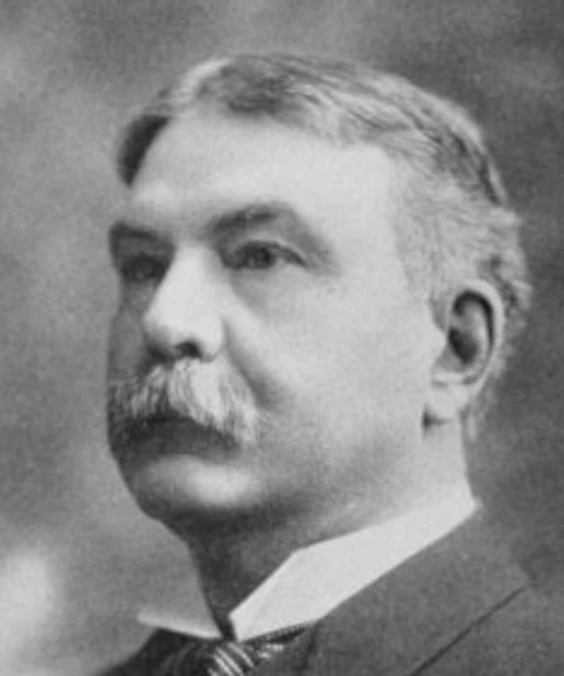
Theodore Roosevelt was the 26th President of the United States, serving from 1901 to 1909. A member of the Republican Party, he was born on October 27, 1858, in New York. Roosevelt was a prominent leader of the Progressive Movement, advocating for domestic policies that included trust-busting, regulation of corporations, and conservation of natural resources. His administration is noted for significant reforms and the establishment of national parks and forests.
I ask only that what every self-respecting American demands from himself and from his sons shall be demanded of the American nation as a whole.
A life of slothful ease, a life of that peace which springs merely from lack either of desire or of power to strive after great things, is as little worthy of a nation as of an individual.
At present a river and harbor bill, like a tariff bill, tends to be settled by a squabble among a lot of big selfish interests and little selfish interests, with scant regard to the one really vital interest, that of the general public.
Finally, it should be the duty of some Governmental department or bureau to investigate the conditions in the various protected industries, and see that the laborers really are getting the benefit of the tariff supposed to be enacted in…
There should be a commission of well-paid experts; men who should not represent any industry; who should be masters of their subjects; of the very highest character; and who should approach the matter with absolute disregard of every…
But the American public does not wish to see the tariff so arranged as to benefit primarily a few wealthy men.
What we desire in a tariff is such measure of protection as will equalize the cost of production here and abroad; and as the cost of production is mainly labor cost, this means primarily a tariff sufficient to make up for the difference in…
The tariff ought to be a material issue and not a moral issue; but if instead of a square deal we get a crooked deal, then it becomes very emphatically a moral issue.
What we want is a square deal in the tariff as in everything else; a square deal for the wage-earner; a square deal for the employer; and a square deal for the general public.
I believe that when protection becomes, not a principle, but a privilege and a preference—or, rather, a jumble of privileges and preferences—then the American people disapprove of it.
I believe this country is fully committed to the principle of protection; but it is to protection as a principle; to protection primarily in the interest of the standard of living of the American workingman.
It has been conclusively shown, by experiments repeated again and again, that the methods of tariff-making by Congress, which have now obtained for so many years, cannot, from the very nature of the case, bring really satisfactory results.
I mention them merely to illustrate the need of having a truly National system of government under which the people can deal effectively with all problems, meeting those that affect the people as a whole by affirmative Federal action, and…
I am, however, convinced, both from the inconsistency of these decisions with the tenor of other decisions, and furthermore from the very fact that they are in such flagrant and direct contradiction to the spirit and needs of the time…
If such decisions as these two indicated the Court’s permanent attitude, there would be real and grave cause of alarm; for such decisions, if consistently followed up, would upset our whole system of popular Government.
In effect, it reduced to impotence the only body which did have power, so that in this case the decision, although nominally against State rights, was really against popular rights, against the democratic principle of government by the…
But the Supreme Court of the United States possessed, and unfortunately exercised, the negative power of not permitting the abuse to be remedied.
It was a decision nominally against National rights, but really against popular rights, against the democratic principle of government by the people.
Remember also that many of the men who protest loudly against effective National action would be the first to turn round and protest against the State action if such action in its turn became effective, and would then unhesitatingly invoke…
The coal should be kept for the people, and those who mine it should pay part of the profit back to the people.
If we are foolish enough to grant their requests, we shall have ourselves to blame when we wake up to find that we have permitted another privilege to intrench itself, and another portion of what should be kept for the public good to be…
Now I am sure that those men, according to their lights, are good citizens; but, naturally enough, their special interest obscures their sense of the public need; and as their object is to escape efficient control, they clamor to be put…
The great corporations which are managed and largely owned in the older States are those which are most in evidence in developing and using the mines and water powers and forests of the new Territories and new States, from Alaska to…
We should make it our duty to see that hereafter the power sites are kept under the control of the general Government for the use of the people as a whole.
Unfortunately, the realization has come too late as regards many of the power sites, but many yet remain with which our hands are free to deal.
Politicians like Teddy Roosevelt