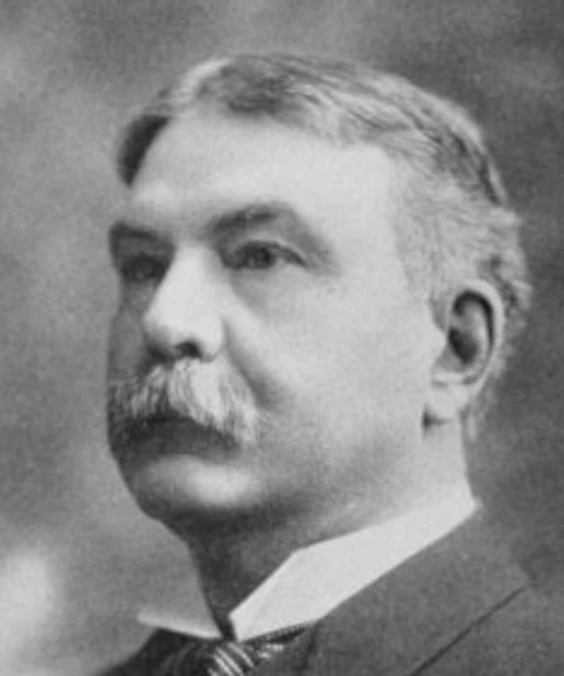
Teddy Roosevelt
The Public Record
Theodore Roosevelt was the 26th President of the United States, serving from 1901 to 1909. A member of the Republican Party, he was born on October 27, 1858, in New York. Roosevelt was a prominent leader of the Progressive Movement, advocating for domestic policies that included trust-busting, regulation of corporations, and conservation of natural resources. His administration is noted for significant reforms and the establishment of national parks and forests.
Jan 1, 1900
Great as is the superiority in efficiency of the men who do things over those who do not, it may be no greater than their superiority in morality.
Jan 1, 1900
When Wendell Phillips denounced Abraham Lincoln as “the slave-hound of Illinois,” he did not show himself more virtuous than Lincoln, but more foolish.
Jan 1, 1900
As a matter of fact, the typical extremist of this kind differs from the practical reformer, from the public man who strives in practical fashion for decency, not at all in superior morality, but in inferior sense.
Jan 1, 1900
In the particular objects they severally profess to champion they are as far asunder as the poles, for one of their characteristics is that each little group has its own patent recipe for salvation and pays no attention whatever to the…
Jan 1, 1900
Just as the upright politician should hold in peculiar scorn the man who makes the name of politician a reproach and a shame, so the genuine reformer should realize that the cause he champions is especially jeopardized by the mock reformer…
Jan 1, 1900
In every community there are little knots of fantastic extremists who loudly proclaim that they are striving for righteousness, and who, in reality, do their feeble best for unrighteousness.
Jan 1, 1900
Every man who is striving to do good public work is traveling along a ridge crest, with the gulf of failure on each side—the gulf of inefficiency on the one side, the gulf of unrighteousness on the other.
Jan 1, 1900
It is not possible to lay down an inflexible rule as to when compromise is right and when wrong; when it is a sign of the highest statesmanship to temporize, and when it is merely a proof of weakness.
Jan 1, 1900
At times a man must cut loose from his associates, and stand alone for a great cause; but the necessity for such action is almost as rare as the necessity for a revolution; and to take such ground continually, in season and out of season…
Jan 1, 1900
Our standard of public and private conduct will never be raised to the proper level until we make the scoundrel who succeeds feel the weight of a hostile public opinion even more strongly than the scoundrel who fails.
Jan 1, 1900
The mean and cringing admiration which such a career commands among those who think crookedly or not at all makes this kind of success perhaps the most dangerous of all the influences that threaten our national life.
Jan 1, 1900
The successful man, whether in business or in politics, who has risen by conscienceless swindling of his neighbors, by deceit and chicanery, by unscrupulous boldness and unscrupulous cunning, stands toward society as a dangerous wild beast.
Jan 1, 1900
We shall never make our Republic what it should be until as a people we thoroughly understand and put in practice the doctrine that success is abhorrent if attained by the sacrifice of the fundamental principles of morality.
Jan 1, 1900
If there is one tendency of the day which more than any other is unhealthy and undesirable, it is the tendency to deify mere “smartness,” unaccompanied by a sense of moral accountability.
Jan 1, 1900
All men in whose character there is not an element of hardened baseness must admit the need in our public life of those qualities which we somewhat vaguely group together when we speak of “reform,” and all men of sound mind must also admit…
Jan 1, 1900
It is only the warlike power of a civilized people that can give peace to the world.
Jan 1, 1900
But the peoples that do not expand leave, and can leave, nothing behind them.
Jan 1, 1900
Similarly to-day it is the great expanding peoples who bequeath to the future ages the great memories and material results of their achievements, and the nations which shall have sprung from their loins, England standing as the archetype…
Jan 1, 1900
Nations that expand and nations that do not expand may both ultimately go down, but the one leaves heirs and a glorious memory, and the other leaves neither.
Jan 1, 1900
What is necessary is to approach the subject, not with a desire to get ahead of one another, but to do even and exact justice, and to put into operation a scheme which will work, while scrupulously conserving the honor and interest of all…
Jan 1, 1900
But, as it is, this country will keep the islands and will establish therein a stable and orderly government, so that one more fair spot of the world’s surface shall have been snatched from the forces of darkness.
Jan 1, 1900
In North America, as elsewhere throughout the entire world, the expansion of a civilized nation has invariably meant the growth of the area in which peace is normal throughout the world.
Jan 1, 1900
The rule of law and of order has succeeded to the rule of barbarous and bloody violence.
Politicians like Teddy Roosevelt