Jan 1, 1900
There must be many compromises; but we can not compromise with dishonesty, with sin.
The Public Record
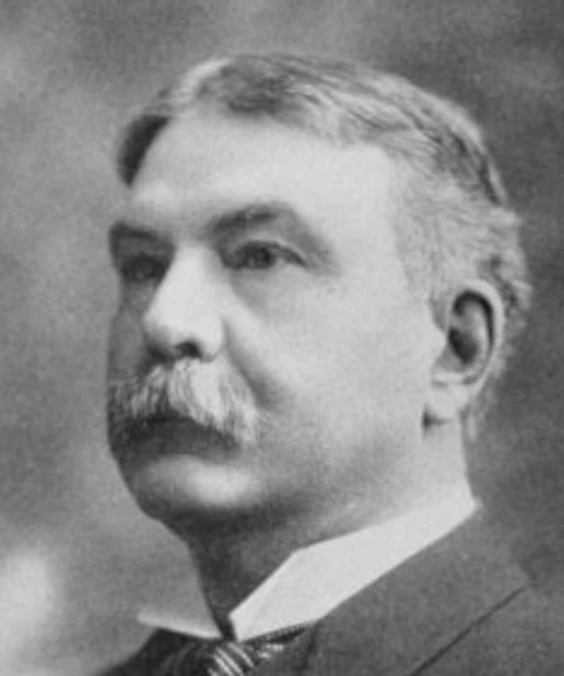
Theodore Roosevelt was the 26th President of the United States, serving from 1901 to 1909. A member of the Republican Party, he was born on October 27, 1858, in New York. Roosevelt was a prominent leader of the Progressive Movement, advocating for domestic policies that included trust-busting, regulation of corporations, and conservation of natural resources. His administration is noted for significant reforms and the establishment of national parks and forests.
There must be many compromises; but we can not compromise with dishonesty, with sin.
So, in our turn, we of to-day are bound to try to tread in the footsteps of those great Americans who in the past have held high ideal and have striven mightily through practical methods to realize that ideal.
He did not lose his temper at their conduct, or cease to strive for the abolition of slavery and the restoration of the Union; and whereas their conduct foreboded disaster to both causes, his efforts secured the success of both.
The fanatical antislavery people wished to hurry him into unwise, extreme, and premature action, and denounced him as compromising with the forces of evil, as being a practical politician—which he was, if practicality is held to include…
Lincoln disregarded the jibes of these men, who did their puny best to hurt the great cause for which he battled; and they never, by their pin-pricks, succeeded in diverting him from the real foe.
But, after all, he can generally be disregarded, whereas the real and dangerous foe is the corrupt politician, whom we can not afford to disregard.
We must not be diverted from our warfare with these powerful and efficient corruptionists by irritation at the vain prattlers who think they are at the head of the reform forces, whereas they are really wandering in bypaths in the rear.
Cynicism in public life is a curse, and when a man has lost the power of enthusiasm for righteousness it will be better for him and the country if he abandons public life.
It is vital that every man who is in politics, as a man ought to be, with a disinterested purpose to serve the public, should strive steadily for reform; that he should have the highest ideals.
We need men who are far-sighted and resolute; men who combine sincerity with sanity.
That species of practicability eats into the moral sense of the people like a cancer, and he who practices it can no more be excused than an editor who debauches public decency in order to sell his paper.
As soon as a politician gets to the point of thinking that in order to be “practical” he has got to be base, he has become a noxious member of the body politic.
Yet he must consider the question of expediency, in order that he may do all the good possible, for otherwise he will do none.
It is inexcusable to refuse to work, to work slackly or perversely, or to mar the work of others.
There is not the slightest excuse for one sincere worker looking down upon another because he chooses a different part of the field and different implements.
What is of really vital importance is that something should be accomplished, and that this something should be worthy of accomplishment.
You are not to be excused if you fail to try to make things better; and the very phrase “trying to make things better” implies trying in practical fashion.
These men thus do inestimable damage; for the reform spirit, the spirit of striving after high ideals, is the breath of life in our political institutions; and whatever weakens it by just so much lessens the chance of ultimate success…
Too often, indeed, they actually alienate from the cause of decency keen and honest men, who grow to regard all movements for reform with contemptuous dislike because of the folly and vanity of the men who in the name of righteousness…
They have lost the power to do practical work by ceasing to exercise it, by confining themselves to criticism and theorizing, to intemperate abuse and intemperate championship of what they but imperfectly understand.
Against them we see, it is true, masses of voters who both know how to, and do, strive for righteousness; but we see also very many others in whom the capacity for self-government seems to have atrophied.
Where enthusiasts are ready to destroy or be destroyed for trifles magnified into importance by a squeamish conscience, it is not strange that the very name of conscience should become a byword of contempt to cool and shrewd men of…
The sound, wholesome common-sense of the American people fortunately renders such movements, as a rule, innocuous; and this is, in reality, the prime reason why republican government prospers in America, as it does not prosper, for…
They were incapable of supporting a great constructive statesman in a great crisis; and this, not because they were too virtuous, but because they lacked the necessary common-sense and power of subordination of self to enable them to work…
Politicians like Teddy Roosevelt