Jan 1, 1900
Softness of heart is an admirable quality, but when it extends its area until it also becomes softness of head, its results are anything but admirable.
The Public Record
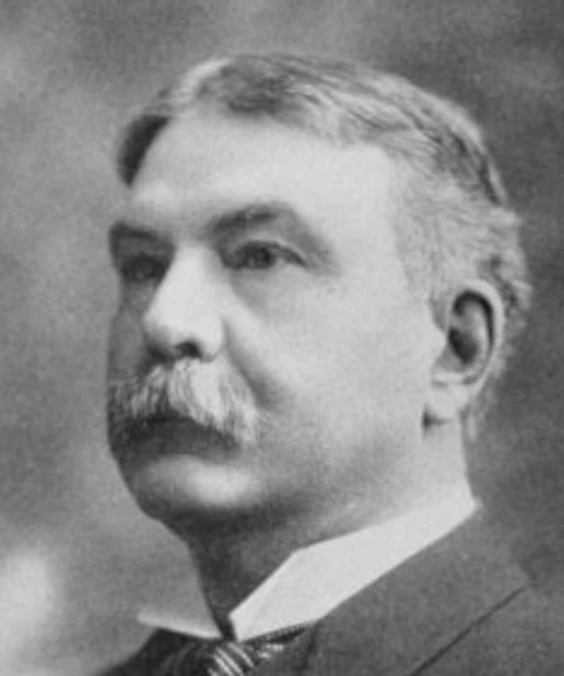
Theodore Roosevelt was the 26th President of the United States, serving from 1901 to 1909. A member of the Republican Party, he was born on October 27, 1858, in New York. Roosevelt was a prominent leader of the Progressive Movement, advocating for domestic policies that included trust-busting, regulation of corporations, and conservation of natural resources. His administration is noted for significant reforms and the establishment of national parks and forests.
Softness of heart is an admirable quality, but when it extends its area until it also becomes softness of head, its results are anything but admirable.
For instance, there must be no compromise under any circumstances with official corruption, and of course no man should hesitate to say as much.
The man who is taken in by, or demands, impossible promises is not much less culpable than the politician who deliberately makes such promises and then breaks faith.
Now, not only should such politicians be regarded as infamous, but the people who are hoodwinked by them should share the blame.
There are always politicians willing, on the one hand, to promise everything to the people, and, on the other, to perform everything for the machine or the boss, with chuckling delight in the success of their efforts to hoodwink the former…
When in public speech or in a party platform a policy is outlined which it is known can not or will not be pursued, the fact is a reflection not only upon the speaker and the platform-maker, but upon the public feeling to which they appeal.
If a course of policy is vicious and produces harm it should be reversed at any cost.
But in moving forward we must realize that normally the condition of sure progress is that it shall not be so fast as to ensure a revolt and a stoppage of the upward course.
A revolution is sometimes necessary, but if revolutions become habitual the country in which they take place is going down-hill.
It is set back by those extremists who by their action always invite reaction, and, above all, by those worst enemies of our public honesty who by their incessant attacks upon good men give the utmost possible assistance to the bad.
Certainly there is infinite room for improvement, infinite need of fearless and trenchant criticism; but the improvement can only come through intelligent and straightforward effort.
It is a great mistake to think that the extremist is a better man than the moderate.
Every leader of a great reform has to contend, on the one hand, with the open, avowed enemies of the reform, and, on the other hand, with its extreme advocates, who wish the impossible, and who join hands with their extreme opponents to…
But the possession or preaching of these high ideals may not only be useless, but a source of positive harm, if unaccompanied by practical good sense, if they do not lead to the effort to get the best possible when the perfect best is not…
Military power is at an end when the honor of the soldier can no longer be trusted; and, in the right sense of the word, civic greatness is at an end when civic righteousness is no longer its foundation.
Mere desire to do right can no more by itself make a good statesman than it can make a good general.
It is a melancholy fact that many of the worst laws put upon the statute-books have been put there with the best of intentions by thoroughly well-meaning people.
We need absolute honesty in public life; and we shall not get it until we remember that truth-telling must go hand in hand with it, and that it is quite as important not to tell an untruth about a decent man as it is to tell the truth…
We need fearless criticism of dishonest men, and of honest men on any point where they go wrong; but even more do we need criticism which shall be truthful both in what it says and in what it leaves unsaid—truthful in words and truthful in…
Few politicians do as much harm as the newspaper editor, the clergyman, or the lay reformer who, day in and day out, by virulent and untruthful invective aimed at the upholders of honesty, weakens them for the benefit of the frankly…
Politicians like Teddy Roosevelt