Political Quotes

Teddy Roosevelt

The Public Record

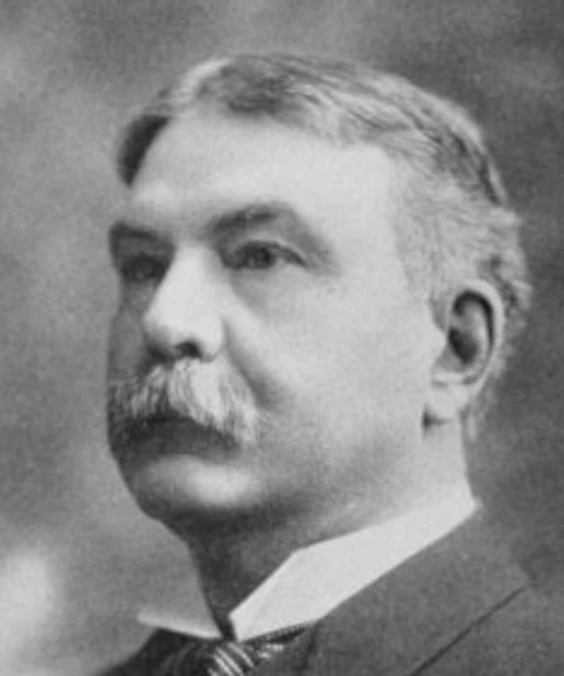
Theodore Roosevelt was the 26th President of the United States, serving from 1901 to 1909. A member of the Republican Party, he was born on October 27, 1858, in New York. Roosevelt was a prominent leader of the Progressive Movement, advocating for domestic policies that included trust-busting, regulation of corporations, and conservation of natural resources. His administration is noted for significant reforms and the establishment of national parks and forests.

Quotes by year · 190219122,141 total · peak 1905 (747)
1902: 355 quotes1903: 523 quotes1904: 180 quotes1905: 747 quotes1906: 136 quotes1907: 46 quotes1908: 56 quotes1909: 60 quotes1910: 20 quotes1912: 18 quotes
Jan 1, 1900

In charity the one thing always to be remembered is that, while any man may slip and should at once be helped to rise to his feet, yet no man can be carried with advantage either to him or to the community.

gutenberg.org
Jan 1, 1900

The greatest possible good can be done by the extension of a helping hand at the right moment, but the attempt to carry any one permanently can end in nothing but harm.

gutenberg.org
Jan 1, 1900

We need men who are far-sighted and resolute; men who combine sincerity with sanity.

gutenberg.org
Jan 1, 1900

The soup-kitchen style of philanthropy is as thoroughly demoralizing as most forms of vice or oppression, and it is of course particularly revolting when some corporation or private individual undertakes it, not even in a spirit of foolish…

gutenberg.org
Jan 1, 1900

The really hard-working philanthropists, who spend their lives in doing good to their neighbors, do not, as a rule, belong to the “mushy” class, and thoroughly realize the unwisdom of foolish and indiscriminate giving, or of wild and crude…

gutenberg.org
Jan 1, 1900

Success must always include, as its first element, earning a competence for the support of the man himself, and for the bringing up of those dependent upon him.

gutenberg.org
Jan 1, 1900

On the one hand, he must not be volatile and irresolute, and, on the other hand, he must not fear to try a new line because he has failed in another.

gutenberg.org
Jan 1, 1900

We can never as a nation afford to forget that, back of our reason, our understanding, and our common-sense, there must lie, in full strength, the tremendous fundamental passions, which are not often needed, but which every truly great…

gutenberg.org
Jan 1, 1900

Moreover, the minute that a move is made in politics, the people who are helped and those who would help them grow to have a common interest which is genuine and absorbing instead of being in any degree artificial, and this will bring them…

gutenberg.org
Jan 1, 1900

This in itself has a good side; but there is an even better side, due to the fact that disinterested motives are appealed to, and that men are made to feel that they are working for others, for the community as a whole as well as for…

gutenberg.org
Jan 1, 1900

There must be many compromises; but we can not compromise with dishonesty, with sin.

gutenberg.org
Jan 1, 1900

Philanthropy has undoubtedly been a good deal discredited both by the exceedingly noxious individuals who go into it with ostentation to make a reputation, and by the only less noxious persons who are foolish and indiscriminate givers.

gutenberg.org
Jan 1, 1900

Yet in dwelling upon the lessons for our ordinary conduct which we can learn from your experience, we must never forget that it also shows us what should be our model in times that are not ordinary, in the times that try men’s souls.

gutenberg.org
Jan 1, 1900

We need to have within us the splendid heroic virtues which alone avail in the mighty crises, the terrible catastrophes whereby a nation is either purified as if by fire, or else consumed forever in the flames.

gutenberg.org
Jan 1, 1900

Neither our national nor our local civil life can be what it should be unless it is marked by the fellow-feeling, the mutual kindness, the mutual respect, the sense of common duties and common interests, which arise when men take the…

gutenberg.org
Jan 1, 1900

Anything that encourages pauperism, anything that relaxes the manly fibre and lowers self-respect, is an unmixed evil.

gutenberg.org
Jan 1, 1900

Character is shown in peace no less than in war.

gutenberg.org
Jan 1, 1900

No man can be a really good citizen unless he takes a lively interest in politics from a high standpoint.

gutenberg.org
Jan 1, 1900

The West will shape our destinies because she will have more people and a greater territory, and because the whole development of the Western country is such as to make it peculiarly the exponent of all that is most vigorously and…

gutenberg.org
Jan 1, 1900

A very wholesome effect has been produced in great cities by the university settlements, college settlements, and similar efforts to do practical good by bringing closer together the more and the less fortunate in life.

gutenberg.org
Jan 1, 1900

The fact that, instead of little, much good does in reality result, is due to the entirely practical methods and the spirit of comradeship shown by those foremost in these organizations.

gutenberg.org
Jan 1, 1900

If managed in a spirit of patronizing condescension, or with ignorance of the desires, needs, and passions of those round about, little good indeed will come from them.

gutenberg.org
Jan 1, 1900

Where the immigrant parents are able to make their way in the world, their children have no more difficulty than the children of the native-born in becoming part of American life, in sharing all its privileges and in doing all its duties.

gutenberg.org
Jan 1, 1900

But the children of the very poor of foreign birth would be handicapped almost as much as their parents, were it not for the public schools and the start thus given them.

gutenberg.org
Jan 1, 1900

Loyalty to the flag is taught by precept and practice in all these public schools, and loyalty to the principles of good citizenship is also taught in no merely perfunctory manner.

gutenberg.org

Politicians like Teddy Roosevelt