Political Quotes

Teddy Roosevelt

The Public Record

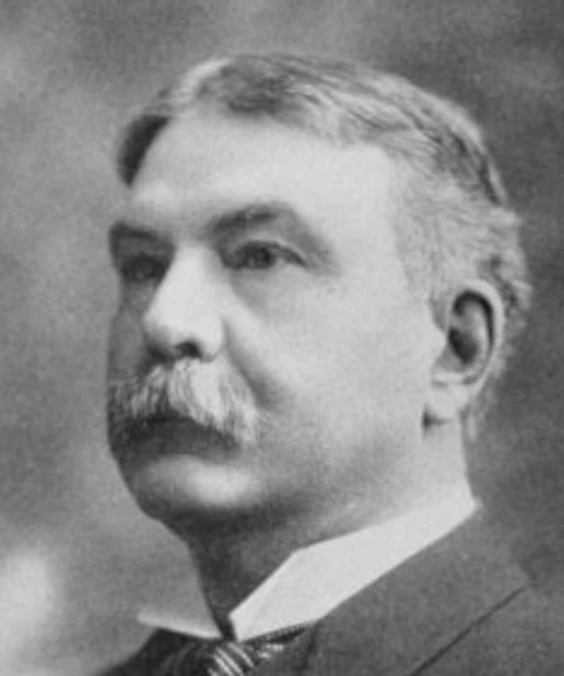
Theodore Roosevelt was the 26th President of the United States, serving from 1901 to 1909. A member of the Republican Party, he was born on October 27, 1858, in New York. Roosevelt was a prominent leader of the Progressive Movement, advocating for domestic policies that included trust-busting, regulation of corporations, and conservation of natural resources. His administration is noted for significant reforms and the establishment of national parks and forests.

Quotes by year · 190219122,141 total · peak 1905 (747)
1902: 355 quotes1903: 523 quotes1904: 180 quotes1905: 747 quotes1906: 136 quotes1907: 46 quotes1908: 56 quotes1909: 60 quotes1910: 20 quotes1912: 18 quotes
Jan 1, 1900

From Hudson Bay to the Straits of Magellan, we, the men of the two Americas, have been conquering the wilderness, carving it into state and province, and seeking to build up in state and province governments which shall combine industrial…

gutenberg.org
Jan 1, 1900

Let us ever most vividly remember the falsity of the belief that any one of us is to be permanently benefited by the hurt of another.

gutenberg.org
Jan 1, 1900

More and more we are learning that to love one’s country above all others is in no way incompatible with respecting and wishing well to all others, and that, as between man and man, so between nation and nation, there should live the great…

gutenberg.org
Jan 1, 1900

Nor is there the least chance of its being broken, provided only that all of us alike act with full recognition of the vital need that each should realize that his own interests can best be served by serving the interests of others.

gutenberg.org
Jan 1, 1900

There are certain truths which are so commonplace as to be axiomatic, and yet so important that we can not keep them too vividly before our minds.

gutenberg.org
Jan 1, 1900

We can not retain the full measure of our self-respect if we can not retain pride in our citizenship.

gutenberg.org
Jan 1, 1900

If rowing or foot-ball or base-ball is treated as the end of life by any considerable section of a community, then that community shows itself to be in an unhealthy condition.

gutenberg.org
Jan 1, 1900

There is no place among us for the mere pessimist; no man who looks at life with a vision that sees all things black or gray can do aught healthful in molding the destiny of a mighty and vigorous people.

gutenberg.org
Jan 1, 1900

But there is just as little use for the foolish optimist who refuses to face the many and real evils that exist, and who fails to see that the only way to ensure the triumph of righteousness in the future is to war against all that is…

gutenberg.org
Jan 1, 1900

This twentieth century is big with the fate of the nations of mankind, because the fate of each is now interwoven with the fate of all to a degree never even approached in any previous stage of history.

gutenberg.org
Jan 1, 1900

It is very much easier to carry out the former part of the order than the latter; while, on the other hand, it is of much more importance for the good of mankind that our goodness should be accompanied by wisdom than that we should merely…

gutenberg.org
Jan 1, 1900

During the last century we have on the whole made long strides in the right direction, but we have very much yet to learn.

gutenberg.org
Jan 1, 1900

The century upon which we have just entered must inevitably be one of tremendous triumph or of tremendous failure for the whole human race, because, to an infinitely greater extent than ever before, humanity is knit together in all its…

gutenberg.org
Jan 1, 1900

In order to act wisely we must first see clearly.

gutenberg.org
Jan 1, 1900

Character is shown in peace no less than in war.

gutenberg.org
Jan 1, 1900

We all look forward to the day when there shall be a nearer approximation than there has ever yet been to the brotherhood of man and the peace of the world.

gutenberg.org
Jan 1, 1900

Our greatest statesmen have always been those who believed in the nation—who had faith in the power of our people to spread until they should become the mightiest among the peoples of the world.

gutenberg.org
Jan 1, 1900

We have got to see the work through, because we are not a nation of weaklings.

gutenberg.org
Jan 1, 1900

We are strong men, and we intend to do our duty.

gutenberg.org
Jan 1, 1900

We have got to stay there, establish order, and then give the inhabitants as much self-government as they show they can use to advantage.

gutenberg.org
Jan 1, 1900

To do our duty—that is the sum and substance of the whole matter.

gutenberg.org
Jan 1, 1900

As we perform those duties well or ill, so will we, in large part, determine our right to a place among the great nations of the earth.

gutenberg.org
Jan 1, 1900

Unless a man is honest we have no right to keep him in public life, it matters not how brilliant his capacity, it hardly matters how great his power of doing good service on certain lines may be.

gutenberg.org
Jan 1, 1900

If we are frightened at the task, above all, if we are cowed or disheartened by any check, or by the clamor of the sensation-monger, we shall show ourselves weaklings unfit to invoke the memories of the stalwart men who fought to a finish…

gutenberg.org
Jan 1, 1900

If we do not rule wisely, and if our rule is not in the interest of the peoples who have come under our guardianship, then we had best never to have begun the effort at all.

gutenberg.org

Politicians like Teddy Roosevelt