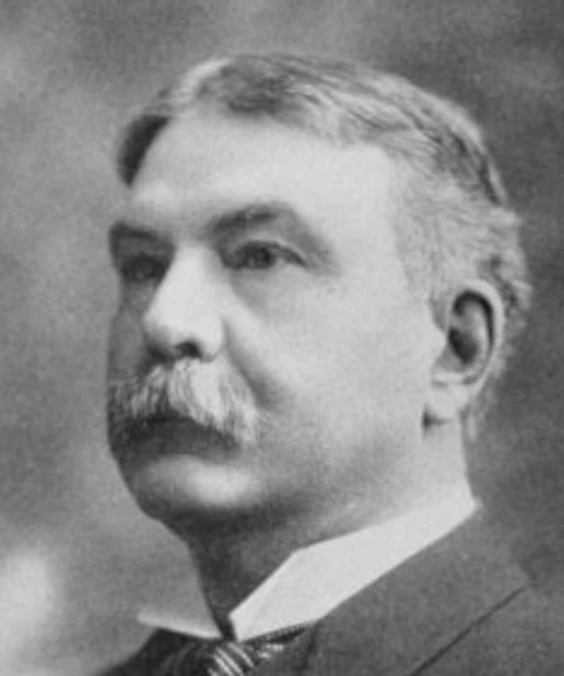
Political Quotes

Teddy Roosevelt

The Public Record

Theodore Roosevelt was the 26th President of the United States, serving from 1901 to 1909. A member of the Republican Party, he was born on October 27, 1858, in New York. Roosevelt was a prominent leader of the Progressive Movement, advocating for domestic policies that included trust-busting, regulation of corporations, and conservation of natural resources. His administration is noted for significant reforms and the establishment of national parks and forests.

Quotes by year · 190219122,141 total · peak 1905 (747)
1902: 355 quotes1903: 523 quotes1904: 180 quotes1905: 747 quotes1906: 136 quotes1907: 46 quotes1908: 56 quotes1909: 60 quotes1910: 20 quotes1912: 18 quotes
Jan 1, 1900

In applying the new principles to our conditions we have found the Federal Constitution a nearly perfect instrument.

gutenberg.org
Jan 1, 1900

Liar” is just as ugly a word as “thief,” because it implies the presence of just as ugly a sin in one case as in the other.

gutenberg.org
Jan 1, 1900

The Romans kept national unity, but only by means of a crushing centralized despotism.

gutenberg.org
Jan 1, 1900

The system of a closely knit and indestructible union of free commonwealths has enabled us to do what neither Greek nor Roman in their greatest days could do.

gutenberg.org
Jan 1, 1900

In all the history of mankind there is nothing that quite parallels the way in which our people have filled a vacant continent with self-governing commonwealths, knit into one nation.

gutenberg.org
Jan 1, 1900

We need fearless criticism of dishonest men, and of honest men on any point where they go wrong; but even more do we need criticism which shall be truthful both in what it says and in what it leaves unsaid—truthful in words and truthful in…

gutenberg.org
Jan 1, 1900

Woe to all of us if ever as a people we grow to condone evil because it is successful.

gutenberg.org
Jan 1, 1900

We are in honor bound each to strive according to his or her strength to bring ever nearer the day when justice and wisdom shall obtain in public life as in private life.

gutenberg.org
Jan 1, 1900

We can not retain the full measure of our self-respect if we can not retain pride in our citizenship.

gutenberg.org
Jan 1, 1900

Our greatest statesmen have always been those who believed in the nation—who had faith in the power of our people to spread until they should become the mightiest among the peoples of the world.

gutenberg.org
Jan 1, 1900

Under any governmental system which was known to Europe, the problem offered by the westward thrust, across a continent, of so masterful and liberty-loving a race as ours would have been insoluble.

gutenberg.org
Jan 1, 1900

To be a good husband or good wife, a good neighbor and friend, to be hard-working and upright in business and social relations, to bring up many healthy children—to be and to do all this is to lay the foundations of good citizenship as…

gutenberg.org
Jan 1, 1900

Each of us has not only his duty to himself, his family, and his neighbors, but his duty to the State and to the nation.

gutenberg.org
Jan 1, 1900

It is a great mistake to think that the extremist is a better man than the moderate.

gutenberg.org
Jan 1, 1900

The great civilized and colonizing races of antiquity, the Greeks and the Romans, had been utterly unable to devise a scheme under which when their race spread it might be possible to preserve both national unity and local and individual…

gutenberg.org
Jan 1, 1900

If, after making all the effort that his strength of body and of mind permits, he yet honorably fails, why, he is still entitled to a certain share of respect because he has made the effort.

gutenberg.org
Jan 1, 1900

While striving to prevent industrial injustice at home, we must not bring upon ourselves industrial weakness abroad.

gutenberg.org
Jan 1, 1900

Hysteria in any form is incompatible with sane and healthy endeavor.

gutenberg.org
Jan 1, 1900

It is a law of our intellectual development that the greatest and most important truths, when once we have become thoroughly familiar with them, often because of that very familiarity grow dim in our minds.

gutenberg.org
Jan 1, 1900

Modern industrial competition is very keen between nation and nation, and now that our country is striding forward with the pace of a giant to take the leading position in the international industrial world, we should beware how we fetter…

gutenberg.org
Jan 1, 1900

But if he does not make the effort, or if he makes it half-heartedly and recoils from the labor, the risk, or the irksome monotony of his task, why, he has forfeited all right to our respect, and has shown himself a mere cumberer of the…

gutenberg.org
Jan 1, 1900

If a man is dishonest he should be driven from public life.

gutenberg.org
Jan 1, 1900

The true welfare of the nation is indissolubly bound up with the welfare of the farmer and the wage-worker—of the man who tills the soil, and of the mechanic, the handicraftsman, the laborer.

gutenberg.org
Jan 1, 1900

On the other hand, it is equally true that the prosperity of any of us can best be attained by measures that will promote the prosperity of all.

gutenberg.org
Jan 1, 1900

The poorest motto upon which an American can act is the motto of “Some men down,” and the safest to follow is that of “All men up.” A good deal can and ought to be done by law.

gutenberg.org

Politicians like Teddy Roosevelt