Jul 1, 1886
I am utterly unable to discover any relation between this accident and the military service.
The Public Record
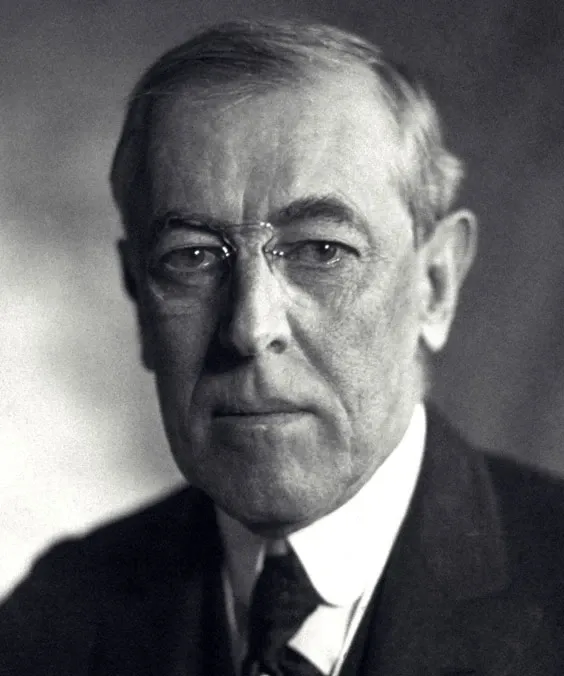
Grover Cleveland was the 22nd and 24th President of the United States, serving two non-consecutive terms from 1885 to 1889 and again from 1893 to 1897. A member of the Democratic Party, he was born in New Jersey and is known for his commitment to honesty and integrity in government. Cleveland's presidency was marked by his opposition to high tariffs and his efforts to reform the civil service system, which earned him a reputation as a champion of the common man.
I am utterly unable to discover any relation between this accident and the military service.
I transmit herewith a communication, with an accompanying paper, from the Secretary of State, in relation to the distribution of the award of the late Mexican Claims Commission in the case of S. A. Belden & Co. against the Republic of…
I therefore suggest that a second provision to the law accepting her be made giving authority to the Court of Claims to hear and determine the question of title.
I am of the opinion that the investigation there should be fully completed before special legislation is resorted to.
I hereby return without approval House bill No. 7167, entitled 'An act for the relief of Mrs. Maria Hunter.'
I should be sorry to be a party to a scheme permitting him to profit by the death of his patriotic son.
I am entirely satisfied that all has been done in this case that the most liberal treatment demands.
I base my action upon the opinion, derived from an examination of the circumstances attending the death of the claimant's husband, that his fatal disease did not have its origin in his military service and was entirely disconnected…
It is proposed by this bill to grant a pension to the person above named, who was discharged from the military service in December, 1864.
Although the deceased soldier held a high rank, I have no doubt his widow will receive ample justice through the instrumentality organized for the purpose of dispensing the nation's grateful acknowledgment of military service in its…
I am of the opinion that the matter should be determined by the Bureau to which it has properly been presented before special legislation should be invoked.
I herewith return without approval House bill No. 6774, entitled 'An act granting a pension to Bruno Schultz.'
I hereby return without approval House bill No. 7931, entitled 'An act increasing the pension of Clark Boon.'
I am entirely satisfied with the rejection of this claim by the Pension Bureau.
I hereby return without approval House bill 576, entitled 'An act for the relief of Louisa C. Beezeley.'
I return herewith without approval House bill No. 6117, entitled 'An act granting a pension to James D. Cotton.'
There is no doubt that his disability existed to quite an extent at least before his enlistment.
If such speculations and presumptions as this are to be indulged, we shall find ourselves surrounded and hedged in by the rule that all men entering an army were free from disease or the liability to disease before their enlistment.
I think upon all the facts presented the Pension Bureau properly rejected this claim, because there was no record of the injury and no satisfactory evidence produced showing that it was incurred in service and in line of duty, 'all sources…
In this condition of this case I think this bill should not be approved.
The widow's claim seems to have been properly rejected by the Pension Bureau on the ground that the soldier's death was not due to his military service.
Those who prosecute claims for pensions have grown very bold when cases of this description are presented for consideration.
Politicians like Grover Cleveland