Jun 4, 1888
The gross receipts of the office for the year ended June 30, 1887, are reported by the Postmaster-General at $5,337.
The Public Record
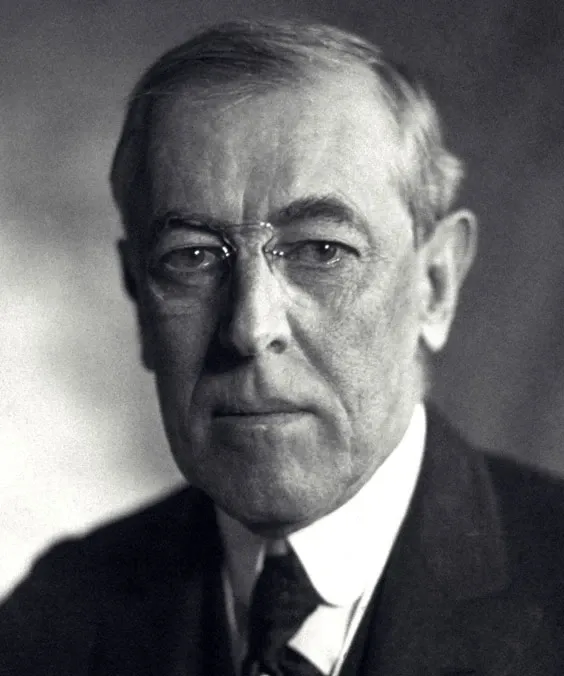
Grover Cleveland was the 22nd and 24th President of the United States, serving two non-consecutive terms from 1885 to 1889 and again from 1893 to 1897. A member of the Democratic Party, he was born in New Jersey and is known for his commitment to honesty and integrity in government. Cleveland's presidency was marked by his opposition to high tariffs and his efforts to reform the civil service system, which earned him a reputation as a champion of the common man.
The gross receipts of the office for the year ended June 30, 1887, are reported by the Postmaster-General at $5,337.
I return herewith without approval House bill No. 4467, entitled an act for the erection of a public building at Bar Harbor, in Maine.
I am decidedly of the opinion that if a public building is to be erected at this place, of which at present there appears to be no necessity, it should be done under a system which will not give the post-office and the postmaster there an…
The entire town within which Bar Harbor is situated contained in 1880 1,639 inhabitants, as appears by the census of that year.
I can see no reason why additional ground should not be purchased for 'the proper accommodation and safety' of a large proportion of the public buildings completed and in process of erection.
There is no pretense that there is any need of a public building there except to accommodate the post-office.
The permission to purchase this addition at a price per foot greatly in excess of that already owned by the Government seems so unnecessary, except to benefit the owner, that I am of the opinion it should not be granted.
Upon the verdict found, in the absence of insanity caused by any disability, it can hardly be claimed that his death was caused by his military service.
I am satisfied that the appropriation of $75,000 for a building at Youngstown is at present not justified.
I return without approval Senate bill No. 835, entitled 'An act for the relief of Elisha Griswold.'
His claim based upon this injury was, in my opinion, properly rejected as having no connection with his military service.
A letter addressed to the postmaster at Youngstown containing certain questions bearing upon the necessity of a new building failed to elicit a reply.
I can not see that it was such a result of military service as to entitle the applicant to a pension.
I return without approval Senate bill No. 347, entitled 'An act to provide for the erection of a public building in the city of Youngstown, Ohio.'
The utmost liberality to those who were in our Army hardly justifies a compensation by way of pension for injuries incurred in sport or pastime or as the result of a practical joke.
There does not seem to be any governmental purpose to which such a building could be properly devoted except the accommodation of the post-office.
This bill authorizes the Secretary of the Treasury to pay to the party named therein the sum of $905.
If the claims mentioned are such as should be paid by the United States, there appears to be no difficulty in making an appropriation for their payment from the general funds of the Government.
It is directed, however, that this money be paid out of the Texas indemnity fund.
This balance was on the 30th day of June, 1877, carried to the surplus fund and covered into the Treasury.
Thus since that date it seems there has been no Texas indemnity fund, nor is there any such fund now from which the money mentioned in the bill herewith returned can be paid.
I return without approval House bill No. 5234, entitled 'An act granting a pension to Cyrenius G. Stryker.'
Politicians like Grover Cleveland