Jul 16, 1888
To grant a pension in such a case would establish a precedent in the appropriation of money from the public Treasury which I can hardly think we should be justified in following.
The Public Record
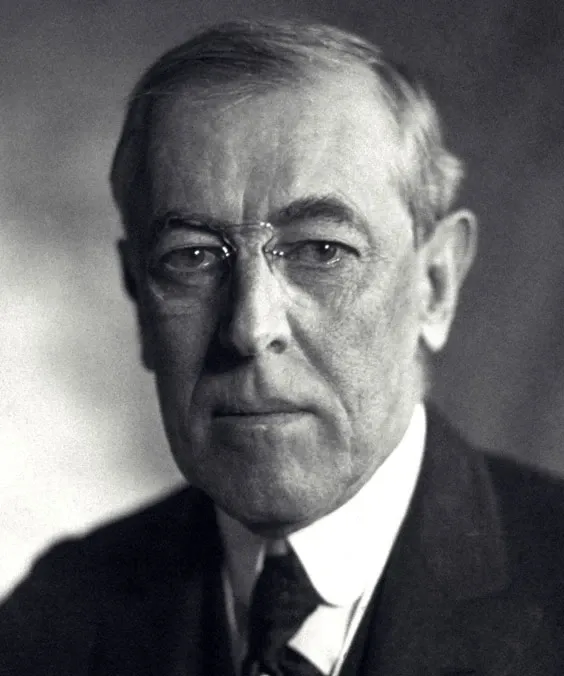
Grover Cleveland was the 22nd and 24th President of the United States, serving two non-consecutive terms from 1885 to 1889 and again from 1893 to 1897. A member of the Democratic Party, he was born in New Jersey and is known for his commitment to honesty and integrity in government. Cleveland's presidency was marked by his opposition to high tariffs and his efforts to reform the civil service system, which earned him a reputation as a champion of the common man.
To grant a pension in such a case would establish a precedent in the appropriation of money from the public Treasury which I can hardly think we should be justified in following.
the overwhelming weight of proof seems to establish that whatever disabilities exist are the result of disease contracted by vicious habits
I will take no part in putting a name upon our pension roll which represents a Union soldier found fighting against the cause he swore he would uphold.
It is proposed by this bill to pension the beneficiary named therein, as the widow of Edmund Fitzmorris, under the provisions and limitations of the general pension laws.
I am unable to see how his death can be in any way attributed to his military service or his widow be justly pensioned therefor.
I return without approval House bill No. 9520, entitled 'An act for the relief of Mary Fitzmorris.'
I return without approval Senate bill No. 470, entitled 'An act granting a pension to Amanda F. Deck.'
The name of the beneficiary is already upon the pension roll, and she is now entitled to receive precisely the sum as a pensioner which is allowed her under this bill.
As her application to the Pension Bureau was quite lately favorably acted upon, it is supposed this special bill for her relief was passed by the Congress in ignorance of that fact.
A pension should not be allowed, for the reason, among others, that three careful medical examinations failed to disclose any pensionable disability.
The rejection of the widow's claim by the Pension Bureau on the ground that the cause of death was mainly intemperance was correct.
I can not believe that an injury was sustained such as was specified by the applicant in 1880 and that nothing was said of it either in the claim made in 1864 or in 1870.
I am satisfied that this case was properly disposed of by the Pension Bureau.
I have considered the pension list of the Republic a roll of honor, bearing names inscribed by national gratitude, and not by improvident and indiscriminate almsgiving.
I insist that the true soldier is a good citizen, and that he will be satisfied with generous, fair, and equal consideration for those who are worthily entitled to help.
I can not see how the cause of death can be connected with his service or with the incapacity for which he was placed upon the retired list.
The death of the son of the beneficiary is far from being satisfactorily established.
I transmit herewith, with a view to its ratification, a convention for the extradition of criminals between the United States of America and the Republic of Colombia.
I can not spell out any principle upon which the bounty of the Government is bestowed through the instrumentality of the flood of private pension bills that reach me.
Ordered, That noncompetitive examinations to test fitness for the following designated places in the classified departmental service be, and are hereby, authorized.
If he had refrained from interference, he would have saved himself and performed to the utmost his military duty.
His presence on the boat was in the line of duty, but he had no charge of the rest of the men.
The death of this soldier was not the result of his military service.
Politicians like Grover Cleveland