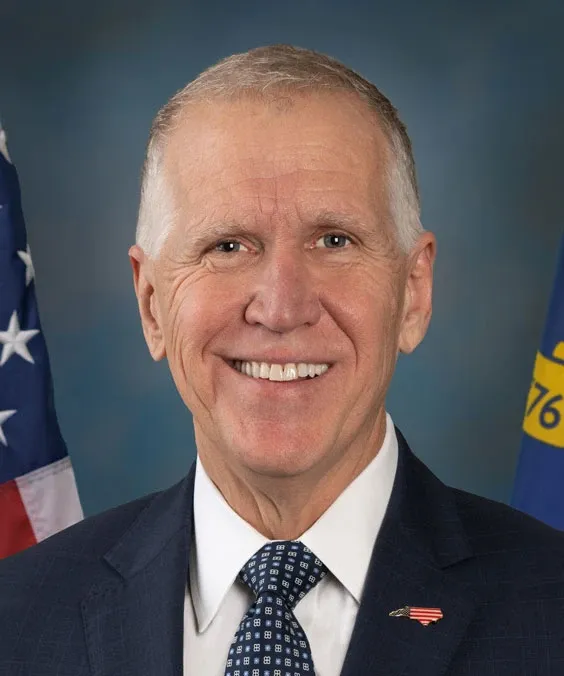
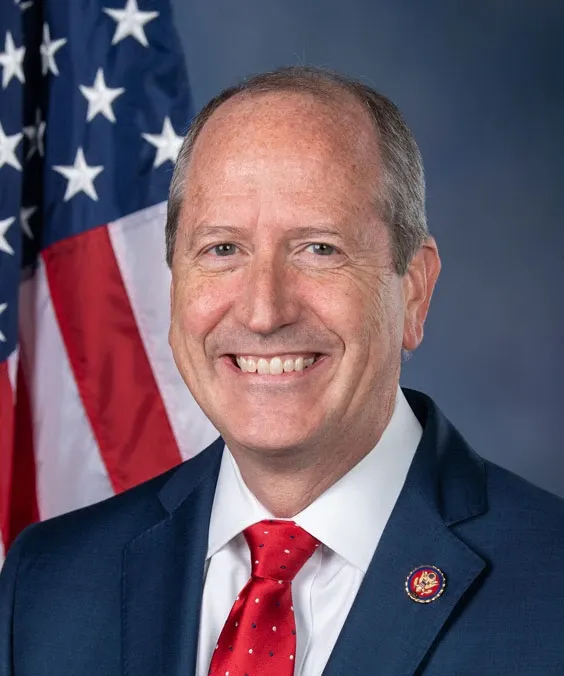
Richard Burr
The Public Record
Richard Burr is an American politician serving as the senior United States senator from North Carolina since 2005. A member of the Republican Party, Burr has focused on issues such as veterans' health care and the relationship between the Department of Veterans Affairs and academic institutions. Throughout his tenure, he has been involved in various legislative efforts aimed at improving services for veterans and enhancing the efficiency of government programs.
Apr 21, 2009
Listen, this is not the first time I have been on this cabbage truck, and it has been in Republican Administrations and now it happens to be a Democratic Administration and the likelihood is your testimony sat at OMB, and OMB ignored the…
Apr 21, 2009
I want to go on the record in terms of my commitment to those individuals--and this is my favorite expression, Mr. Chairman--that allow us to do what we do because they did what they did in protecting this country and fighting for us.
Apr 21, 2009
I ask my colleagues for their support on S. 669 so that we can right what I think is a tremendous wrong.
Apr 21, 2009
This assessment of our veterans is not only misguided, it is an absolute insult to every one of them.
Apr 21, 2009
We must provide our veterans with the due process granted to every other citizen.
Apr 21, 2009
One of the bills on the agenda that I feel passionately about is S. 669, the Veterans' 2nd Amendment Protection Act.
Apr 21, 2009
I am pleased to see that legislation I introduced to create a voluntary dental insurance benefit for all veterans and survivors of veterans enrolled for care at VA is on the agenda.
Apr 21, 2009
It is very important and possible that we will have two appropriations for VA enacted this year, the first for 2010, the second for 2011.
Apr 21, 2009
I will never complain to you about the volume of what we are trying to undertake in this Committee, I will assure you.
Apr 21, 2009
The practice of stop-loss, or involuntarily keeping soldiers on Active Duty beyond the end of their obligated active service, would come to an end by March 2011.
Apr 21, 2009
The incidences of suicides, particularly in the Army, were increasing at an alarming rate.
Apr 21, 2009
What impact will the increase in the end strength of the Army have on dwell time?
Apr 21, 2009
We simply cannot achieve desired BOG dwell ratios until demand is reduced to a sustainable level.
Apr 21, 2009
How many BCTs need to be rated C-2 or above in order for the Army to declare a restoration of the desire rebalancing?
Apr 21, 2009
Has the Department of the Army developed a withdrawal and reset plan based on a reduced presence in Iraq to raise the readiness levels over time for all combat brigades?
Apr 21, 2009
In your opinion, will the Army's share of a residual force of 35,000-50,000 in Iraq continue to be a significant strain on the Army's ability to restore their balance?
Apr 21, 2009
Unfortunately, the Army cannot influence demand, and the current level does not appear likely to improve significantly for the foreseeable future.
Apr 21, 2009
The challenge continues to be complicated by changing circumstances and increased demand on the force.
Apr 21, 2009
Can I get your assurance that each contract or task or delivery order carried out in the future for the construction, installation, repair, maintenance, or operation of expeditionary facilities for the Army incorporates generally accepted…
Apr 21, 2009
The fact that we have lost military personnel to accidental electrocution is a tragic circumstance that must not be allowed to persist.
Apr 21, 2009
Can you assess the impact to Army and Marine Corps operations in Iraq and Afghanistan if you were prohibited from using service support contracts such as the Army's Logistics Civil Augmentation Program (LOGCAP)?
Apr 21, 2009
General Amos and General Chiarelli, I have a question about the impact to military readiness and operations of support provided by contractors in Iraq and Afghanistan.
Politicians like Richard Burr