Apr 15, 2013
How can you quantify the expense associated with mitigating a threat you can't even quantify?
The Public Record
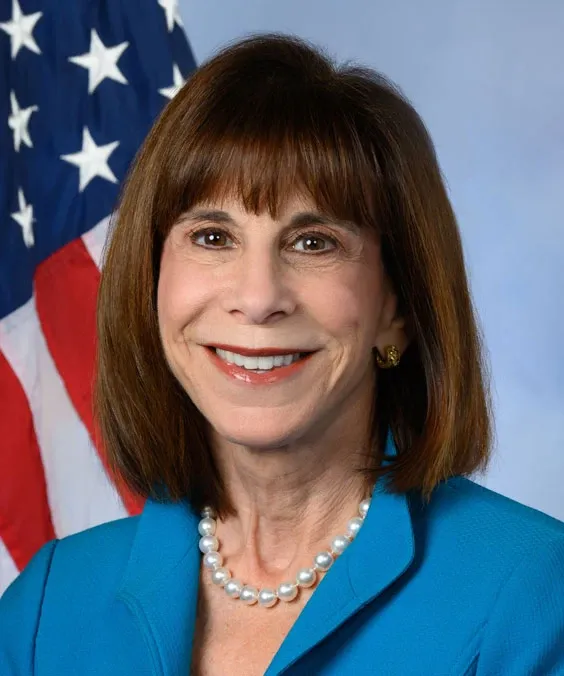
Deborah Koff Ross is an American politician serving as the U.S. Representative for North Carolina's 2nd congressional district since 2015. A member of the Democratic Party, she has focused on issues such as healthcare, education, and economic development during her time in office. Ross has been an advocate for women's rights and has worked to promote policies that support families and children. Before her election to Congress, she served in the North Carolina General Assembly, where she was known for her commitment to public service and community engagement.
How can you quantify the expense associated with mitigating a threat you can't even quantify?
Do you have any quantitative metrics that you use now to determine whether a company may be a grave threat?
I, and I think the American people, have many questions about how the Federal Reserve would decide if a company poses a grave threat to our economy.
So does it take--under Section 121, does it require that a company must first be in bankruptcy as a precondition to be considered a grave threat?
I guess what I am getting at, and my point is, that there are no standards available right now to determine grave threat for either a bank SIFI or a nonbank SIFI.
So it is more or less a game-time decision as to determine whether a grave threat exists.
Do you think that insurance companies at all are considered systemically important financial institutions?
I understand that just the other day, Mary Miller indicated that she thought it would be best if there was a joint rule delivered.
And being from Florida, where sunshine is very important, sunshine and the--arena has to do with transparency.
But you agree that the GAO report indicated that they have insufficient staff support? Is that true?
I firmly agree that banks should not be involved in proprietary trading when they are using insured deposits.
the public cannot easily monitor FSOC's progress toward fulfilling its statutory purpose because it does not maintain sufficiently detailed records of its meetings.
The impact of not having a consistent rule is going to be devastating on the financial industry.
I urge the committee to pass H.R. 239, the ZERO Act, to smoke out waste in the Federal agencies.
This responsibility to our constituents is why I suggest adopting legislation requiring a pay cut should Congress fail to pass a budget that balances within 10 years.
We need to reform Medicare and our other entitlements if we want to maintain the ability and flexibility to invest in our other programs.
One solution I have advocated for would be, over time gradually increasing the retirement age for both Social Security and Medicare to 72.
I thank you for your time and I hope that we will begin to look at some radical ways to change the direction of our country.
I have introduced H.R. 239, the Zero-Based Budgeting Ensures Responsible Oversight, or ZERO, Act...
Removing the baseline from agency and department budgets and implementing zero-based budgeting instead would get rid of the automatic spending increases.
Like this little family that is living beyond their means, we are going to have to get America back living within our means.
Baseline budgeting is one of the most sinister ways that politicians claim to cut spending when they are actually increasing spending.
Politicians like Deborah Koff Ross