Jul 27, 2022
Now the Supreme Court is going to have to decide whether or not State courts have any authority whatsoever over election laws within the State.
The Public Record
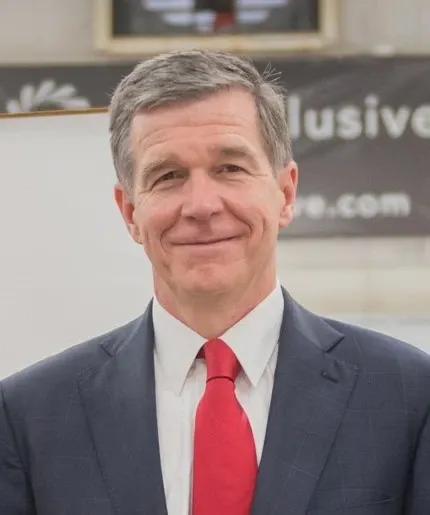
G. K. Butterfield is a Democratic politician from North Carolina, born on April 27, 1946. He served as a member of the U.S. House of Representatives, representing North Carolina's 1st congressional district from 2004 until 2022. During his tenure, Butterfield focused on issues such as healthcare, education, and civil rights, advocating for policies that support underserved communities. He has been a prominent voice for African American representation in Congress and has served in various leadership roles within the Democratic Party. Butterfield's career in public service also includes time as a judge and a member of the North Carolina Utilities Commission.
★ Featured Quote
May 23, 2023
I also want to do another promotion of the briefing that Congressman Butterfield and I are hosting on pediatric trauma, May 24th.
— G. K. Butterfield
Now the Supreme Court is going to have to decide whether or not State courts have any authority whatsoever over election laws within the State.
The State supreme court ruled that the congressional map was an extreme, intentional partisan gerrymander and directed legislature to fix it.
We took the case into Federal court, and the lower Federal courts ruled in our favor and ruled that the State legislature engaged in partisan gerrymandering and that it was a violation of the Federal Constitution.
Unfortunately, the High Court decided that political gerrymandering is not protected by the Federal Constitution.
I represent one of thirteen districts in North Carolina. And, as all of you certainly know, the Rucho case originated in my State, as well as the Moore v. Harper case.
Just because you have high turnout doesn't mean that bad laws aren't barriers to voting.
Floridians deserve free and fair elections, not more restrictions on access to the ballot.
In conclusion, our democracy works best when every voter can make their voice heard.
The ability to cast a ballot free of undue burden and discrimination is the cornerstone of our participatory democracy.
Let's just keep fighting, let's keep pushing, and let's keep representing the people that elect us every 2 years.
The Voting Rights Act has transformed American politics and we are on a good trajectory.
Democrats are continuing to fight to get the John Lewis Voting Rights Advancement Act passed and the For the People Act passed.
We want to minimize opportunities for misinformation, and we want to minimize opportunities to overturn an election.
What is the one thing, one key thing that you think Congress should do to improve access to the ballot for all of your fellow Pennsylvanian citizens?
More people, everybody with legal access to voting and we must stop the undermining of our confidence in elections.
Thank you for the incredible work that you do in the House of Representatives.
Let me also just say to my colleagues that I had every intention of being with you today.
Let me say thank you to our colleague, and fellow Member of the Committee on House Administration, my friend Congresswoman Mary Gay Scanlon of the Fifth District.
What was struck down was Section 4, which is the formula that decides which States, which counties, which cities are included in Section 5.
Section 5 has been very meaningful and has meant a lot to the political progress the minority groups have made across the country.
Section 2 has been very effective down through the years, and those of you who have been involved in litigation, you know what I mean.
The burden of proof is on the Member to prove that she is not guilty of the offense for which she is charged.
I had spent thirty years in a courtroom before coming to Congress, and, you know, in a courtroom, the rules are so much different than the rules for ethics for Members of Congress.
Politicians like G. K. Butterfield