The close vote on the Civil Rights Bill admonished the Republicans of their danger.
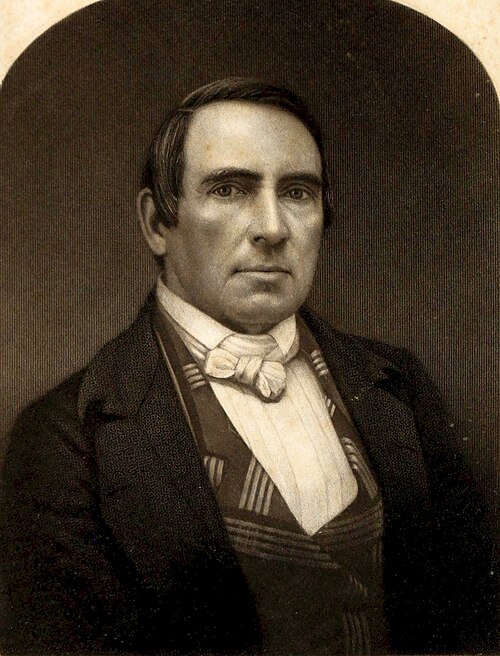
James Blaine
The Public Record
James Gillespie Blaine was an American statesman and Republican politician who represented Maine in the United States House of Representatives from 1863 to 1876, served as Speaker of the House from 1869 to 1875, and was a United States senator from 1876 to 1881. He served twice as Secretary of State, under presidents James A. Garfield and Chester A. Arthur in 1881, and under Benjamin Harrison from 1889 to 1892. He sought the Republican presidential nomination in 1876 and 1880, and received the nomination in 1884, narrowly losing the general election to Democratic nominee Grover Cleveland. Blaine was a prominent figure in the moderate faction of the Republican Party, known as the "Half-Breeds".
gutenberg.org
If it is blood they want let them have courage enough to strike like men.
I am not afraid of the assassin attacking me where a brave and courageous man would attack another.
Does not the murder of Lincoln appease the vengeance and wrath of the opponents of this Government?
Whether by assassination or not, there are individuals in this Government, I doubt not, who want to destroy our institutions and change the character of the Government.
The American people will speak for their interests, and they will know who are their friends and who their enemies.
There is an earthquake coming, gentlemen: there is a ground-swell coming of popular judgment and indignation.
Overcome in both chambers by the aggressive force of a majority which transcended the limit of two-thirds, they congratulated themselves that this very power, beyond the restraint of the Executive and exercised in defiance of his opinions…
It affected moreover only that great section of country which had engaged in the crime of rebellion; and if it were viewed only as a punishment of those who had sought the destruction of the Government, they felt more than justified in…
They knew that the great mass of the North was heartily opposed to slavery: they knew that its abolition was not merely right but was destined to be popular.
In the Constitutional amendment abolishing slavery they went forward without distrust, with complete approbation of conscience, with undoubting belief in the expediency of the act.
Many who were borne along in the irresistible current of aggressive reform dreaded all the more the effect of the votes which the moral and political pressure of their constituents compelled them to give.
They did not object to their inherent and essential justice and rightfulness, but with instinctive caution they feared that an attempt to wipe away the prejudices of two centuries in a single day might lead to a dangerous re-action, and to…
It was not, of course, without some misgiving, without a certain timidity and distrust, that many Republicans were brought to the support of these measures.
It was an illustration of how rapidly public opinion is changed, and with what force it may be brought to bear upon a given question in a period that is filled with the spirit of revolutionary excitement.
The time will come when the people, being convinced of these things, will say that there is more to be feared from a combined Congress than from a President, in relation to the liberties of the people." The angry position of Mr.
I feel myself justified in taking every advantage which the Almighty has put in my hands to defend the power and authority of this body.
Because I believe the great question of Congressional power and authority is at stake here, I yield to no importunities on the other side.
Such, sir, is not the meaning of our Constitution: such is not the meaning of American citizenship.
Trumbull argued with great force that the citizen has a counter-claim upon the Government for the comprehensive claim which the Government has upon the citizen.
The tendency of the bill must be to resuscitate rebellion and to arrest the progress of those influences which are more closely thrown around the States--the bond of union and peace.
The farther the Republic drifted from the old moorings of the equality of human rights, the more numerous became the judicial and legislative utterances in conflict with some of the leading features sought to be re-established by this bill.
This law would destroy all State power over the subject; and the man who offended in the matter of marriage between the races, so far from being punished himself, could bring the judge who attempted to enforce the law against him into…
If he comes from England or from any of the countries of the world he becomes that moment an inhabitant; and if this bill is to pass in the shape it stands he can buy, he can sell, he can hold, he can inherit and be inherited from and…
By using the word inhabitant in the bill he made it impossible for any State in the Union to "draw any distinction between citizens who have been there from birth, or have been residents for a long time, and him who comes into the State…
Politicians like James Blaine