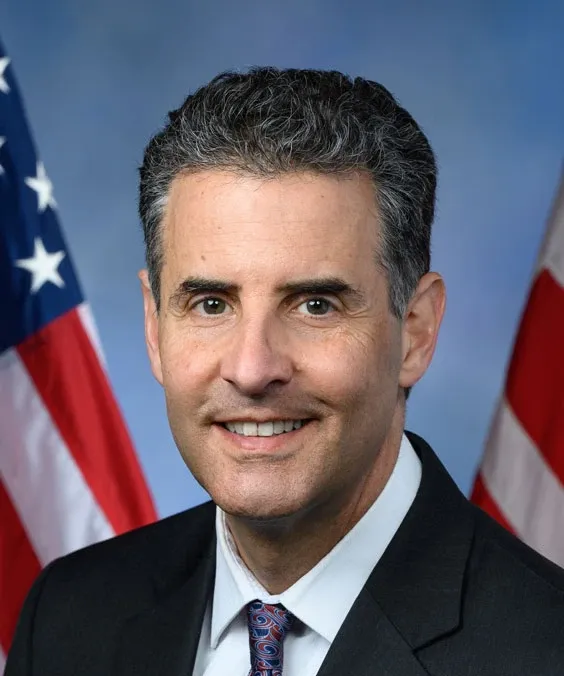
Ben Cardin
The Public Record
Ben Cardin is a United States Senator from Maryland, serving since January 4, 2007. A member of the Democratic Party, he has focused on issues such as healthcare, education, and civil rights throughout his political career. Prior to his tenure in the Senate, Cardin served in the U.S. House of Representatives from January 3, 1987, to January 3, 2007, where he was known for his work on tax policy and social security reform.
Mar 24, 2021
The United States must sanction these entities and their subsidiaries to meaningfully degrade the junta's sources of revenue.
Mar 24, 2021
Coordinated bilateral sanctions should be imposed on the junta's major sources of revenue, including military owned and controlled enterprises and the oil and gas sector.
Mar 24, 2021
The brutality of the military comes in sharp contrast to the bravery of protesters like 19-year-old Kial Sin, nicknamed Angel.
Mar 24, 2021
The coup carried out by the Burmese military has sparked widespread civilian outrage inside Burma, leading to sweeping peaceful protests and strikes.
Mar 24, 2021
The Biden administration's response to the coup was swift and I applaud their attention to this crisis.
Mar 24, 2021
The United States and its allies should do everything in their collective power to avoid this outcome by providing the peaceful opposition movement in Burma the opportunity to succeed.
Mar 24, 2021
It is my hope that we can coalesce around further concrete actions the United States Government can take to help alleviate the suffering of the people of Burma.
Mar 24, 2021
I intend to bolster our support for United States' allies and find avenues for greater cooperation and U.S. investment in the region.
Mar 24, 2021
I also believe that the international community, with leadership from the United States, must engage in a diplomatic offensive.
Mar 23, 2021
Well, thank you, Chairman and Ranking Member, for the bipartisan manner in which we are bringing forward very important legislation today.
Mar 23, 2021
I just want to congratulate the Committee leadership for forwarding legislation in the bipartisan manner the mission of our Committee for drinking water and wastewater infrastructure.
Mar 23, 2021
We have a greater tradition of democratic governments. But we are very much compromised by systemic corruption that exists in so many countries.
Mar 23, 2021
I would just point out that when parliamentarians are involved, there is a much better chance that the policies adopted by the Organization will be implemented in their particular states.
Mar 23, 2021
We have so-called democratic states that have weakness in governance that we really need to work on.
Mar 23, 2021
I think your response underscores the importance to deal with corruption and transparency that you have talked about before.
Mar 23, 2021
The initiation of the trafficking commitments globally to fight, human trafficking, to deal with the Global Magnitsky statute, came out of the Parliamentary Assembly.
Mar 16, 2021
This is obviously an extremely important subject. We know that nursing home safety has been a critical part of dealing with COVID-19.
Mar 16, 2021
So I guess my question to all of us is that, obviously, a lot of this can be done administratively, but we in Congress might need to take a look at policies that reflect that.
Mar 16, 2021
We are going to be looking at the existing tools to see whether we cannot make them more effective in carrying out the mission, particularly reaching the traditionally underserved communities, and the smaller of the small businesses.
Mar 16, 2021
We need to work with the SBA, because they have raised some administrative issues.
Politicians like Ben Cardin