Surely not those of the slaves themselves, the suffering, the laborious, the producing classes.
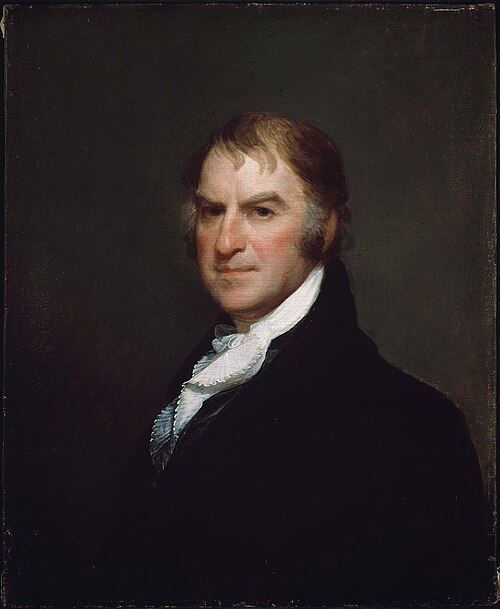
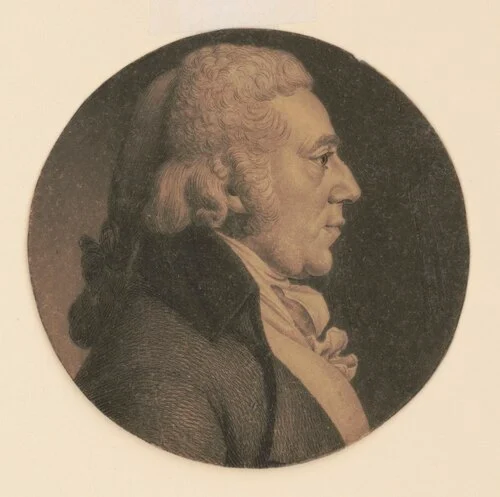
Josiah Quincy
The Public Record
Josiah Quincy III was an American educator and political figure. He was a member of the U.S. House of Representatives (1805–1813), mayor of Boston (1823–1828), and President of Harvard University (1829–1845). The historic Quincy Market in downtown Boston is named in his honor. A panel of 69 scholars in 1993 ranked him among the ten best mayors in American history.
gutenberg.org
Nor is there a shadow of reason why feelings of the house should be outraged by the presentation of a petition from slaves, any more than by petitions from soldiers in the army, seamen in the navy, or from the working-women in a…
One of the most sacred duties of a member is to present the petitions committed to his charge; a duty which he cannot refuse or neglect to perform without violating his oath to support the constitution of the United States.
What have the feelings of the house to do with the free agency of a member in the discharge of his duty?
There is an express provision of the constitution that Congress shall pass no law abridging the right of petition; and here is a resolution declaring that a member ought to be considered as regardless of the feelings of the house, the…
I pray you to remember this, not on my account, or from the suspicion that I could or shall ever be moved from my purpose by such menaces, but to give you the measure of slaveholding freedom of speech, of the press, of action, of thought!
I am not to be intimidated by him, nor by all the Grand Juries of the universe.
If the gentleman from South Carolina, by bringing forward this resolution of censure, thinks to frighten me from my purpose, he has mistaken his man.
What! are we from the Northern States to be indicted as felons and incendiaries, for presenting petitions not exactly agreeable to some members from the South, by a jury of twelve men, appointed by a marshal, his office at the pleasure of…
Adams, in reply, exclaimed: "If this is true,--if a member is there made amenable to the Grand Jury for words spoken in debate,--I thank God I am not a citizen of South Carolina!
The right of petition belongs to all; and so far from refusing to present a petition because it might come from those low in the estimation of the world, it would be an additional incentive, if such an incentive were wanting.
Does it say that, before presenting a petition, you shall look into it, and see whether it comes from the virtuous, and the great, and the mighty?
There is no absolute monarch on earth who is not compelled, by the constitution of his country, to receive the petitions of his people, whosoever they may be.
And where is the degree of vice or immorality which shall deprive the citizen of the right to supplicate for a boon, or to pray for mercy?
Where, in the land of freemen, was the right of petition ever placed on the exclusive basis of morality and virtue?
Where is your law which says that the mean, the low, and the degraded, shall be deprived of the right of petition, if their moral character is not good?
I adhere to the right of petition; and let me say here that, let the petition be, as the gentleman from Virginia has stated, from free negroes, prostitutes, as he supposes,--for he says there is one put on this paper, and he infers that…
Their petitions were treated with contempt, and the petitioners themselves loaded with foul and infamous imputations, poured forth on a class of citizens as pure and virtuous as the inhabitants of any section of the United States.
Among the outrages inflicted on that portion of the people of this country whose aspirations were raised to the greatest improvement that could possibly be effected in the condition of the human race,--the total abolition of slavery on…
He considered these attacks as outrages on the constitution of the country, and the freedom of the people, as far as they went.
It was indeed true that all discussion, all freedom of speech, all freedom of the press, on this subject, had been, within the last twelve months, violently assailed in every form in which the liberties of the people could be attacked.
He hoped the people of this country would be spared the mortification, the injustice, and the wrong, of a decision that such petitions should not be received.
Of the immediate causes of the war we are not yet fully informed; but I fear you will find them, like the remoter causes, all attributable to yourselves.
This, sir, is the remote and primitive cause of the present Indian war--your own injustice sanctioning and sustaining that of Georgia and Alabama.
To those prisons she committed inoffensive, innocent, pious ministers of the Gospel of truth, for carrying the light, the comforts, the consolations of that Gospel, to the hearts and minds of those unhappy Indians.
Politicians like Josiah Quincy