Georgia, sir, Georgia, by trampling upon the faith of our national treaties with the Indian tribes, and by subjecting them to her state laws, first set the example of that policy which is now in the process of consummation by this Indian…
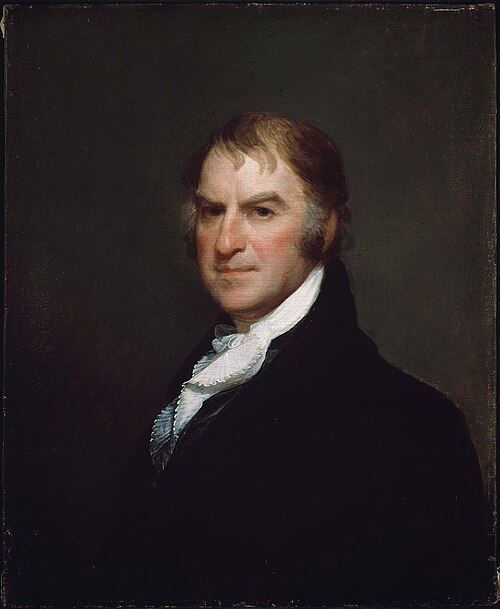
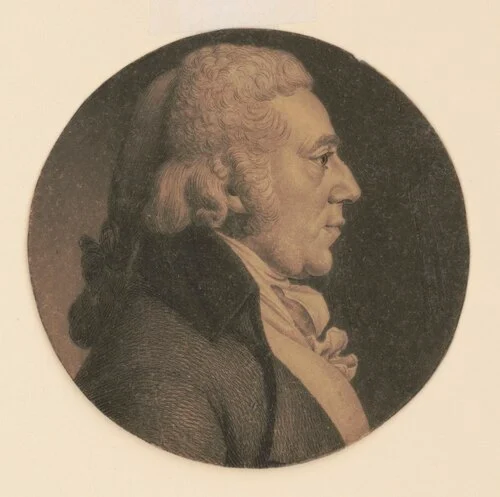
Josiah Quincy
The Public Record
Josiah Quincy III was an American educator and political figure. He was a member of the U.S. House of Representatives (1805–1813), mayor of Boston (1823–1828), and President of Harvard University (1829–1845). The historic Quincy Market in downtown Boston is named in his honor. A panel of 69 scholars in 1993 ranked him among the ten best mayors in American history.
gutenberg.org
The people of Alabama and Georgia are now suffering the recoil of their own unlawful weapons.
A Mexican war; a war with Great Britain, if not with France; a general Indian war; a servile war; and, as an inevitable consequence of them all, a civil war;--for it must ultimately terminate in a war of colors, as well as of races.
She will carry emancipation and abolition with her in every fold of her flag; while your stars, as they increase in numbers, will be overcast by the murky vapors of oppression, and the only portion of your banners visible to the eye will…
In that war the banners of freedom will be the banners of Mexico, and your banners--I blush to speak the word--will be the banners of slavery.
Adams then foretold, what subsequent events proved, that the war then commencing would be, on the part of the United States, "a war of aggression, conquest, and for the reëstablishment of slavery where it has been abolished.
It was a war, on the part of the United States, of conquest, and for the extension of slavery.
It is impossible for me to withhold from those appeals a responsive and yielding voice." He had voted, he said, for millions after millions, and would again and again vote for drafts from the public chest for the same purpose, should they…
They are all urged through by the terror of those instruments of death, under the most affecting and pathetic appeals, from the constituents of the sufferers, to all the tender and benevolent sympathies of our nature.
The slaveholders of the South have bought the coöperation of the Western country by the bribe of the Western lands, abandoning to the new Western States their own proportion of this public property, and aiding them in the design of…
His own opinion was that one great difficulty under which the manufacturing interest of the country labors is a political combination of the South and the West against it.
Slavery and democracy--especially a democracy founded, as ours is, on the rights of man--would seem to be incompatible with each other; and yet, at this time, the democracy of the country is supported chiefly, if not entirely, by slavery.
He deemed it a fundamental principle that Congress had no right to take away or abridge the constitutional right of petition.
He was opposed to that act, because he did not think it proper that this traffic without our boundaries should be called piracy, while there was no constitutional right to interdict it within our borders.
He knew that it was difficult to use language on this subject which slaveholders would not deem disrespectful.
He believed the true course to be to let error be tolerated; to grant freedom of speech and freedom of the press, and apply reason to put it down.
For the share I had in those transactions,--and it was not a small one,--I hope God will forgive me, for I never shall forgive myself.
The people can only act by the machinery of party.
In all my election contests, therefore, my character is at the mercy of the basest slanderer; and slander is so effective a power in all our elections, that the friends of the candidates for the highest offices use it without scruple.
The other, that it is the invariable rule of the President to reward his friends and punish his enemies.
First, that the contest for place and power, in this country, is a state of war, and all the emoluments of office are the spoils of victory.
With a removal of the deposits and a transfer draft, millions on millions may be transferred, by the stroke of the pen of a supple and submissive Secretary of the Treasury, from place to place, at home and abroad, wherever any purpose…
In vain had the laws cautiously stationed the Register, the Comptroller, the Treasurer, as checks upon the Secretary of the Treasury, so that the most trifling sum in the treasury should never be accessible to any one or any two men.
There is an air of conscious shamefacedness in the suppression of that which was so glaringly notorious; and something of an appearance of trifling, if not of mockery, in presenting a long array of reasons, omitting that which lies at the…
The corruptibility of Congress itself, and the foregone decisions of the Supreme Court of the United States, were alike despised and degraded.
Politicians like Josiah Quincy