There is something of awful enjoyment in observing the rising and the setting of the sun.
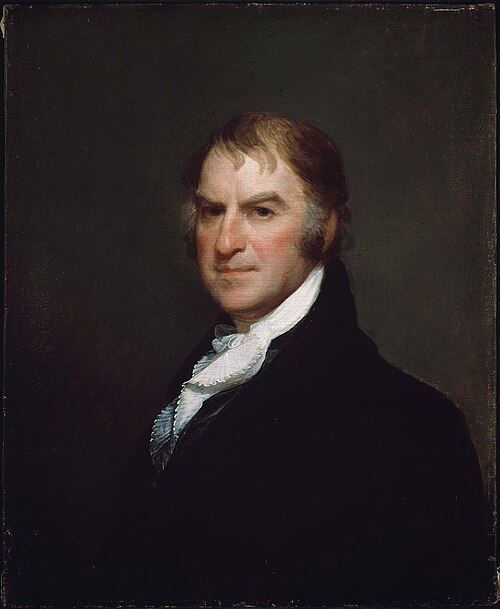
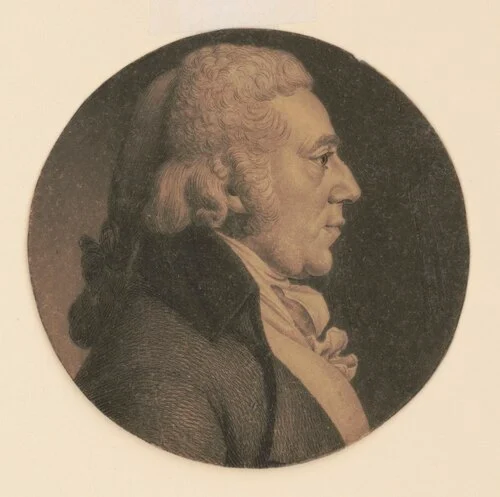
Josiah Quincy
The Public Record
Josiah Quincy III was an American educator and political figure. He was a member of the U.S. House of Representatives (1805–1813), mayor of Boston (1823–1828), and President of Harvard University (1829–1845). The historic Quincy Market in downtown Boston is named in his honor. A panel of 69 scholars in 1993 ranked him among the ten best mayors in American history.
gutenberg.org
The suspension of the right of petition, the suppression of the freedom of debate, the thirst for the annexation of Texas, the war-whoop of two successive Presidents against Mexico, are all but varied symptoms of a deadly disease seated in…
If they choose to be represented by slaves, they will find servility enough to represent and betray them.
I believe it impossible that this total subversion of every principle of liberty should be much longer submitted to by the people of the free states of this Union.
The people of the North still support by their suffrages the men who have truckled to Southern domination.
Northern subserviency to Southern dictation is the price paid by a Northern administration for Southern support.
Infuriated mobs, murdering the peaceful ministers of Christ for the purpose of extinguishing the light of a printing-press, and burning with unhallowed fire the hall of freedom, the orphan's school, and the church devoted to the worship of…
Philosophers, like the Sophists of ancient Greece, pulverized by the sober sense of Socrates, elaborating theories of moral slavery from the alembic of a sugar plantation, and vaporing about lofty sentiments and generous benevolence to be…
Ministers of the gospel, like the priest in the parable of the Good Samaritan, coming and looking at the bleeding victim of the highway robber, and passing on the other side; or, baser still, perverting the pages of the sacred volume to…
Emancipation, universal emancipation, was the lesson they had urged on their contemporaries, and held forth as transcendent and irremissible duties to their children of the present age.
To repair the injustice of our fathers to these races had been, from the day of the Declaration of Independence, the conscience of the good and the counsel of the wise rulers of the land.
You have a glorious though arduous career before you; and it is among the consolations of my last days that I am able to cheer you in the pursuit, and exhort you to be steadfast and immovable in it.
The youthful champions of the rights of human nature have buckled and are buckling on their armor; and the scourging overseer, and the lynching lawyer, and the servile sophist, and the faithless scribe, and the priestly parasite, will…
That, in three-score years from the day of the Declaration of Independence, its self-evident truths should be yet struggling for existence against the degeneracy of an age pampered with prosperity, and languishing into servitude, is a…
I rejoice that the defence of the cause of human freedom is falling into younger and more vigorous hands.
I do believe slavery to be a sin before God; and that is the reason, and the only insurmountable reason, why we should refuse to annex Texas to this Union.
And I say, in the third place, that the end was virtuous, pure, and of the most exalted character, namely, to prevent the perpetuation and spread of slavery throughout America.
They petitioned under a conviction that the consequence of the annexation would be the advancement of that which is sin in the sight of God, namely, slavery.
Now, I aver further, that, in the instance to which his observation refers, namely, in the act of petitioning against the annexation of Texas to this Union, the motive was pure, the means appropriate, and the purpose virtuous, in the…
The motive must be pure, the means appropriate, and the purpose good; and I say that woman, by the discharge of such duties, has manifested a virtue which is even above the virtues of mankind, and approaches to a superior nature.
The mere departure of woman from the duties of the domestic circle, far from being a reproach to her, is a virtue of the highest order, when it is done from purity of motive, by appropriate means, and towards a virtuous purpose.
But I say that the correct principle is that women are not only justified, but exhibit the most exalted virtue, when they do depart from the domestic circle, and enter on the concerns of their country, of humanity, and of their God.
Why does it follow that women are fitted for nothing but the cares of domestic life: for bearing children, and cooking the food of a family; devoting all their time to the domestic circle,--to promoting the immediate personal comfort of…
The broad principle is morally wrong, vicious, and the very reverse of that which ought to prevail.
Shall it be said that such conduct was a national reproach, because it was the conduct of women who left 'their domestic concerns, and rushed into the vortex of politics'?
Politicians like Josiah Quincy