Sep 17, 2013
I am asking you to properly recognize a lot of true implementation problems that make a lot of the implementation not ready for prime time.
The Public Record
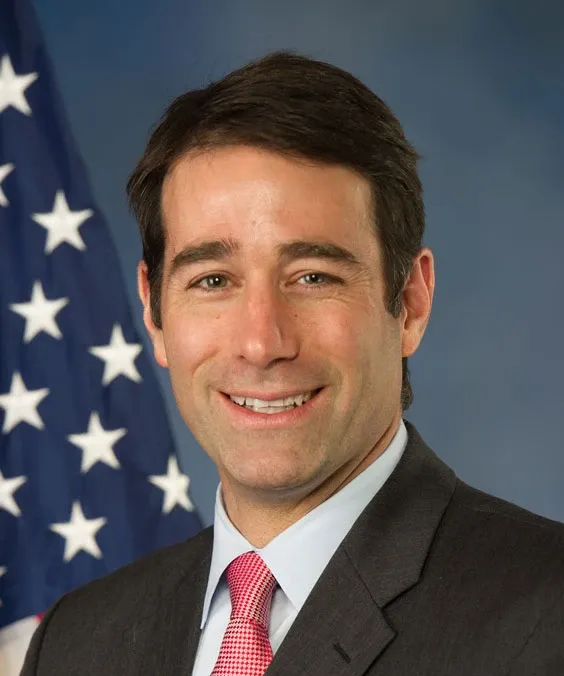
David Vitter is a former United States Senator from Louisiana, serving from 2005 to 2017. A member of the Republican Party, Vitter was known for his focus on issues such as transportation, infrastructure, and environmental policy. During his tenure, he served on various Senate committees, including the Environment and Public Works Committee, where he addressed topics like water quality and pharmaceuticals in the nation's waters.
I am asking you to properly recognize a lot of true implementation problems that make a lot of the implementation not ready for prime time.
So as Senator Vitter points out, you can very easily get to these very high numbers if you are in an area of significant risk.
Does anyone disagree that on major highway projects we should absolutely bring those averages way down?
So just to underscore, this is the same pushback we got when we talked about this originally.
What we are really focused on, I think everybody knows, are major transportation projects.
The desire for that reform grew from something pretty simple and basic, real frustration over projects stuck in bureaucratic purgatory.
Nobody is saying get rid of the NEPA process, nobody is saying get rid of the review process. But it needs to be far more efficient and straightforward.
Unfortunately, I am going to have to sustain my objection. But I am very hopeful this can be worked out in short order, as soon as a vote on my amendment is locked down. In fact, I will go this far. It doesn't even have to be on this bill…
EPA recently determined, without State input, that it will assess Bay Watershed States' animal feeding operation standards and has indicated that it will take 'appropriate actions' if the State program isn't satisfactory to the agency.
I am concerned, however, that Federal officials and environmental groups are not holding up their end of the bargain.
It is no secret that taking on incredibly complex restoration efforts--whether in the Chesapeake Bay, Louisiana, or elsewhere--requires cooperative and trustworthy relationships between numerous parties, including local, State and Federal…
I think it is a very safe presumption in that case that they wouldn't examine that issue, and fail to take action with a clear and legitimate health and safety concern.
I hope we don't, none of us, cling to a bill that may be perfect in any of our individual minds that will not pass.
I think doing that, using Lautenberg-Vitter as a base, resolving those issues, clarifying everything we can, it won't get rid of all of our differences.
Fine. OK, Dr. Borak, can you comment on a particular statement in the Society of Toxicology letter?
Do you think California's environmental health and safety protections would be made stronger or weaker by the Lautenberg-Vitter bill?
So following up on that specifically with regard to that California Safer Consumer Products law, do you think Lautenberg-Vitter would 'cripple' it?
Would the Lautenberg-Vitter bill improve EPA's ability to get what it needs in that regard?
I don't think that stalemate benefits the public, but I know it benefits them in many instances.
The present version of Lautenberg-Vitter specifically talks about vulnerability of any sub-populations.
Politicians like David Vitter