On this ground, as an anti-slavery man, I opposed it with all my might from the beginning to the end of its life.
George Julian
The Public Record
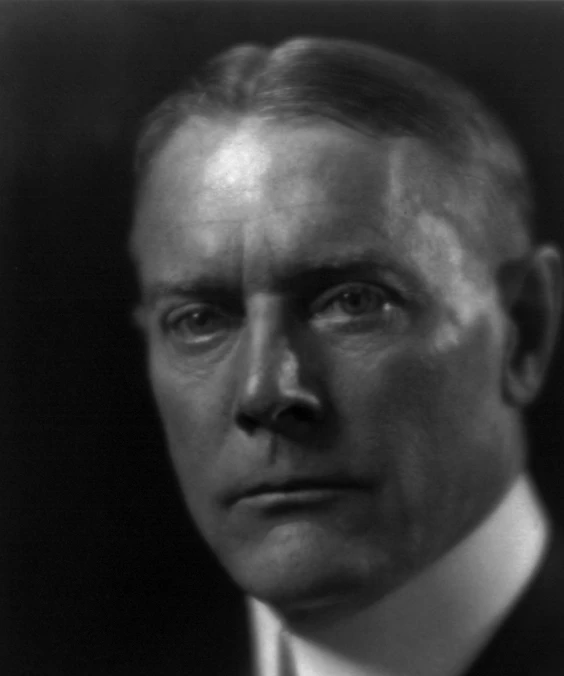
George Washington Julian was a politician, lawyer, and writer from Indiana who served in the United States House of Representatives during the 19th century. A leading opponent of slavery, Julian was the Free Soil Party's candidate for vice president in the 1852 election and was a prominent Radical Republican during the American Civil War and the Reconstruction era.
gutenberg.org
This happened in my own county and town, where thousands of men, including many of my old Free Soil brethren, assembled as an organized mob to suppress the freedom of speech; and they succeeded by brute force in taking possession of every…
At one time I think I had less than a dozen political friends in the State, and I could see in the glad smile which lighted up the faces of my old- time enemies that they considered me beyond the reach of political resurrection.
But I never for a moment intermitted my warfare, or doubted that in the end the truth would be vindicated, although I did not dream that in less than two years I would be the recognized leader of the men composing this mob, who would be…
Such were the elements which mingled and commingled in the political ferment of 1854, and out of which an anti-slavery party was to be evolved capable of trying conclusions with the perfectly disciplined power of slavery.
The dispersion of the old parties was one thing, but the organization of their fragments into a new one on a just basis was quite a different thing.
The honor of taking the first step in the formation of the Republican party belongs to Michigan, where the Whigs and Free Soilers met in State convention on the sixth of July, formed a complete fusion into one party, and adopted the name…
The ticket was elected, but it was done by combining opposite and irreconcilable elements, and was not only barren of good fruits but prolific of bad ones, through its demoralizing example; for the same dishonest game was attempted the…
Instead of inflexibly maintaining their ground and beckoning the people to come up and possess it, they meanly deserted it themselves, while vainly expecting others to occupy it.
Its resolutions and address to the people did not fitly echo the feeling and purpose of its members, but this was a preliminary movement, and it was evident that nothing could stay the progress of the cause.
The spirit of liberty was up, and side issues forgotten.
The platform reasserted the self-evident truths of the Declaration of Independence, and denied that Congress, the people of a Territory, or any other authority, could give legal existence to slavery in any Territory of the United States.
It asserted the sovereign power of Congress over the Territories, and its right and duty to prohibit it therein.
Know-Nothingism received no recognition, and the double-faced issue of the restoration of the Missouri compromise was disowned, while the freedom of Kansas was dealt with as a mere incident of the conflict between liberty and slavery.
All these factions were destined soon to political extinction, but in a hand-to-hand fight with the slave power they yet formed a considerable obstacle to that union and harmony in the free States which were necessary to success.
The issues could hardly have been better defined, and they were vital.
It was a struggle between two civilizations, between reason and brute force, between the principles of Democracy and the creed of Absolutism; and the case was argued with a force, earnestness, and fervor, never before known.
No Presidential contest had ever so touched the popular heart, or so lifted up and ennobled the people by the contagion of a great and pervading moral enthusiasm.
It was a struggle for party ascendancy by continual and most humiliating concessions to the ever-multiplying demands of slavery; and the ardor of the struggle must have been cooled by many troublesome misgivings as to the final effect of…
The brutal and cowardly assault of Brooks upon Sumner was the counterpart of border ruffianism in Kansas, and perhaps did more to stir the blood of the people of the Northern States than any of the wholesale outrages thus far perpetrated…
Republican enthusiasm reached its white heat, borrowing the self-forgetting devotion and dedicated zeal of a religious conversion.
Banks and tariffs and methods of administration were completely forgotten, while thousands of Democrats who had been trained in the school of slavery, and hundreds of thousands of conservative Whigs, caught the spirit of liberty which…
To me the memory of this first great national struggle for liberty is a delight, as the part I played in it was a real jubilee of the heart.
I was welcomed by the Republican masses everywhere, and the fact was as gratifying to me as it proved mortifying to the party chiefs who, a little while before, had found such comfort in the assurance that henceforward they were rid of me.
The baleful interposition of Know-Nothingism stood in the way of that union of forces which the situation demanded, and was thus chiefly responsible for the Republican defeat.
Politicians like George Julian